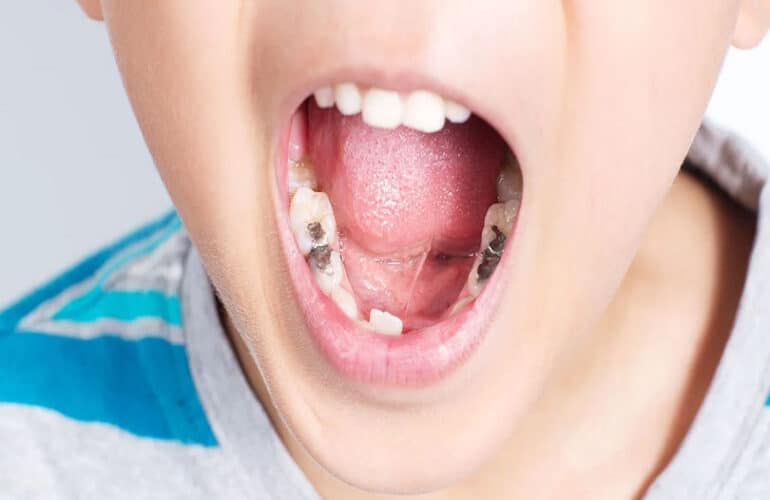

The tooth extraction healing process is relatively quick, especially for kids. Most children return to their regular activities within two or three days; however, there are some things to avoid after tooth extraction to minimize pain and complications. Knowing what to do—and what not to do—during the first few days can help protect the blood clot, reduce discomfort, and support proper healing. This is especially important for children tooth extraction aftercare, since kids may need extra reminders not to touch the extraction site or return to normal activities too quickly.
Read on to discover some essential tooth extraction recovery tips and dos and don’ts.
Table of Contents
What to Do After a Tooth Extraction
Parents often wonder what they should do immediately after a kids tooth extraction. The most important priorities are protecting the blood clot, managing discomfort, keeping the mouth clean, and giving the extraction site enough time to heal. Follow your dentist’s specific instructions, since aftercare can vary depending on the type of extraction and your child’s health.
How to Care for the Mouth After a Tooth Extraction
Your pediatric dentist may have recommended a tooth extraction for various reasons, and a critical aspect of the procedure is the recovery. Your dentist will provide specific instructions for your child’s case, but you should follow a few basic guidelines.
Keep the Mouth and Extraction Site Clean
The most important thing is to keep your child’s mouth as clean as possible. Have them rinse with an antimicrobial mouthwash up to three times a day. When cleaning teeth after a tooth extraction, avoid brushing or flossing close to the extraction site until your dentist clears it.
Take Your Medication As Directed
Your doctor may send you home with some antibiotics and painkillers after your child’s procedure. For effective infection and pain management after a tooth extraction, it’s essential to administer medication exactly as directed.
Things to Look Out for
A scab-like formation at the extraction site is a blood clot, a normal part of the tooth extraction healing process. There’s no need to worry unless your child experiences pain and inflammation. It’s important to exercise good blood clot care after extraction. Please keep it clean and tamper with it as little as possible.
If you notice that the blood clot hasn’t formed properly or becomes dislodged, your child could have a dry socket. Most dry socket cases come independently, but ir is better to inform your care team if you suspect it.
If your child has pain or swelling after a tooth extraction, alert your doctor immediately so they can attend to the issue promptly.
Older children and teens who undergo surgical extractions, including wisdom tooth removal, may also have stitches placed over the extraction site. If you notice wisdom teeth stitches coming out during recovery, avoid pulling or cutting the thread yourself and contact the dental team if the wound opens, bleeding returns, or pain increases.
Things to Avoid After Tooth Extraction
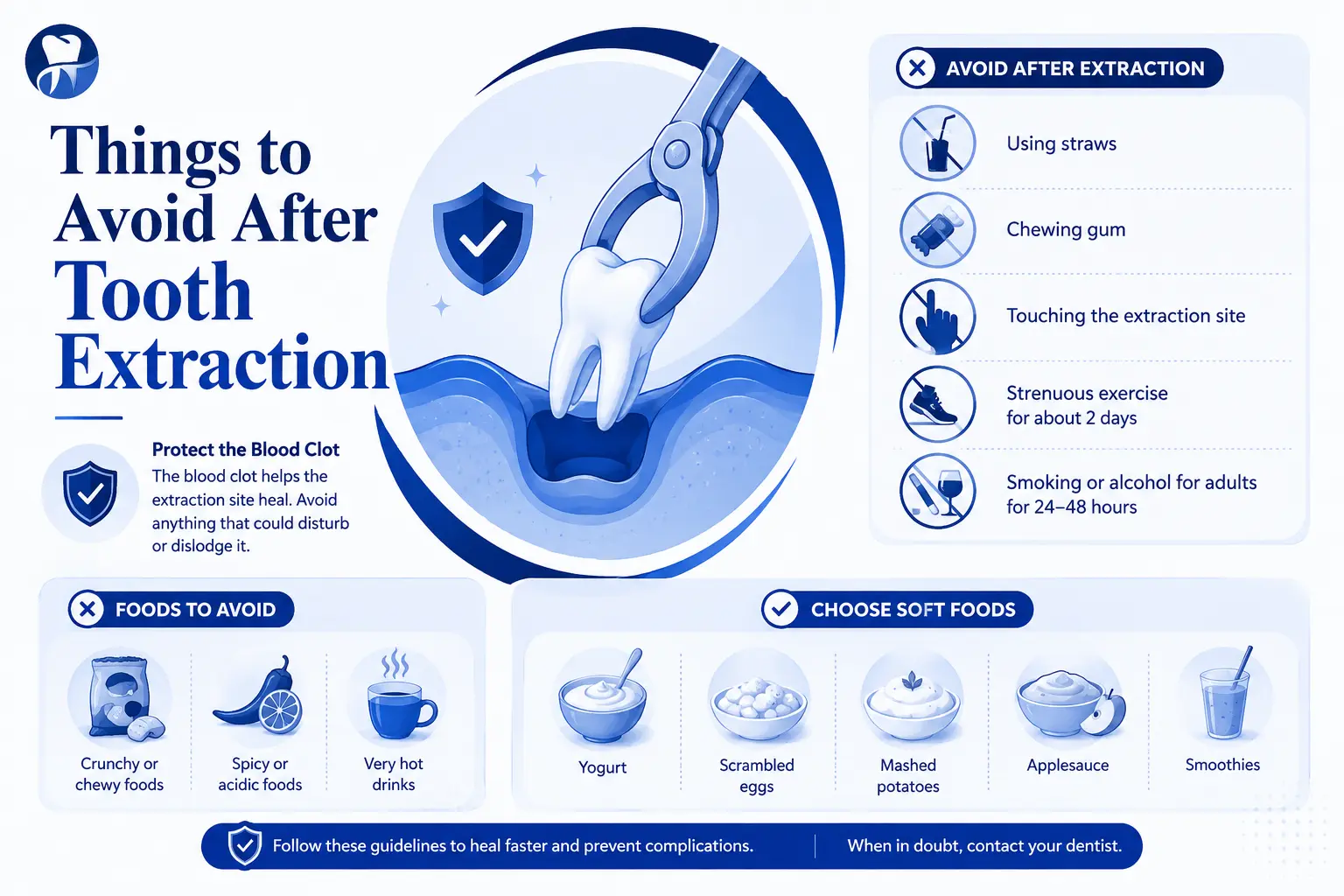
Now that we have covered what to do let’s look at what not to do after tooth extraction. The most important things to avoid after a tooth extraction are actions that create suction, disturb the blood clot, increase bleeding, or place unnecessary pressure on the healing area. People make some common post-tooth extraction mistakes, but it is easy to avoid them. Here’s how to prevent dry socket and other post-extraction problems:
- Don’t use straws, as the suction can cause damage.
- Avoid biting the lip while it’s still numb.
- Avoid chewing gum after tooth extraction.
- Don’t administer aspirin, as it can thin blood and cause bleeding. Use Ibuprofen instead.
- For adults, avoid drinking alcohol after tooth extraction and smoking after tooth extraction for at least 24 to 48 hours.
You may also wonder how long it takes to avoid exercise after extraction. It is best to keep your child from strenuous exercise, heavy lifting, or bending over for at least two days after their procedure.
Activities to Avoid After Tooth Extraction
Some activities to avoid after tooth extraction include running, vigorous sports, heavy lifting, rough play, and repeated bending over. These activities can increase blood pressure and may contribute to renewed bleeding at the extraction site.
For most children, quiet activities are best for the rest of the day. Follow your dentist’s instructions about when your child can return to sports, physical education, or other strenuous activities.
The table below provides a quick overview of common activities and habits that may interfere with the early healing process.
| Avoid | Why It Matters | Safer Alternative |
|---|---|---|
| Drinking through a straw | Suction may disturb the blood clot | Sip directly from a cup |
| Vigorous rinsing or spitting | May loosen the clot | Follow gentle rinsing instructions |
| Hard or crunchy foods | Can irritate or enter the socket | Choose soft foods |
| Chewing on the extraction side | Adds pressure to healing tissue | Chew on the opposite side |
| Strenuous exercise | May increase bleeding | Choose quiet activities |
| Touching the socket with fingers or tongue | Can irritate the area | Leave the site undisturbed |
| Smoking or vaping | Delays healing and increases complications | Avoid completely during healing |
What to Eat After Tooth Extraction
Eating after tooth extraction can be challenging. Choosing the right soft foods to eat after tooth extraction can help your child stay comfortable while protecting the healing area. Good options include yogurt, scrambled eggs, mashed potatoes, applesauce, and other foods that require minimal chewing. For a few days, stick to soft foods like yogurt, scrambled eggs, mashed potatoes, ice cream, apple sauce, and smoothies.
Foods to avoid after extraction:
- Crunchy food like popcorn, crisps, cereals, and nuts.
- Chewy food such as steak.
- Spicy dishes like curries.
- Acidic foods such as citrus fruit.
It’s also best not to have extremely hot drinks after tooth extraction.
Expert Pediatric Tooth Extraction Support
If you follow these steps to avoid tooth extraction, your child should recover quickly. Remember to contact your dental surgeon immediately if anything feels or looks wrong after the procedure. Contact our team for more information and support.
FAQs About Things to Avoid After Tooth Extraction
What are the most important things to avoid after tooth extraction?
What activities should children avoid after tooth extraction?
Can my child brush their teeth after an extraction?
What should a child eat after tooth extraction?
How long should a child rest after tooth extraction?