
Gum disease is far more common than most people realize. According to the National Institute of Dental and Craniofacial Research (NIDCR), roughly two in five adults in the United States are affected by some form of this condition, making it an important public health concern.
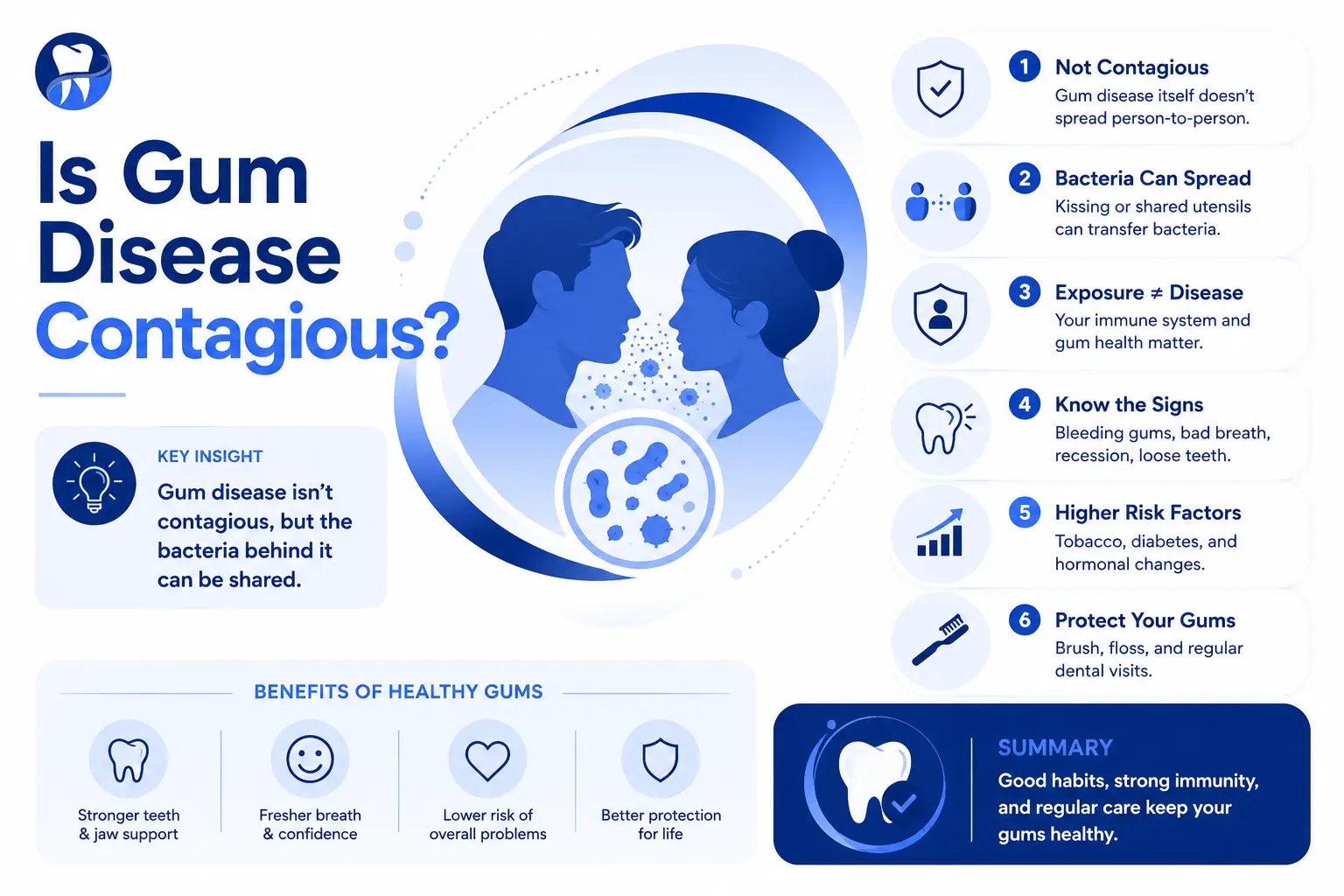
If you or someone in your household has been diagnosed with gum disease, you may be wondering: Is gum disease contagious? The short answer is no, not in the way a cold or flu is- but the story does not end there. Although gum disease itself is not considered contagious in the traditional sense, the bacteria associated with it can be transferred through saliva. This is why questions such as “Is gum disease contagious by kissing?” and “Is periodontal disease contagious?” require a little more explanation than a simple yes or no.
Table of Contents
The Source of Gum Disease: A Bacterial Infection
Gum disease, also known as periodontal disease, is a bacterial infection of the tissues that surround and support your teeth. It begins at the gum line, where a sticky film of bacteria called plaque accumulates due to poor oral hygiene. Left undisturbed, this plaque buildup triggers gum inflammation, leading to the earliest stage of gum disease: gingivitis. According to the American Dental Association (ADA), without early treatment, gingivitis can progress through the stages of gum disease into periodontitis, where the infection spreads deeper into the soft tissue and connective tissues that hold your teeth in place.
So while the infection of the tissues itself does not pass from person to person like a virus, the harmful oral bacteria responsible for it can spread through saliva. Sharing a toothbrush, eating from the same utensils, or even close contact, such as kissing, can expose family members and loved ones to these microbes. Whether that exposure leads to gum disease depends largely on the receiving person’s immune response and overall gum health.
Can Gum Disease Spread Between People?
The distinction between bacterial transfer and actually developing gum disease is important. The table below shows which everyday situations may expose someone to oral bacteria and what that exposure actually means.
| What You Notice | What It May Mean | Recommended Action |
|---|---|---|
| Soft bulge that appears during crying | Reducible inguinal hernia | Arrange prompt pediatric surgical evaluation |
| Bulge disappears when the baby relaxes | Hernia contents have returned to the abdomen | Surgery is still generally required |
| Firm bulge that remains visible | Possible incarcerated hernia | Seek urgent medical care |
| Red, purple, or tender swelling | Possible compromised blood supply | Go to the emergency department |
| Vomiting with abdominal swelling | Possible bowel obstruction | Seek emergency care immediately |
| Severe or inconsolable crying | Possible pain from trapped tissue | Obtain urgent medical evaluation |
In other words, saying gum disease is contagious is misleading. The bacteria linked to gum disease can spread between people, but the disease itself develops through a combination of bacterial buildup, oral hygiene habits, individual susceptibility, and other risk factors.
Can You Protect Your Partner or Family From Gum Disease?
If someone in your household has gingivitis or periodontitis, there is usually no need to avoid normal everyday contact. Instead, focus on reducing the amount of harmful bacteria in the mouth through consistent brushing, daily interdental cleaning, and professional treatment.
Avoid sharing toothbrushes, and replace your toothbrush or brush head regularly. Partners and family members should also maintain their own routine dental checkups, particularly if they already have bleeding gums, persistent bad breath, or other signs of periodontal disease.
Is Gum Disease Contagious by Kissing?
Is gum disease contagious by kissing? Not exactly. Kissing can transfer saliva—and with it, some of the bacteria associated with gingivitis and periodontitis—but exposure to those bacteria does not automatically mean the other person will develop gum disease.
Whether disease develops depends on several factors, including oral hygiene, plaque accumulation, smoking, diabetes, immune function, and existing gum health. For most healthy people who brush, floss, and receive regular dental care, occasional exposure to another person’s oral bacteria is unlikely to cause gum disease on its own.
However, someone with active gum disease should avoid sharing toothbrushes and should be especially mindful of daily oral hygiene to reduce bacterial buildup.
Who Is at Higher Risk?
Not everyone exposed to harmful bacteria will develop gum disease. Your immune system plays a significant role in keeping bacterial levels in check. However, several risk factors can lower your defenses and increase your risk. Tobacco use is one of the most significant, it impairs gum tissue healing and reduces the mouth’s ability to fight infection. Health conditions such as diabetes can also compromise your immune response, making it harder for your body to manage bacterial infection. Hormonal changes during pregnancy or menopause can make gums more sensitive and more prone to inflammation. Other factors that can increase susceptibility include a family history of periodontal disease, certain medications that affect saliva flow or gum tissue, and inconsistent professional dental care. This helps explain why two people exposed to similar oral bacteria may have very different outcomes.
Are Gingivitis and Periodontitis Contagious?
People sometimes ask both “Is gingivitis gum disease contagious?” and “Is periodontal disease contagious?” The answer is similar in both cases: neither condition spreads from person to person like a viral infection.
Gingivitis is the earliest stage of gum disease and is primarily caused by plaque buildup along the gum line. Periodontitis is a more advanced form in which inflammation and infection damage the tissues and bone supporting the teeth.
The bacteria associated with both conditions can be exchanged through saliva, but developing gum disease requires more than simply being exposed to those bacteria. Oral hygiene, genetics, smoking, systemic health, and the body’s immune response all influence whether gingivitis or periodontitis develops.
Recognizing the Common Symptoms
Early detection is one of the most powerful tools in managing gum disease. Because the early stages are often painless, many people do not realize something is wrong until the condition has already progressed. Knowing what to look for makes a real difference. Tender gums, gum inflammation, and persistent bad breath that does not resolve with brushing are often the first signals. Symptoms do not always affect the entire mouth. Some people notice throbbing pain in gums, while others experience gum sensitivity in one spot. Localized discomfort can have several causes, so persistent or worsening symptoms should be evaluated by a dental professional.
As the condition advances, you may notice gum recession, where the gums begin to pull away from the teeth, and eventually loose teeth as the supporting bone is affected. If any of these common symptoms sound familiar, reaching out to your dental team promptly is essential.
Simple Steps to Protect Your Oral Health
Prevention remains the most effective approach to gum disease. Brushing twice daily, flossing regularly, and scheduling consistent regular dental visits form the foundation of any strong oral hygiene routine.
Avoiding sharing your toothbrush is a simple but meaningful step, especially when someone in your household is managing active gum disease. Managing systemic health conditions and reducing or eliminating tobacco use will also significantly lower your risk.
And if you have not yet made the switch, an electric toothbrush or water flosser can make a noticeable difference in reaching areas along the gum line that traditional brushing may miss.
If you are unsure where to start, our guide on the best toothpaste for gingivitis can help you make informed choices about your daily routine.
Kakar Dental Group Is Here to Help You
A proper treatment plan starts with an accurate diagnosis and a team that genuinely cares about your long-term dental health. At Kakar Dental Group, our specialists are trained to identify every form of gum disease, from early-stage gingivitis to advanced periodontitis, and to walk you through the treatment options that make the most sense for your situation. Whether you are concerned about your own gum health or want to protect your family members, we are here to help you take the right next step. Request an appointment today and let our team help you protect your smile for years to come.
FAQs About Whether Gum Disease Is Contagious
Is gum disease contagious?
Is gum disease contagious by kissing?
Is gingivitis gum disease contagious?
Is periodontal disease contagious?