
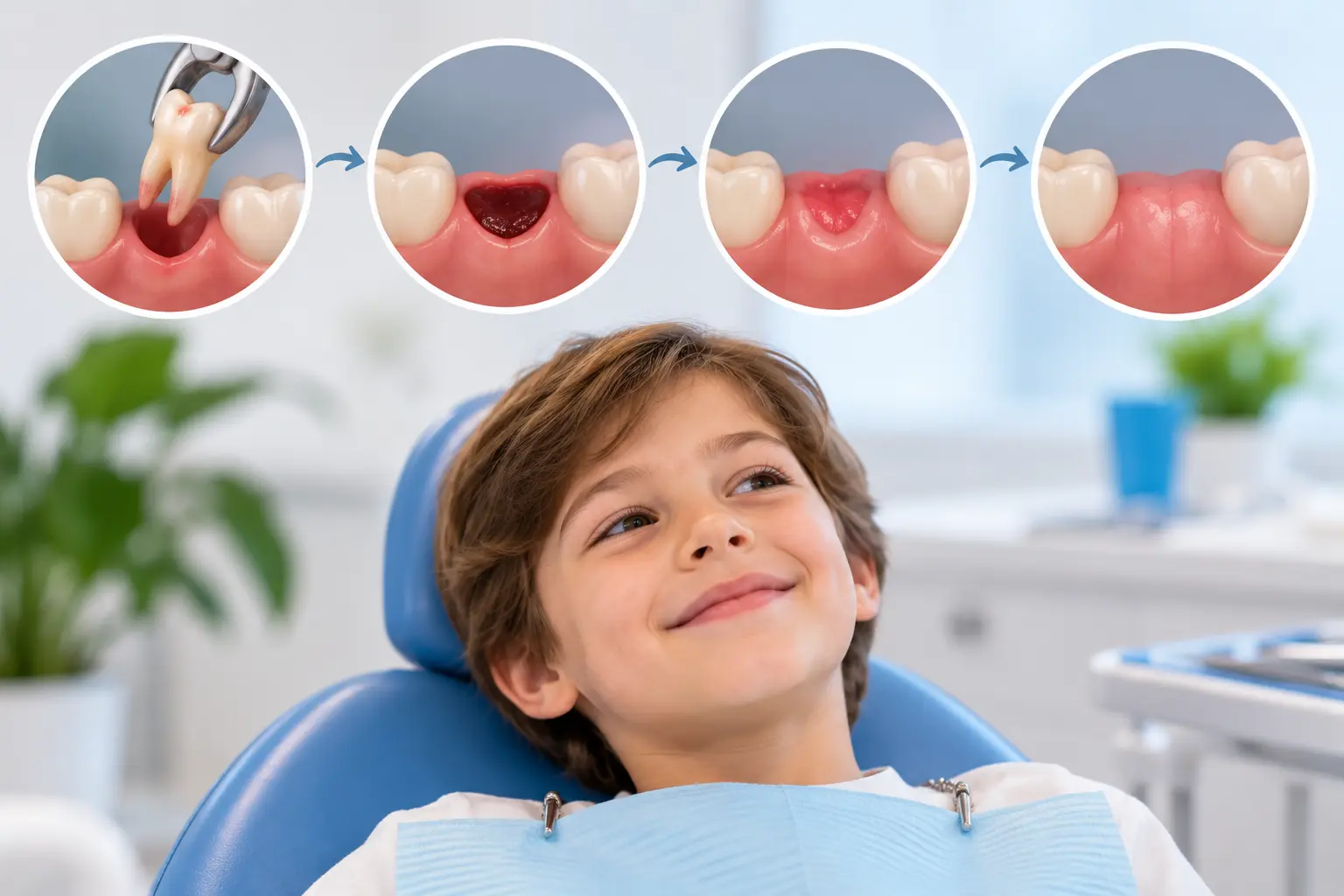
Healing after a tooth extraction starts with a protective blood clot, then the gum tissue gradually closes over the following weeks while deeper bone remodeling continues for months. This timeline is general and varies with the complexity of the extraction, overall health, and the dentist’s specific instructions, so it’s worth treating any timeline as a guide rather than a guarantee.
Table of Contents
First 24 Hours: Blood Clot Formation
The clot that forms in the socket isn’t something to clean away; it’s the body’s scaffold for everything that follows, and disturbing it raises the risk of complications like dry socket. Standard guidance from the American Association of Oral and Maxillofacial Surgeons calls for rest, gentle gauze pressure as instructed, and avoiding straws, vigorous rinsing, and smoking during this window specifically because these actions can dislodge the clot.
Days 2–3: Inflammation and Early Recovery
Some discomfort and swelling are a normal part of the body clearing debris and beginning repair, and this phase commonly peaks around day two or three before starting to improve. Worsening severe pain, swelling that keeps building, fever, or a bad taste or odor at this stage points toward something that needs evaluation rather than routine recovery.
Days 4–7: New Healing Tissue Forms
By this point, the original clot is being replaced by granulation tissue, new, vessel-rich tissue that supports ongoing repair. Its appearance varies considerably: it can look red, pink, whitish, or pale yellow, and color alone doesn’t confirm normal healing or rule out infection. A peer-reviewed review of extraction socket healing describes this tissue in detail, and normal tooth extraction healing stages at this point are defined more by improving comfort than by a particular shade of tissue.
Weeks 2–4 and Beyond: Gum Closure and Bone Remodeling
Surface healing and deeper bone healing run on different clocks. The gum may look mostly closed within a few weeks, especially after a straightforward extraction, but the bone underneath is still forming and reorganizing for months afterward. This is especially true for surgical extractions, wisdom teeth, or cases involving grafting, where the visible and symptomatic recovery period tends to run longer.
Signs a Tooth Extraction May Not Be Healing Normally
New or escalating pain after things had started improving, persistent or heavy bleeding, fever, a foul taste or odor, pus, or swelling that worsens instead of easing are all reasons to contact the dentist. Seek urgent care for difficulty breathing or swallowing, rapidly spreading swelling in the face or neck, heavy uncontrolled bleeding, or major trauma. Dry socket deserves particular mention here: it’s a painful complication involving a broken-down clot, typically emerging one to five days after extraction with pain that intensifies rather than fades, and it needs dental evaluation rather than home treatment.
What Normal Tooth Extraction Healing Can Look Like
A healing extraction site can change color several times, which is why appearance alone is not a reliable way to diagnose a problem. During the first few days, a clot may look dark red or brown. As new healing tissue develops, the area may look pink, white, pale yellow, or a mixture of colors. A visible opening can also remain for a while, particularly after a molar or surgical extraction.
The more useful pattern to watch is the overall trend: swelling and discomfort should gradually ease after the first few days, and the socket should slowly become smaller over time. A change in appearance accompanied by worsening pain, fever, pus, a persistent foul taste, or spreading swelling should be evaluated by a dentist.
| Healing Stage | What You May Notice | Usually Reassuring Signs | Contact a Dentist If |
|---|---|---|---|
| First 24 hours | A dark red blood clot, mild oozing, tenderness, and early swelling | Bleeding slows with gauze pressure as directed; pain is manageable | Bleeding is heavy or does not slow, or pain is severe and uncontrolled |
| Days 2–3 | Swelling and soreness may peak; the clot can look dark red, brown, or uneven in color | Symptoms are stable or beginning to improve with the prescribed care plan | Swelling keeps worsening, fever develops, or pain becomes severe rather than manageable |
| Days 4–7 | The socket may look red, pink, pale yellow, or whitish as healing tissue develops | Swelling is decreasing and comfort is gradually improving | Pain starts increasing after initial improvement, or there is pus, a foul odor, or a persistent bad taste |
| Weeks 2–4 | The opening usually becomes smaller as gum tissue closes over it | Little to no pain; the site appears to be gradually closing | The site is not improving, remains very painful, or new swelling develops |
| Following months | The gum may look healed even while the bone beneath continues remodeling | No ongoing pain, drainage, swelling, or bleeding | You have concerns about delayed healing, especially after a surgical extraction or bone graft |
How to Support Healing After a Tooth Extraction
Following the procedure-specific instructions from your own dentist matters more than any general guide, since factors like extraction complexity and individual health can shift the plan. Beyond that, protecting the clot in the first day, taking medications only as directed, choosing soft foods as advised, keeping up gentle oral hygiene once cleared to do so, and attending any scheduled follow-up all support a smoother recovery.
For guidance on what to eat during this period, Kakar’s soft foods after tooth removal guide covers this in more depth, and our children’s tooth extraction aftercare article addresses pediatric-specific recovery. Salt water, antibiotics, or home remedies won’t cure an infection on their own; they’re supportive measures at most, and persistent symptoms still need professional attention. Reach out to the team at Kakar Dental Group, which sees patients across its Tysons, Falls Church, Manassas, and Fredericksburg locations with any concerns.
Frequently Asked Questions About Tooth Extraction Healing
Why is day 3 sometimes the worst after a tooth extraction?
What does granulation tissue look like after a tooth extraction?
How long does the tooth extraction hole take to close?
Is a white or yellow layer after extraction always an infection?