Fluoride toothpaste remains the most thoroughly studied and widely recommended option for preventing cavities in children and adults. For those seeking an alternative to fluoride toothpaste, hydroxyapatite is the ingredient with the strongest supporting research, although its evidence base is smaller and its suitability depends on each person’s cavity risk. Families considering a switch, particularly for young children, should review the decision with a dentist first.
This blog explains why fluoride remains the clinical standard, what current research shows about hydroxyapatite, how to evaluate “natural” marketing claims, and when a professional evaluation is advisable. It does not endorse any specific product.
Table of Contents
Why Fluoride Toothpaste Is Still Commonly Recommended
Fluoride protects teeth in two complementary ways. It helps make tooth enamel more resistant to the acids produced by plaque bacteria, and it supports remineralization, the natural process through which minerals are redeposited into enamel during the earliest stages of decay. According to the American Dental Association, fluoride strengthens teeth and helps remineralize enamel in early decay, and any toothpaste carrying the ADA Seal of Acceptance for cavity protection must contain fluoride.
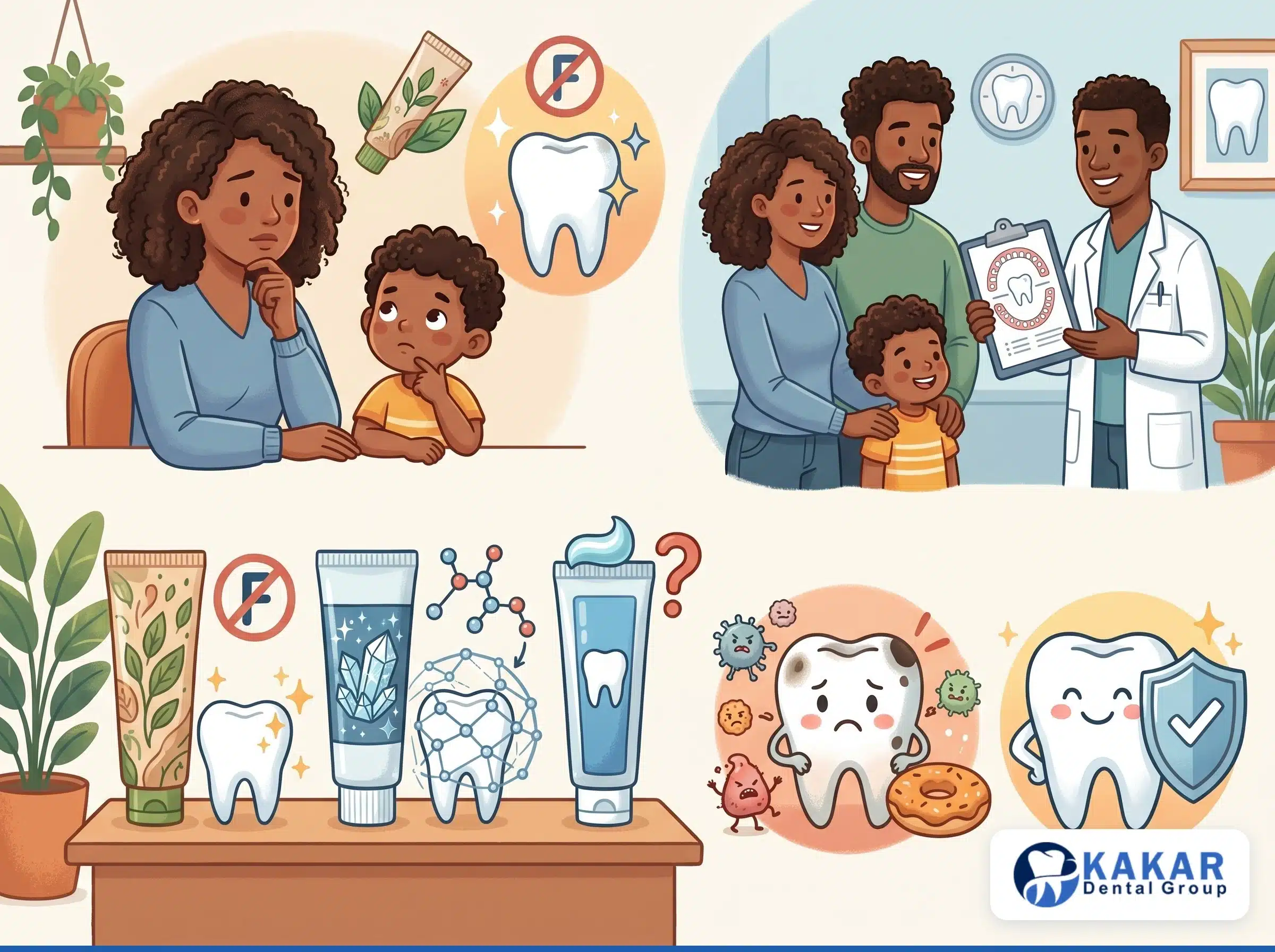
Pediatric guidance reflects the same consensus. The American Academy of Pediatric Dentistry (AAPD) describes fluoride as an effective therapy for reducing tooth decay in infants, children, adolescents, and individuals with special health care needs. The AAPD and ADA both recommend age-appropriate amounts: a smear about the size of a grain of rice from the first tooth until age three, and a pea-sized amount from ages three to six. An adult should dispense the toothpaste and supervise brushing.
Not every patient requires the same fluoride concentration or regimen. A dentist may recommend a standard over-the-counter toothpaste for one child and prescription-strength products, professional varnish, or supplements for another, depending on cavity risk, local water fluoride levels, and medical history.
What Is the Main Alternative to Fluoride in Toothpaste?
The most common alternative to fluoride in toothpaste is hydroxyapatite, a calcium phosphate mineral closely related to the mineral that makes up natural tooth enamel. On ingredient labels, it typically appears as hydroxyapatite or nano-hydroxyapatite, depending on particle size. Researchers believe it works by depositing mineral on the tooth surface, supporting the repair of early enamel lesions, and reducing the ability of bacteria to adhere to teeth.
The research is promising but still evolving. A 2024 systematic review and meta-analysis published in the Journal of Dentistry pooled five clinical trials and eight in situ trials and concluded that fluoride-free hydroxyapatite products demonstrated anti-caries effects. Separately, an 18-month randomized clinical trial in adults found that a hydroxyapatite toothpaste was not statistically inferior to a 1,450 ppm fluoride toothpaste in preventing new decay.
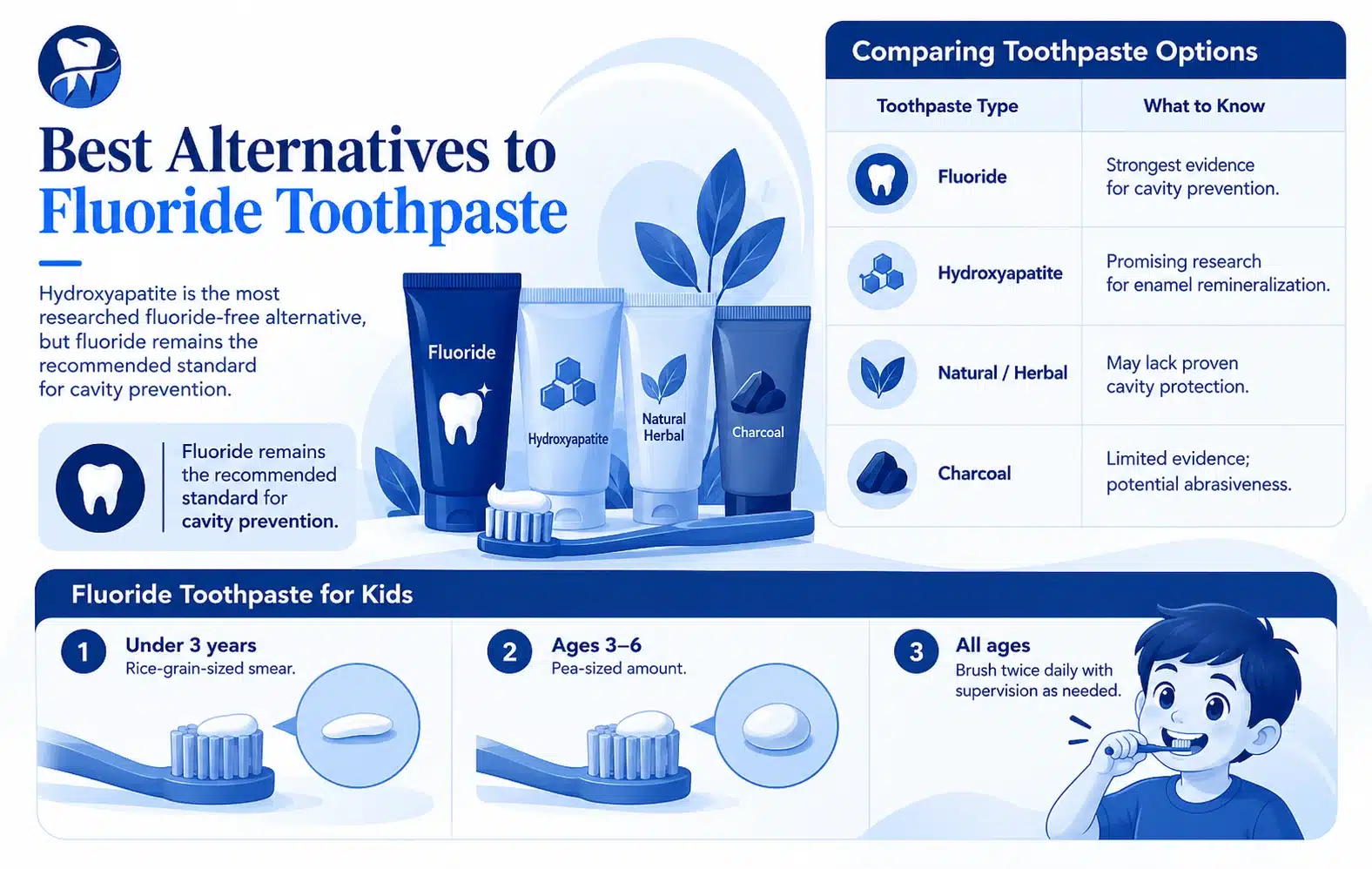
These findings are meaningful, but they have limits. The total number of trials remains small compared with decades of fluoride research, products differ in hydroxyapatite type and concentration, and several investigators in this field are affiliated with a manufacturer of hydroxyapatite oral care products. No hydroxyapatite toothpaste currently carries the ADA Seal for cavity protection, and the federal standards for over-the-counter anticaries toothpaste recognize only fluoride compounds. For these reasons, the best alternative to fluoride toothpaste for one person may not be appropriate for another.
| Ingredient/Category | What Evidence Supports | Important Limits | Who Should Ask a Dentist First |
|---|---|---|---|
| Fluoride toothpaste (sodium fluoride, stannous fluoride, sodium monofluorophosphate) | Decades of clinical research showing reduced tooth decay in children and adults; endorsed by the ADA and AAPD | Amount must be age-appropriate for young children to limit swallowing | Parents of children under six; anyone using prescription-strength products |
| Hydroxyapatite or nano-hydroxyapatite | Growing clinical evidence, including a 2024 meta-analysis, showing anti-caries effects | Fewer trials than fluoride; formulations vary; no ADA Seal for cavity protection | Parents of young children; anyone with past cavities, active decay, braces, or dry mouth |
| “Natural” or herbal pastes with no active anticaries ingredient | Plaque removal through the act of brushing | No established cavity-prevention effect | Anyone at moderate or high cavity risk |
| Charcoal toothpastes and powders | Insufficient evidence for safety or effectiveness | May be abrasive; many contain no fluoride | Everyone, particularly children and those with enamel wear or gum recession |
Are “Natural” Fluoride-Free Toothpastes a Substitute?
Terms such as “natural,” “herbal,” “clean,” or “botanical” are marketing language, not evidence of cavity prevention. A toothpaste may contain appealing plant-based ingredients and still lack any active ingredient shown to prevent decay. Anyone searching for a natural alternative to fluoride toothpaste should look past the label and ask whether the product’s active ingredient has clinical evidence behind it.
Charcoal products warrant caution. A literature review in the Journal of the American Dental Association found insufficient clinical and laboratory data to support the safety or effectiveness claims made for charcoal-based toothpastes, and some charcoal formulations can be abrasive to enamel and gums.
Homemade preparations carry additional risks. Baking soda pastes, crushed charcoal, and other do-it-yourself mixtures lack cavity-protective ingredients and may be more abrasive than commercial toothpaste. Essential oils, which appear in many natural toothpastes and online recipes, should never be swallowed; poison control specialists have warned that young children are especially vulnerable to essential oil toxicity.
How to Choose a Toothpaste for a Child
Toothpaste decisions for children involve more than ingredient preference. Relevant factors include the child’s age and ability to spit, any history of cavities or current cavity risk, other fluoride sources such as community water or supplements, orthodontic appliances such as braces, dry mouth related to medications or medical conditions, and the recommendations of the child’s dentist. Parents establishing early routines may find our guides on when to start brushing baby teeth and how to brush toddler teeth helpful.
When evaluating a toothpaste for your child, the following steps are recommended:
- Bring the toothpaste tube, or a photo of its ingredient list, to your child’s next dental visit so the dentist can review the active ingredient and its concentration.
- Use only the recommended amount: a rice-grain smear for children under three and a pea-sized amount for children ages three to six, unless your dentist advises otherwise.
- Supervise brushing, dispense the toothpaste yourself, and encourage your child to spit rather than swallow.
- Do not switch products based on online claims alone; discuss any change with your child’s dentist first.
When to Ask a Dentist Before Switching
Some individuals face a higher risk of decay, and for them a toothpaste change warrants professional input. These situations include a history of cavities, active decay, chalky white spots on the enamel that may signal early mineral loss, braces or other orthodontic appliances, dry mouth, special health care needs, and difficulty brushing thoroughly.
A dentist can assess cavity risk, review current fluoride exposure, and determine whether a fluoride-free toothpaste is a reasonable choice or whether additional protection is needed. In some cases, the dentist may recommend continuing fluoride toothpaste while adding other preventive measures, such as professional fluoride varnish or dental sealants.
At Kakar Dental Group, our pediatric dentistry team helps families make informed, evidence-based decisions about toothpaste selection, fluoride use, and cavity prevention. Families can schedule an evaluation with a pediatric dentist in Falls Church or at our offices in Tysons, Manassas, and Fredericksburg to discuss the most appropriate approach for their child.
Frequently Asked Questions
Is hydroxyapatite toothpaste as good as fluoride toothpaste?
Can children use fluoride-free toothpaste?
Is “natural” toothpaste better for teeth?
Can I remineralize teeth without fluoride?
What should I avoid in a fluoride-free toothpaste?