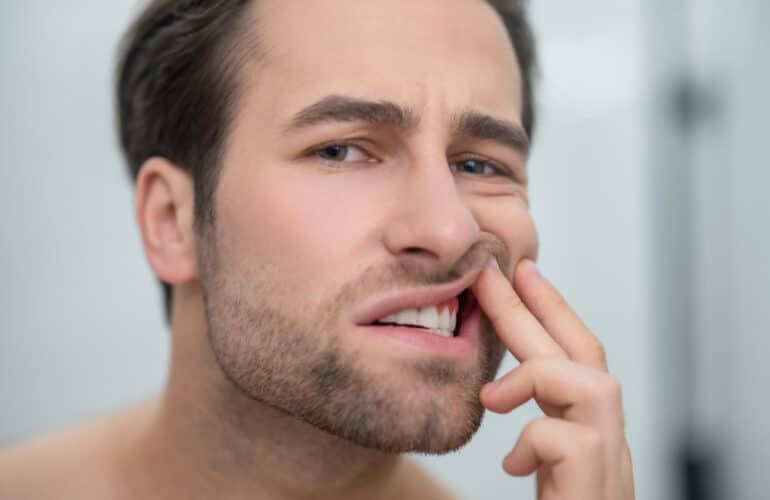

Pain in the soft palate can significantly impact daily activities, including eating, speaking, and swallowing. Recognizing potential causes of discomfort enables individuals to seek appropriate treatment and maintain optimal oral health. This short blog examines the various factors contributing to soft palate pain and provides some relief strategies from the team at Kakar Dental Group.
Table of Contents
Understanding the Soft Palate and Its Role in Oral Health
The soft palate is the flexible part of the mouth roof, distinguished from the hard palate by its muscular composition and mobility. This anatomical structure separates the oral cavity from the nasal passages, playing a vital role in preventing food and liquid from entering the nasal cavity during swallowing.
Potential Causes of Soft Palate Pain
If you are asking why does my soft palate hurt, the answer often depends on whether the irritation is caused by temporary inflammation, infection, lifestyle factors, or an underlying oral condition. Identifying the source of pain in soft palate tissue is the first step toward choosing the most effective treatment approach.
Several everyday triggers can lead to inflammation of the soft palate, including:
- food allergies or sensitivities that irritate oral tissues
- nutritional deficiencies, especially low vitamin B levels
- minor injuries from dental appliances or recent dental work
- irritation from acidic foods or very hot foods
- tobacco use, which significantly increases risk factors for chronic oral irritation and more serious pathology
Because the soft palate is made of delicate, highly mobile tissue, even mild irritation may become more noticeable during eating or swallowing. This is one reason patients often ask why does my soft palate hurt when i swallow, especially after exposure to hot beverages or spicy foods.
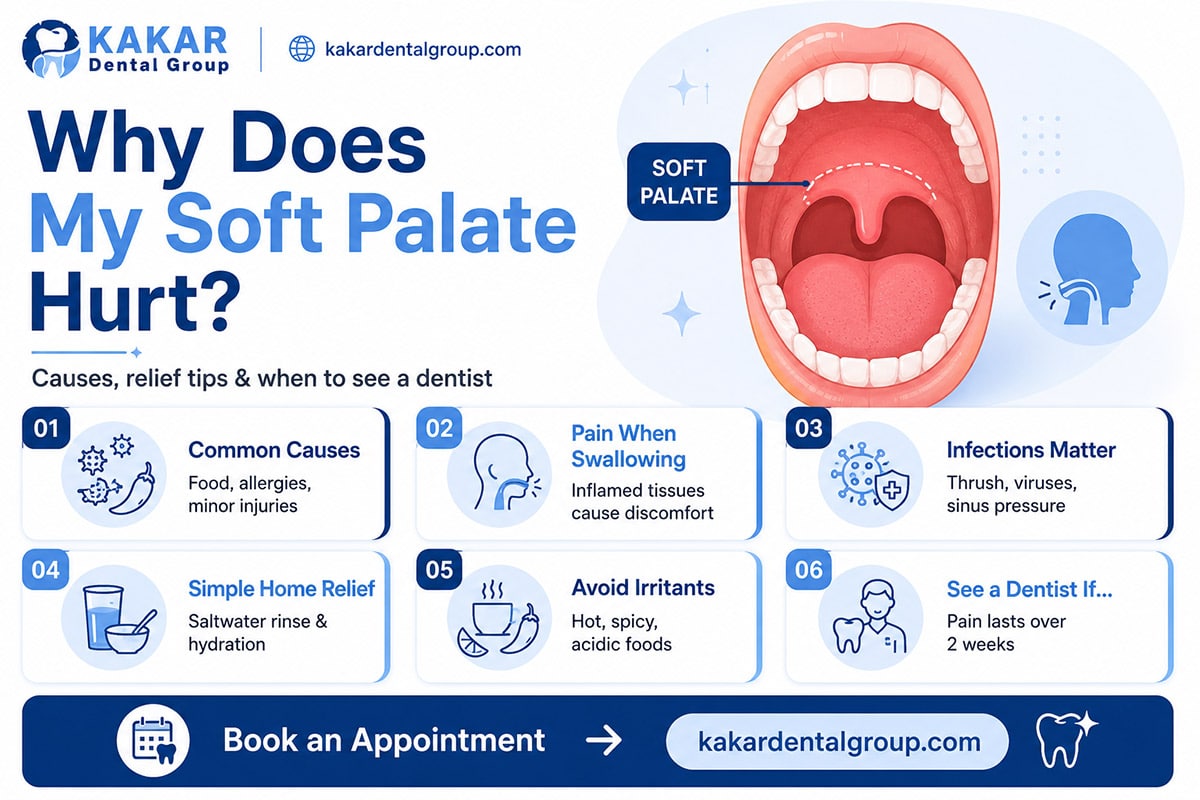
Infectious conditions are another common cause of pain in soft palate tissue and should not be overlooked. These may include:
- oral thrush caused by Candida albicans, which produces white, painful patches that interfere with normal oral function
- herpes simplex virus infections that can create cold sores or fever blisters in the soft palate region
- sinus infections that occasionally cause referred pain to the back of the roof of the mouth, making diagnosis less obvious
Individuals with weakened immune systems are more susceptible to yeast infections affecting the soft palate. In addition, persistent or unexplained pain in soft palate tissue that does not improve over time may indicate underlying conditions such as chronic infection, nutritional imbalance, or early warning signs of oral cancer and should always be evaluated by a dental professional promptly.
Why Does My Soft Palate Hurt When I Swallow?
If you are wondering why does my soft palate hurt when I swallow, the discomfort is often related to inflammation or irritation affecting the delicate tissues at the back of the roof of the mouth. Because the soft palate moves actively during swallowing to close off the nasal passages, even mild swelling or infection can make this movement painful. In many cases, temporary irritation from hot foods, dehydration, seasonal allergies, or minor throat infections can cause noticeable pain in soft palate tissue during swallowing.
Another common reason people ask why does my soft palate hurt when I eat is mechanical irritation from food textures or temperature. Very hot drinks, acidic foods, spicy meals, or sharp-edged snacks can inflame the soft palate and make swallowing uncomfortable for several days. Dry mouth can also contribute to friction between oral tissues and food during chewing, increasing sensitivity in this area.
In some situations, pain in soft palate while swallowing may be linked to infections such as oral thrush, viral illnesses, or sinus-related inflammation that creates referred pressure toward the back of the mouth. Less commonly, persistent discomfort during eating or swallowing may signal nutritional deficiencies, irritation from dental appliances, or an underlying condition that requires professional evaluation. If symptoms last longer than a week, worsen over time, or are accompanied by white patches, swelling, or difficulty swallowing, a dental or medical assessment is recommended to identify the cause and guide treatment.
Home Remedies and Daily Life Tips for Relief
Several home remedies can also provide relief for minor discomfort of the soft palate. Rinsing with salt water reduces inflammation and promotes healing through gentle antimicrobial action.
Avoiding spicy foods, acidic foods, and hot beverages prevents further irritation to compromised tissue. Maintaining adequate hydration combats dry mouth and supports overall tissue health. Over-the-counter pain relievers offer temporary symptom management for minor injuries. Using a humidifier increases ambient moisture, particularly beneficial for individuals experiencing chronic dry mouth.
Implementing lifestyle changes supports the health of the soft palate. Eliminating tobacco use dramatically reduces risk factors for oral disease and improves healing capacity. Maintaining excellent oral hygiene prevents bacterial and fungal infections. Consuming a balanced diet rich in vitamin B addresses nutritional deficiencies that compromise tissue integrity. Managing stress supports immune system function, thereby reducing susceptibility to infections that affect the soft palate.
When to Seek Medical Attention for Soft Palate Pain
Certain symptoms demand immediate professional attention. White patches, aphthous ulcers, or painful sores or mouth ulcers that persist for more than two weeks require evaluation and treatment. Persistent pain in soft palate tissue or difficulty swallowing can interfere with proper nutrition and hydration, making prompt clinical assessment important. Swelling or other signs of an underlying condition should not be ignored. Most critically, ongoing pain in soft palate areas accompanied by unexplained lesions or tissue changes may indicate early warning signs of oral cancer or severe fungal infection and require comprehensive examination and diagnostic testing.
A professional evaluation ensures an accurate diagnosis and appropriate treatment for mouth pain. Visit a dental clinic like Kakar Dental Group for expert care from experienced professionals who understand the complexities of oral health issues. Our pediatric specialists are experienced in treating soft palate conditions in patients of all ages, from young children to young adults.
Home relief vs professional treatment table
Some cases of pain in soft palate improve quickly with simple care at home, while others require professional evaluation. The table below explains the difference.
| Condition Type | Symptoms | Try at Home | Professional Care Needed |
|---|---|---|---|
| Mild irritation | Slight soreness after hot food | Saltwater rinse | No |
| Dry mouth related pain | Burning or sensitivity | Increase hydration | If persistent |
| Oral thrush | White patches | No | Yes |
| Sinus-related pressure | Pain during swallowing | Monitor symptoms | If symptoms continue |
| Persistent soft palate pain | Lasts more than two weeks | No | Immediate evaluation required |
Professional Pediatric Dental Care at Kakar Dental Group
Kakar Dental Group provides comprehensive dental services in Northern Virginia: located in Tysons, Falls Church, Manassas, and Fredericksburg. Our team offers expert diagnosis and treatment for all causes of soft palate pain.
We create a fun, gentle, and positive environment where patients receive personalized care addressing their unique oral health needs. Whether experiencing acute injury or chronic discomfort, our experienced staff provides evidence-based treatment options for optimal outcomes and sustained oral health.
Frequently Asked Questions About Pain In Soft Palate
Why is my soft palate sore?
Why does my soft palate hurt when I eat?
Why does the back of my soft palate hurt?
Why does my soft palate hurt when I have a cold?