
Scroll through any parenting forum and one question surfaces again and again: when do we actually start brushing baby teeth?
According to the American Academy of Pediatric Dentistry (AAPD), good dental hygiene begins well before a single baby tooth ever erupts. Starting early protects primary teeth, reduces the risk of tooth decay and cavities, and builds the habits that can last a lifetime.
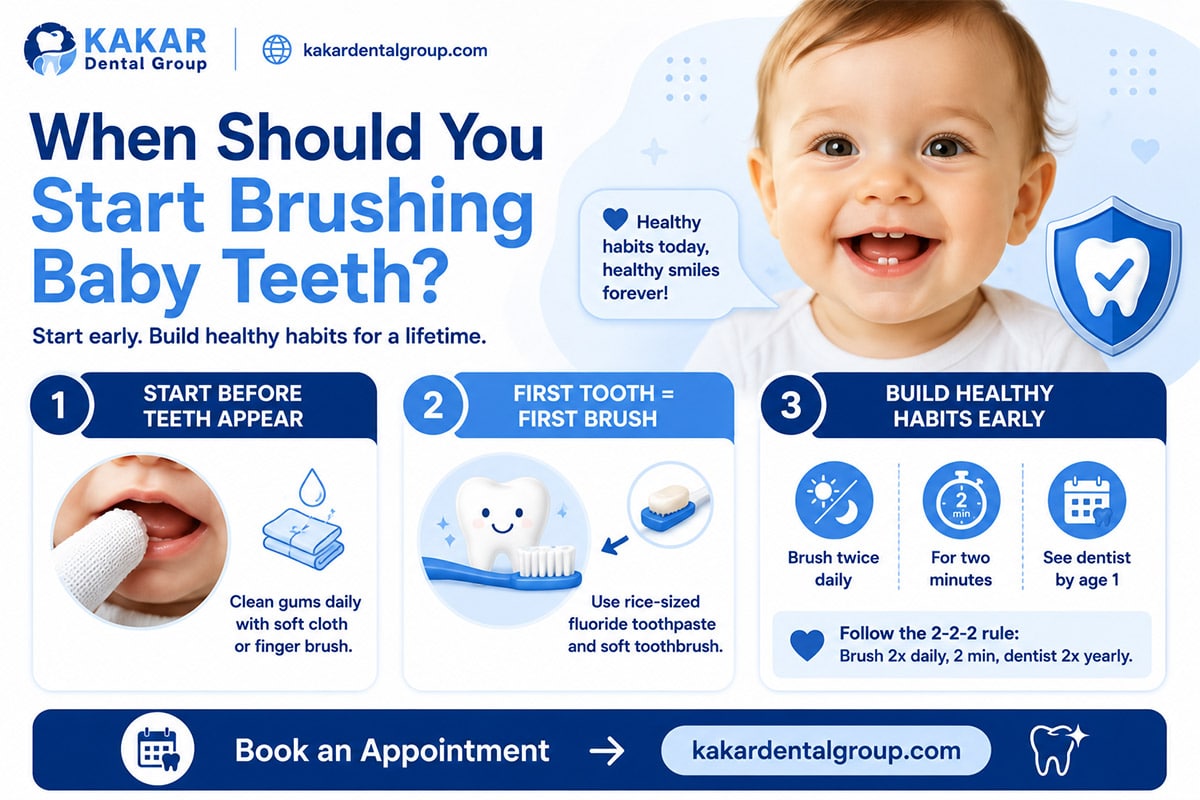
Table of Contents
Why Are Baby Teeth Important?
It is tempting to treat primary teeth as temporary. After all, they fall out eventually. But understanding why baby teeth are important reframes the entire conversation. Primary teeth hold space in the jaw for permanent successors, support proper speech development, and allow children to eat a full range of nutritious foods comfortably. Early tooth decay and cavities in baby teeth can affect a child’s nutrition, school performance, and even the alignment of their adult teeth.
Starting Early: Gum Cleaning for Newborns
Long before teething begins, parents can establish a healthy foundation by gently cleaning their newborn’s gums once or twice a day. A damp washcloth, a folded piece of gauze, or a soft finger brush designed for infants all work well for this purpose. Wiping newborn gums removes bacteria and food debris and, perhaps just as importantly, familiarizes a baby with the sensation of oral care before tooth eruption ever begins.
When the First Tooth Arrives
The appearance of that very first tooth signals the beginning of toothbrushing. Choose a baby toothbrush with a soft toothbrush head and a small-headed toothbrush design that can comfortably reach all tooth surfaces and the gumline. Some parents prefer to continue with a finger brush in the earliest weeks; most pediatric dentist recommendations, however, favor transitioning to a proper toothbrush once teeth are present. Use gentle circular motions along the teeth and gumline to dislodge plaque, the sticky bacterial film that drives tooth decay.
Fluoride toothpaste should be introduced right from the start. AAPD guidelines call for using a smear of toothpaste no larger than a rice-grain amount as soon as the first tooth appears. This tiny quantity delivers meaningful fluoride protection against cavities while keeping the amount your child might swallow to a minimum. Children are generally not ready for spitting toothpaste until around age three, at which point the amount can be increased to a pea-sized amount. Fluoride plays a well-established role in strengthening enamel and protecting against early childhood caries, which the CDC recognizes as one of the most prevalent chronic conditions of childhood.
Building the Brushing Routine and Moving Past Brushing Resistance
Brushing resistance is practically a rite of passage during the toddler years. The good news is that there is no shortage of toothbrushing tips that can help make the process easier: let your child pick out their own soft toothbrush, play a two-minute song, set a visual timer, or simply make the moment part of a predictable nightly ritual. The goal is consistency without conflict, and playfulness tends to work far better than force.
The 2-2-2 rule is an easy framework for families to carry into their daily routine: brush twice daily, for two minutes each time, and visit the dentist twice each year. Even as children grow more independent, supervised brushing should continue well into the elementary years, as young children simply do not yet have the dexterity to clean all tooth surfaces effectively on their own.
The First Dental Visit and What to Expect
It is recommended to schedule the first dental visit by the child’s first birthday or within six months of the first tooth appearing, whichever comes first. This early visit gives the dentist an opportunity to perform a risk assessment, review night feeds and feeding habits, evaluate tooth development, and offer individualized guidance. Parents should feel empowered to call sooner if they notice warning signs such as bad breath, bleeding gums, visible white spot lesions on the tooth surface, or suspected enamel defects.
Families throughout Northern Virginia trust Kakar Dental Group for warm, expert care at every stage of childhood. Our pediatric dentistry team is proud to serve patients at four convenient locations in Tysons, Falls Church, Manassas, and Fredericksburg, and welcomes new patients for that all-important age 1 dental visit and every appointment that follows.