
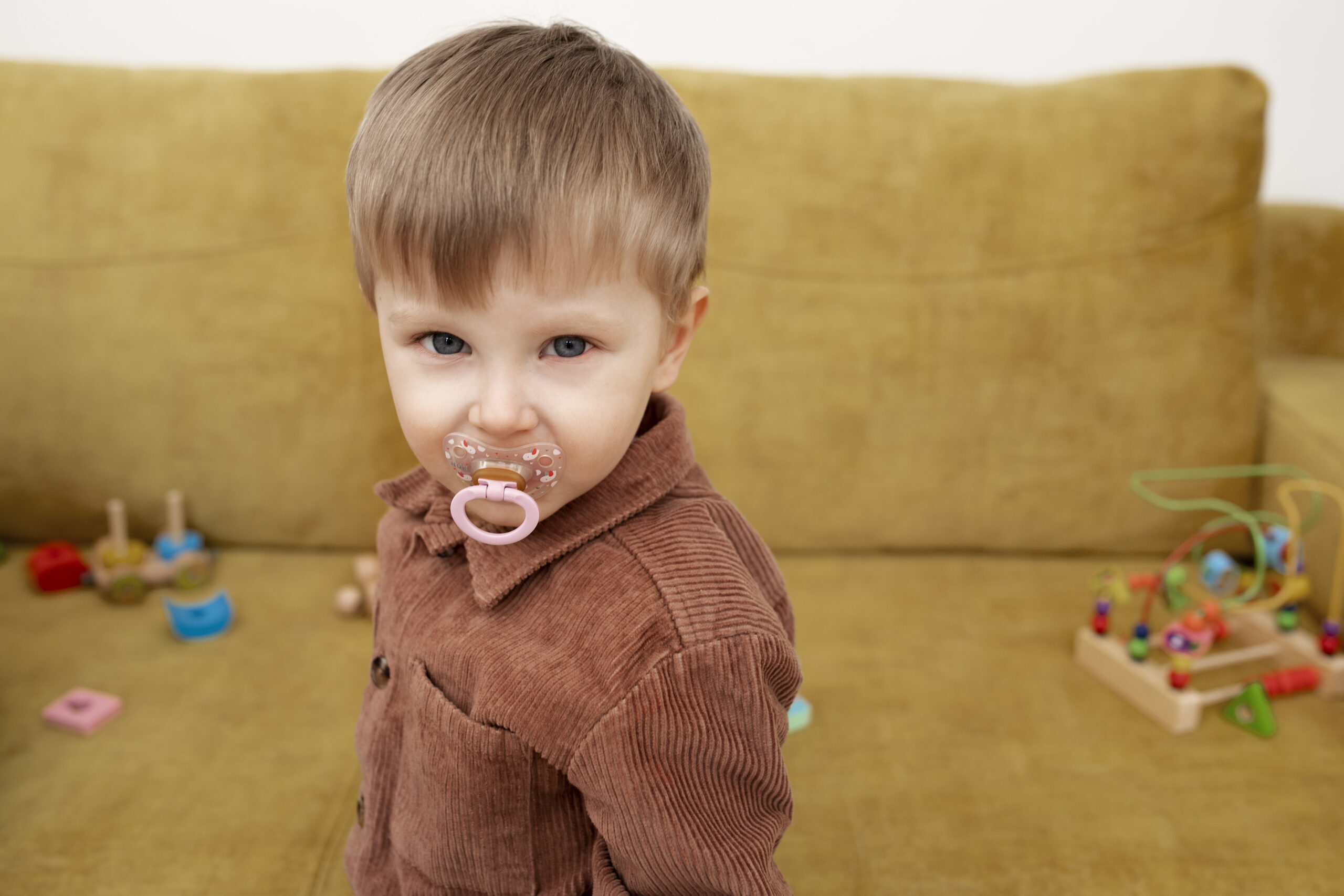
To pacifier or not to pacifier? Every new parent hears a different opinion, from grandparents to friends to the parenting forums, but what actually matters for your baby’s oral development?
The research is fairly consistent on one point: it is prolonged pacifier use, not the brand or design, that is most closely associated with changes in bite development, including open bite and posterior crossbite. A 2024 randomized controlled trial published in the European Journal of Orthodontics followed 451 children and found posterior crossbite at age 7 in a higher percentage of children whose pacifier use continued for at least 12 months, compared with those who stopped by 11 months of age. The researchers advised reducing pacifier use to a minimum after a child’s first birthday. For that reason, proper shield fit, limited daily use, and a realistic plan for when to stop pacifier use matter more than chasing any single perfect pacifier. If you’re wondering which pacifier shape is best for oral development, most pediatric dentists recommend starting with an orthodontic pacifier that has a thin neck, a symmetrical nipple, and an age-appropriate shield. However, how long your child uses a pacifier is generally more important than the specific brand or design.
Table of Contents
What Is the Best Pacifier for Oral Development?
Choosing the best pacifier for oral development involves more than picking a popular brand. Pediatric dentists generally recommend selecting a pacifier that supports natural tongue posture, minimizes unnecessary pressure on developing teeth, and fits your baby’s age and mouth size appropriately.
From a pediatric dentistry standpoint, a few features matter more than marketing language. Look for a thin neck and an orthodontic nipple shape that allows comfortable tongue positioning without excessive bulk against the palate, since good tongue posture and normal tongue cupping and tongue extension support healthy jaw development over time. Shield fit matters as much as nipple shape: the shield should rest comfortably against the face without pressing on the nose or upper lip, and ventilation holes help reduce skin irritation underneath it. Confirm the shield size matches your baby’s age range, and choose an option built from BPA-free silicone or latex that meets current safety standards, including guidance around SIDS and safe sleep. A symmetrical nipple and reversible design mean the pacifier is less likely to sit at an odd angle in your baby’s mouth, which is one small factor in avoiding uneven pressure and bite changes as teeth develop.
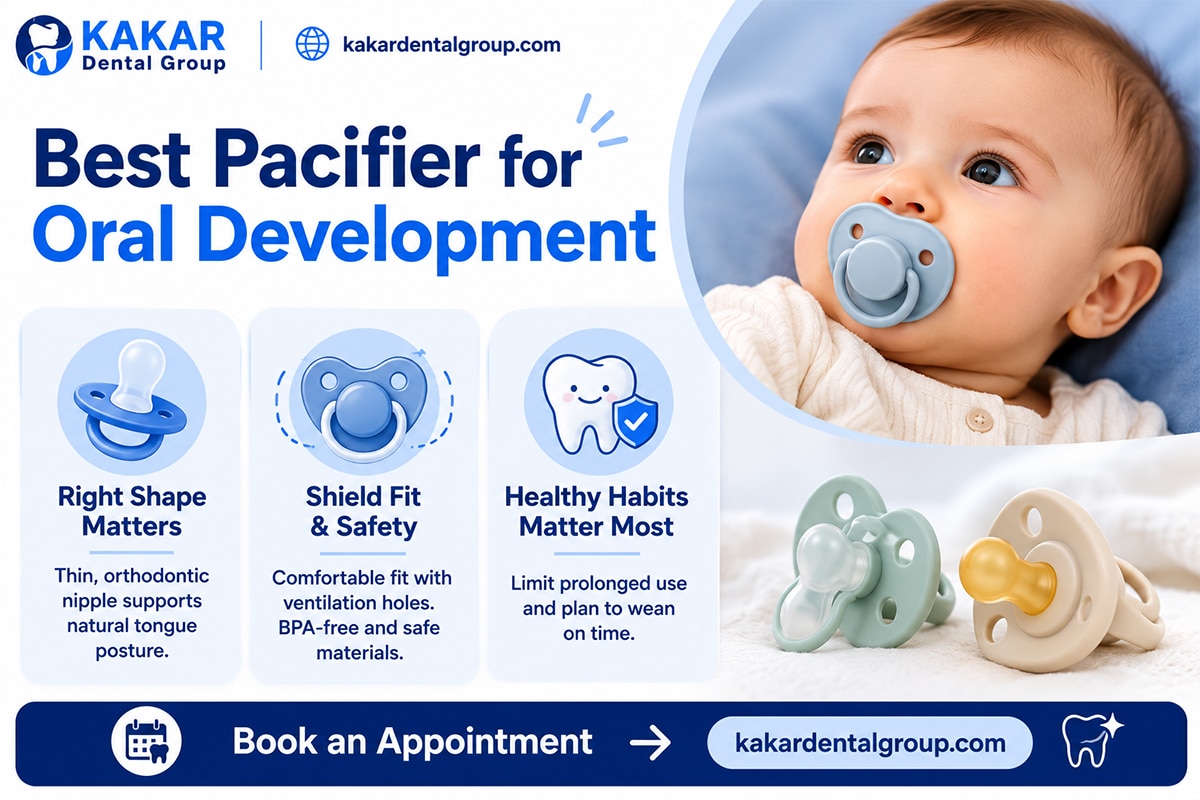
Pacifiers generally fall into a few nipple shapes. A flat pacifier, often marketed as orthodontic, is designed to reduce pressure on the roof of the mouth. A bulb-tip or cylindrical pacifier, sometimes described as a traditional or conventional teat, more closely resembles a round nipple shape. There is not strong evidence that one shape reliably belongs among the best pacifiers for dental health and another among the worst pacifiers for dental health. What matters far more is limiting prolonged daily use and planning to wean before long-term habits begin affecting bite development.
Comparing Common Pacifier Shapes
Understanding the differences between common pacifier designs can help you choose the best pacifier shape for oral development based on your child’s age and needs.
| Pacifier Shape | Potential Benefits | Considerations |
|---|---|---|
| Orthodontic (flattened) | Encourages natural tongue posture and reduces pressure on the palate | Still requires timely weaning |
| Symmetrical | Can be inserted either way and distributes pressure evenly | Limited evidence of superiority |
| Round/Bulb-shaped | Familiar shape accepted by many babies | May place more pressure on the palate with prolonged use |
| One-piece silicone | Easy to clean and lightweight | Shape varies by manufacturer |
Although orthodontic designs are commonly recommended, research suggests that limiting prolonged pacifier use has a much greater influence on oral development than nipple shape alone.
Pediatric Dentist-Informed Picks
A few general pacifier styles consistently stand out for features that support healthy oral development rather than marketing claims alone. Some orthodontic designs are especially valued for a thin neck, a feature intended to reduce pressure on developing teeth and the jaw, and these typically come in multiple age ranges with a ventilated shield on some models and a sterilizer case included in many packages. Other options offer one-piece silicone construction and a symmetrical nipple, and their simple build is part of why they are commonly used in newborn nurseries; easy cleaning and a lightweight shield make these a practical first pacifier. Classic orthodontic styles feature a flattened, angled nipple shape meant to encourage good tongue posture and reduce pressure on the palate, and these are often available in silicone or latex depending on the model. More budget-friendly options often pair an orthodontic nipple with multiple developmental stages and a ventilated shield, offering solid everyday value for families who want an orthodontic pacifier without a premium price tag. Other designs are built around supporting oral motor skills and natural tongue posture, with a lightweight silicone shield and several age-specific sizes.
Across every style, the pattern holds: an orthodontic pacifier is a reasonable default choice, but no single pacifier guarantees ideal palate shaping or teeth alignment on its own. Purchase one pacifier first, confirm your baby accepts it comfortably, and only then buy additional packs in the correct age range.
Cleaning, Sterilizing, and Routine Replacement
Knowing how to sterilize a pacifier properly matters as much as which one you choose. Boiling, steam sterilizing, or using a dedicated sterilizer case are all reasonable options depending on the material; always check the manufacturer’s guidance, since not every silicone or latex nipple tolerates the same sterilizing method. Beyond easy cleaning, routine replacement is essential: discard any pacifier immediately if it becomes sticky, torn, cracked, or misshapen, since a damaged nipple is both a safety hazard and a poor fit for continued oral development.
Maintaining good oral hygiene is equally important, so parents should brush toddler teeth twice a day with an age-appropriate toothbrush and toothpaste as soon as the first tooth erupts.
Weaning and When to Stop Pacifier Use
Most pediatric dentistry guidance points toward a similar window for weaning: gradually reducing pacifier use around age 1 and stopping well before age 2, ideally before prolonged habits begin affecting bite development. Families with a history of family orthodontics, meaning parents or older siblings who needed braces or other bite correction, may want to start monitoring oral development and discuss watchful waiting with a pediatric dentist even earlier. Signs worth mentioning at a visit include an open bite, a developing crossbite, visible changes in teeth alignment, or ongoing mouth breathing. Regular dental checkups also allow your pediatric dentist to identify the early signs of cavity in toddler before they progress into more serious dental problems. During these visits, parents can also ask about black spots on teeth that aren’t cavities, since not every dark mark on a child’s tooth is caused by tooth decay and some may have other harmless or treatable causes.
A pacifier can be a helpful, soothing tool for your baby, but healthy oral development depends far more on how and how long it is used than on which brand sits in the diaper bag. At Kakar Dental Group, our pediatric dentistry team in Tysons, Falls Church, Manassas, and Fredericksburg is always happy to talk through pacifier habits, weaning timelines, or any concerns about your child’s oral development.
FAQs About the Best Pacifier for Oral Development
What is the best pacifier for oral development?
Which pacifier shape is best for oral development?
When should my child stop using a pacifier?
Can pacifiers cause crooked teeth?


