
Does your child cry before every dental appointment, cling to your hand in the waiting room, or beg to skip the visit altogether? If so, you are not alone. Dental anxiety in children is one of the most common challenges pediatric dentistry addresses, and understanding it is the first step toward effective dental anxiety management and a lifetime of comfortable, preventive care.
A 2024 systematic review and meta-analysis published in the Journal of Dentistry found that dental fear and anxiety affects approximately 30 percent of children aged two to six worldwide. This matters because untreated anxiety can affect far more than a single appointment; it can shape a child’s long-term oral health, systemic health, and psychological well-being, ultimately touching their overall quality of life.
Table of Contents
How Do You Manage Dental Anxiety in Children?
Parents often ask, “How do you manage dental anxiety in children?” The answer usually involves a combination of preparation at home, child-friendly communication, and a positive dental environment. While every child is different, helping them understand what to expect and allowing them to feel safe and supported can significantly reduce anxiety before and during dental visits.
Common Strategies for Managing Dental Anxiety in Children
The following techniques are commonly recommended by pediatric dentists to help children feel more comfortable during dental visits.
| Strategy | How It Helps |
|---|---|
| Explain the visit in simple language | Reduces fear of the unknown |
| Read children’s books about the dentist | Builds familiarity before the appointment |
| Schedule morning appointments | Children are often more rested and cooperative |
| Bring a comfort item | Helps children feel secure |
| Practice deep breathing | Reduces stress and promotes relaxation |
| Reward brave behavior with praise | Builds confidence for future visits |
These simple approaches are effective for managing dental anxiety in children and can often prevent fear from becoming a long-term barrier to dental care.
Dental Fear, Dental Anxiety, and Dental Phobia: Knowing the Difference
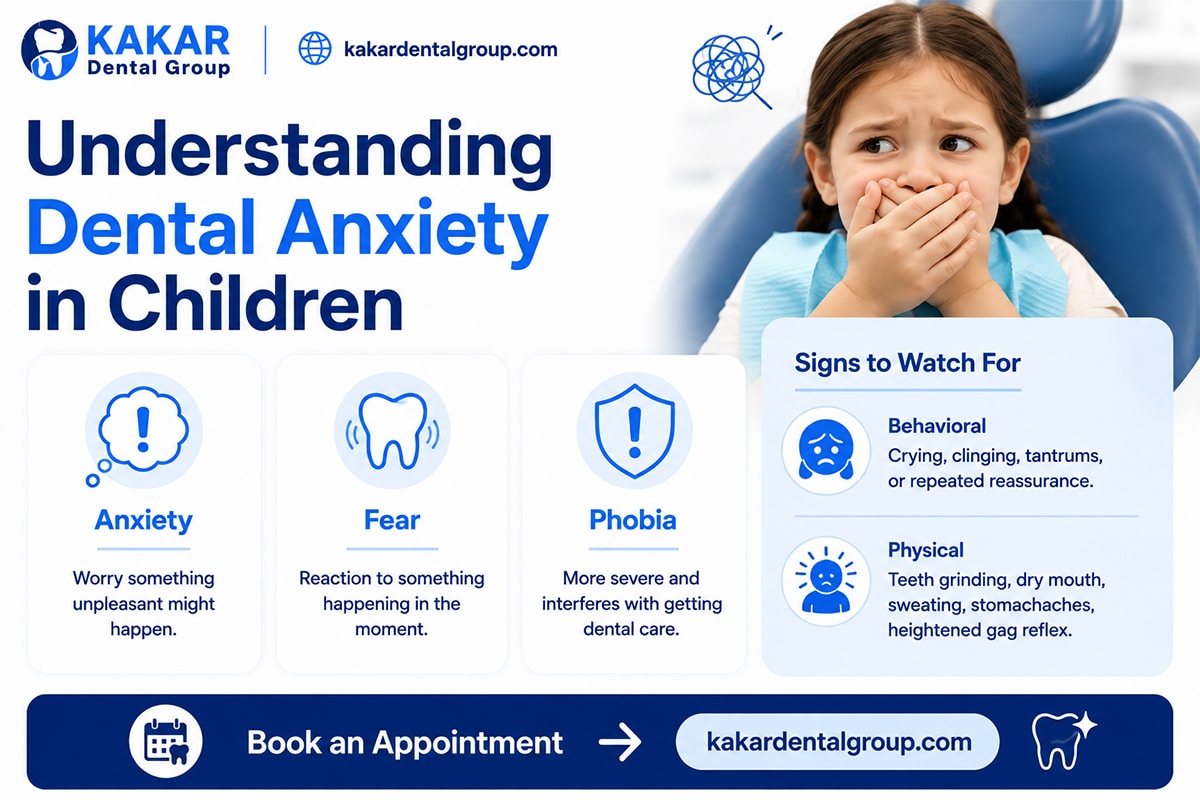
Dental anxiety differs from dental fear and from a true dental phobia. Anxiety is best understood as anticipatory anxiety, a sense that something unpleasant might happen before it actually does. Fear is a reaction to something happening in the moment, such as handpiece noise or the sight of needles.
A dental phobia is more severe and can significantly interfere with a child’s ability to receive consistent preventive care. Watch for signs such as crying, clinging, tantrums before an appointment, or repeated requests for reassurance in the days leading up to a visit. Physical symptoms including bruxism, or teeth grinding, dry mouth, recurrent canker sores, sweating, or stomachaches can also signal underlying anxiety, and a gag reflex that intensifies under stress is common as well.
Why Dental Anxiety Develops
Children often fear the unfamiliar sights, sounds, and smells of an unfamiliar dental setting. Bright operatory lights, the taste of prophy paste, the sound of a drill, or handpiece noise can all become triggers for a child already prone to worry. A previous painful dental treatment, an unresolved toothache, or any negative dental experience can compound this fear over time. Addressing problems such as the early signs of cavity in toddler as soon as they appear can also help prevent painful dental experiences that may contribute to anxiety during future visits. Parental dental fear plays a role too; children whose caregivers feel anxious about dental visits are more likely to develop similar worries themselves, which is why calm reinforcement from a pediatrician, a child therapist, or a trusted family member can make a meaningful difference.
How Kakar Dental Group Supports Children Through Behavior Guidance
Our pediatric dentist team relies on behavior guidance techniques built on years of clinical experience. Positive reinforcement, offering specific praise for cooperative behavior, helps build lasting confidence session after session. For children with sensory sensitivity, small adjustments, such as sunglasses for bright lights or noise-reducing headphones for handpiece noise, can make a meaningful difference. When anxiety is more severe, desensitization visits, a pause signal your child can use at any time, and short successful visits paced to your child’s comfort level all help rebuild trust gradually rather than all at once.
Coping Skills Parents Can Practice at Home
Simple coping skills go a long way toward easing dental fear and anxiety before it starts. Practicing belly breathing together before an appointment, or trying a grounding exercise such as the 3-3-3 rule, naming three things you see, three you hear, and three you can move, helps children regulate their emotions in the moment. A comfort item from home, music distraction during treatment, or agreeing on a hand signal to request a pause all give children a sense of control over their own experience.
When Additional Support Is Needed
For children whose anxiety is severe enough to prevent treatment altogether, options such as a topical anesthetic, local anesthesia, or, in select cases, sedation may be discussed with your pediatric dentist. Any decision involving pain control or sedation is made only after a thorough evaluation and informed consent, with your child’s safety and comfort guiding every step of the plan.
From a child’s very first dental visit onward, preventive care paired with patience and consistent routines helps protect both oral health and quality of life for years to come. Learning what to expect during a kids first dental visit can also help reduce uncertainty and make future appointments feel more familiar. At Kakar Dental Group, our teams in Tysons, Falls Church, Manassas, and Fredericksburg are here to help your child move past dental anxiety and build lasting confidence in the dental chair.
Visit us to learn more, or explore our approach to pediatric dentistry to schedule your child’s next appointment.
FAQs About Dental Anxiety in Children
What causes dental anxiety in children?
How do you manage dental anxiety in children?
How can parents help with overcoming dental anxiety in children?