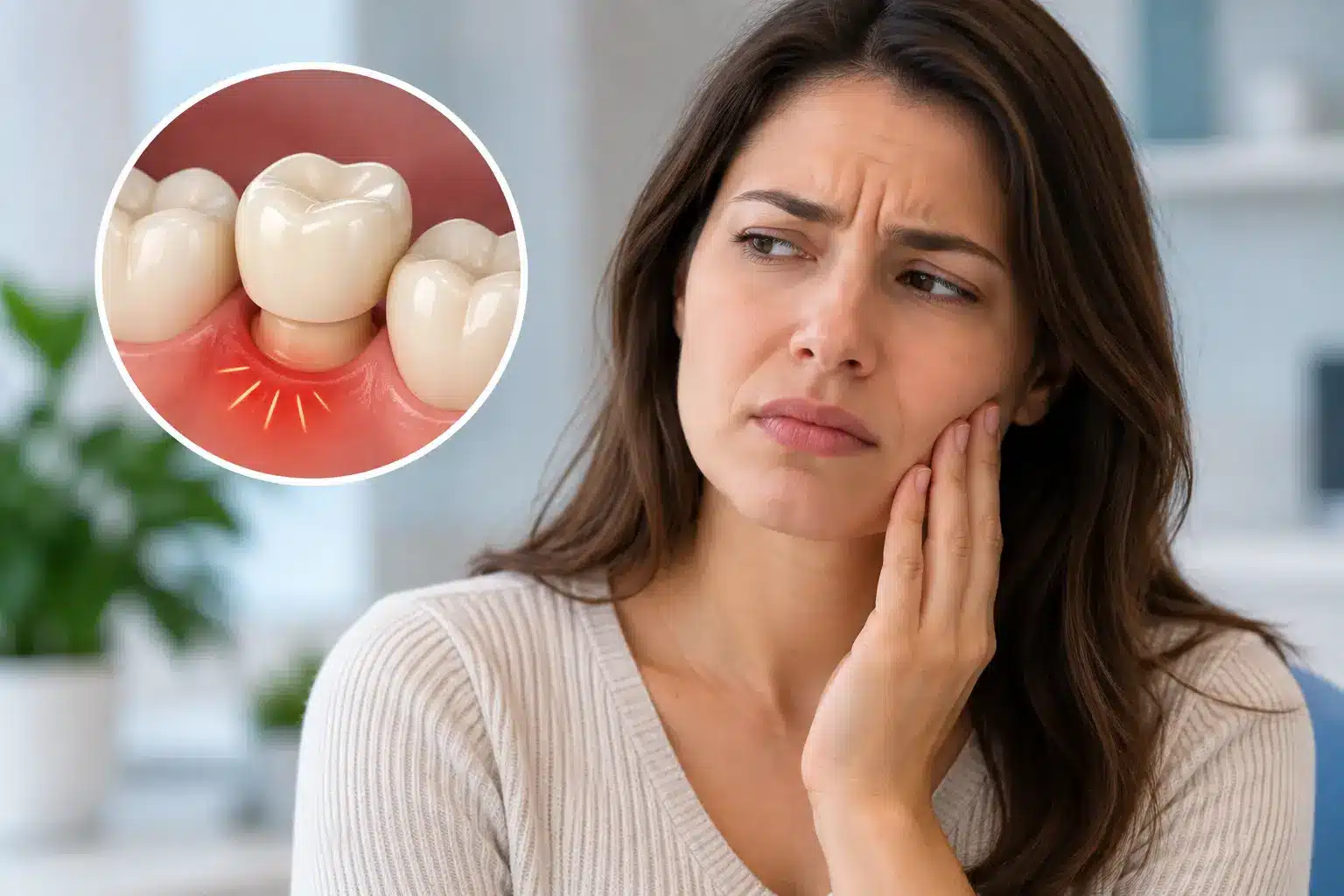
Tooth pain under a crown that comes and goes usually means the tooth, the crown itself, the bite, the gums, or the tissue inside or around the root is irritated in a way that isn’t constant. That intermittent pattern can still reflect a problem worth checking, even if the discomfort fades on its own between episodes.
A crown covers the visible part of a tooth, but the nerve tissue, root, periodontal ligament, and supporting gum and bone underneath are all still capable of producing pain, and figuring out which one is responsible takes a focused dental exam rather than guesswork.
Table of Contents
Common Causes of Intermittent Pain Under a Tooth Crown
Because causes can overlap in how they feel, a dental exam typically includes both a bite assessment and X-rays to narrow things down.
| What You Notice | Possible Explanation | What to Do Next |
|---|---|---|
| The crown feels like it hits first or hurts mainly when chewing | A bite imbalance, pressure on the periodontal ligament, or a crack may be involved. | Schedule a dental bite check. Do not try to adjust the crown at home. |
| Sharp pain when biting or especially when releasing the bite | A crack in the tooth or root may need to be ruled out. | Arrange a dental evaluation, particularly if the symptom repeats. |
| Cold or heat sensitivity that lingers after the trigger is gone | The pulp inside the tooth may be inflamed. | Contact a dentist soon for testing and X-rays if indicated. |
| Soreness, bleeding, or a bad taste around the crown after meals | Food trapping, gum inflammation, or periodontal disease may be contributing. | Book an examination and continue gentle brushing and flossing around the crown. |
| Swelling, fever, pus, or pain that becomes constant or wakes you from sleep | An infection or more serious inflammation may be present. | Seek prompt dental care. Difficulty breathing or swallowing requires urgent medical attention. |
Bite Pressure or a Crown That Sits High
A crown that contacts the opposing teeth too early or too heavily creates what dentists call an occlusal interference, and even a small discrepancy can concentrate chewing force on that one tooth.
This is most relevant soon after a new crown is placed, since the bite needs to be checked once anesthesia wears off and the patient is chewing normally. When a true interference is identified, the crown can usually be adjusted and polished. Persistent chewing pain or a sense that one tooth “hits first” is worth a bite check rather than something to simply wait out. Learn more about tooth sensitivity when biting down and the other possible causes of pain with pressure.
Decay or Leakage at the Crown Edge
A crown doesn’t make the tooth underneath immune to cavities. Decay can develop where bacteria find their way in at the crown margin, particularly if the cement breaks down, gum recession exposes the edge, or plaque builds up somewhere hard to clean. Early decay here often causes no pain at all, since it can progress through outer tooth layers before reaching sensitive areas.
A black or dark tooth under a crown with no pain is a reason to get it examined, not a diagnosis in itself; the discoloration could come from decay, old filling material, a metal margin becoming visible, or several other explanations, and research on secondary caries in crowned teeth notes that clinical exams often catch this kind of decay more reliably than X-rays alone, particularly at margins that sit below the gumline.
Cracked Tooth or Root
A crown can protect a weakened tooth, but it can’t always prevent or reveal a crack that started before the crown went on or developed sometime after. According to the AAE’s guidance on cracked teeth, cracks tend to cause erratic pain when chewing, sometimes specifically as biting pressure is released, along with sensitivity to temperature extremes. Not every crack is visible or treated the same way; some are microscopic, sit below the gumline, or run in a direction that a standard X-ray simply won’t pick up, which is why sharp pain on releasing a bite deserves a proper look rather than an assumption either way.
A crack cannot be reliably diagnosed or repaired at home, and delaying care can allow it to worsen. If you are wondering how to fix a cracked tooth naturally, it helps to understand which home measures may temporarily reduce irritation and why a dental examination is still important.
Inflamed or Infected Pulp/Root Tissues
The pulp is the living tissue inside a tooth, and it can become inflamed in ways that range from a brief, sharp reaction to cold that fades quickly, to more serious inflammation that lingers well after a hot or cold trigger is gone. If the pulp has already lost its blood supply, temperature sensitivity may fade or disappear entirely even as infection spreads toward the root tip. Teeth that have already had a root canal aren’t immune to new problems either. The AAE notes that a previously treated tooth can become painful again months or years later, often due to new decay, a failing crown allowing bacteria back in, or a structural fracture, and this history matters as context for an evaluation rather than as a diagnosis on its own.
Gum Irritation, Food Trapping, or Periodontal Disease
Not every pain around a crown starts inside the tooth. A crown with a poorly contoured edge or a margin that traps plaque can irritate the surrounding gum, leading to soreness, bleeding when flossing, a bad taste, or tenderness that shows up mainly after meals when food gets forced into the area. Periodontal disease often causes little pain until it flares, so periodontal probing is a routine part of evaluating a painful crown.
Does It Matter If the Crown Is New or Years Old?
Some brief sensitivity to temperature or mild soreness shortly after a crown is cemented is common enough, especially when a fair amount of tooth structure was removed to place it. The expected pattern is steady improvement, not worsening. A crown that feels high or produces pain on chewing should be checked promptly rather than monitored indefinitely, and severe, spontaneous, or sleep-disrupting pain isn’t ordinary settling-in sensitivity.
Tooth pain under a crown years later is a different story and typically points toward something new rather than lingering post-placement soreness: recurrent decay or leakage at the margin, a loose or worn crown, a crack, new pulp disease, recurrent infection at the root tip in a previously treated tooth, food impaction or gum disease, or a bite that’s shifted over time.
For any questions regarding crowns, reach out to Kakar Dental Group today.
Frequently Asked Questions About Tooth Pain Under a Crown
Is tooth pain under a crown that comes and goes normal?
Why does my tooth hurt under a crown when I bite down?
Why does tooth pain under a crown happen years later?