
If you’ve noticed your baby’s canine teeth coming in before the front ones, you’re not alone. While this isn’t the usual teething pattern, it’s typically nothing to worry about.
Many parents become concerned when they notice baby canine teeth coming in first instead of the front teeth. Since most teething charts show the front incisors erupting first, seeing a different pattern can be surprising. Fortunately, variations in teething order are often normal and don’t necessarily indicate a dental problem.
Table of Contents
What’s the Normal Order of Baby Teeth Eruption?
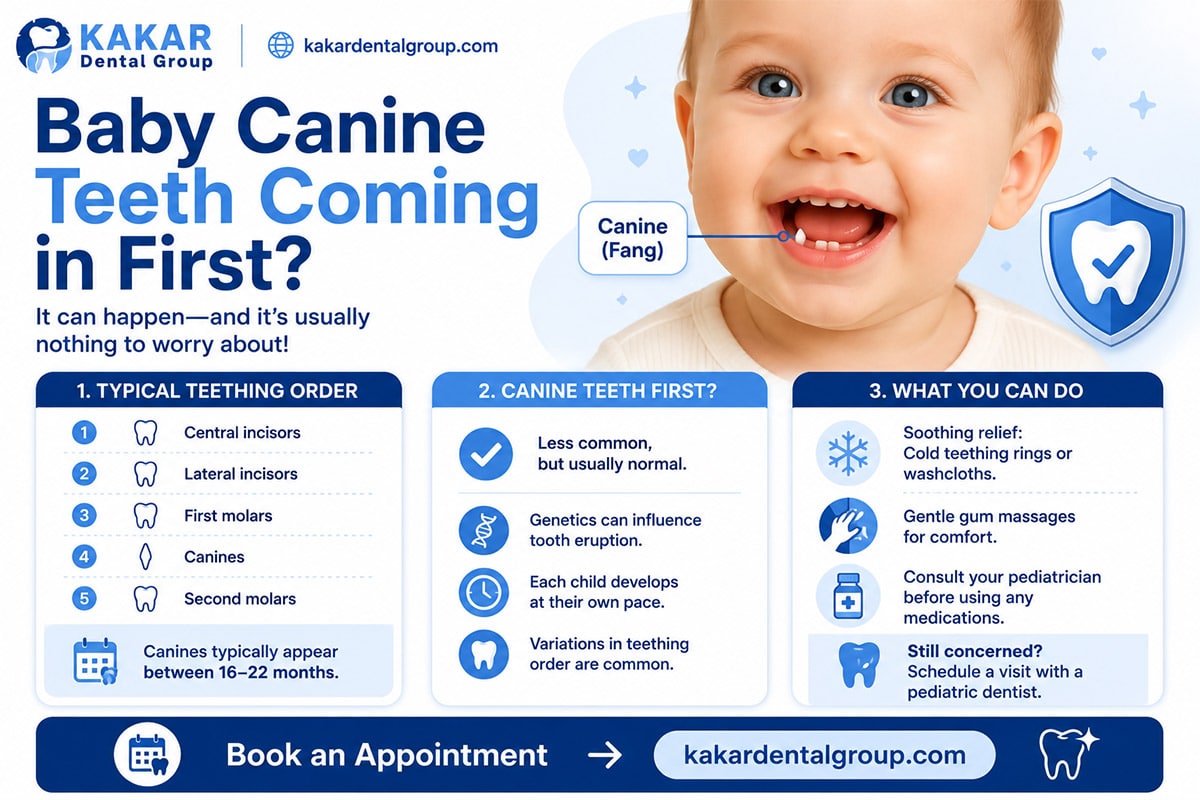
In most cases, babies follow a standard teething sequence:
- Central incisors (front teeth)
- Lateral incisors (next to the front teeth)
- First molars
- Canines (pointed teeth)
- Second molars
This pattern, often called the normal sequence of teething, is a general guideline. According to this baby teeth chart by the American Dental Association, canine teeth in infants usually emerge between 16 and 22 months of age.
But it’s totally normal for some kids to get their teeth in a different order or on a slightly different timeline.
Baby Canine Teeth Coming in First: Is It Uncommon or Alarming?
While it’s less common for canine teeth to appear before other teeth, it’s not necessarily a cause for concern. If you’re wondering if it’s normal for canine teeth to come in first, the answer is that every child develops differently. While it’s less common, dentists occasionally see cases of babies getting canines before front teeth, especially when genetics influence the eruption pattern. Every child is unique, and variations in teething patterns can occur.
What Causes Early Canine Tooth Development?
Several factors might contribute to early canine teeth development:
- Genetics: Family history can influence the order and timing of tooth eruption.
- Developmental variations: Individual differences in growth can lead to atypical patterns.
- Growth anomalies: Occasionally, certain conditions may affect the sequence of teething.
If you observe canine eruptions in babies earlier than expected, you should monitor the situation and consult a pediatric dentist if you have concerns.
In many cases, baby getting canine teeth first is simply related to family history and natural developmental differences. If parents or siblings experienced unusual teething patterns, a similar sequence may occur in younger children.
Typical vs Atypical Baby Tooth Eruption Patterns
Parents often compare their child’s teething progress to standard eruption charts. The table below highlights the differences between a typical teething sequence and situations where baby canine teeth coming in first may occur.
| Typical Teething Order | Less Common Teething Variations |
|---|---|
| Central incisors first | Canines erupt earlier than expected |
| Lateral incisors next | Baby getting canines before front teeth |
| First molars | Delayed front teeth eruption |
| Canines | Mixed eruption sequence |
| Second molars | Individual developmental variations |
Although these variations may seem unusual, they are often harmless. A pediatric dentist can confirm whether your child’s tooth eruption pattern is progressing normally.
Are There Symptoms or Issues to Expect?
Teething can be uncomfortable, and canine teeth are no exception. Common canine teeth teething symptoms include:
- Increased drooling
- Irritability or fussiness
- Chewing on objects
- Swollen or tender gums
For teething pain relief for babies, consider the following:
- Cold items: Chilled (not frozen) teething rings or washcloths can soothe sore gums.
- Gentle gum massages: Using a clean finger to rub the gums can provide comfort.
- Over-the-counter remedies: Consult with your pediatrician before using any medications.
Some parents refer to early-erupting canine teeth as “fangs” because of their pointed appearance. Although they may look unusual, they generally cause the same teething symptoms as other baby teeth.
What Should Parents Do If Their Baby’s Teething Order Seems Off?
If you notice atypical baby teeth eruption patterns, such as canines appearing first, it’s understandable to have teething order concerns. If you notice baby teeth coming through in wrong order, such as canines appearing first, it’s understandable to have concerns about your child’s teething sequence. Here’s what you can do:
- Observe: Monitor your baby’s teething progression and note any irregularities.
- Consult: Reach out to a pediatric dentist to discuss your observations.
- Schedule a checkup: A professional evaluation can provide peace of mind.
At Kakar Dental Group, we understand that teething orders for infants can vary. Our team offers a reassurance-based approach, ensuring your child’s dental development is on track.
When to See a Pediatric Dentist About Early Teething
Professional guidance is essential when navigating early or atypical teething patterns. Consider scheduling a consultation if you’re concerned about your baby getting canine teeth first. Early assessments can help identify underlying issues and provide strategies for managing discomfort.
At Kakar Dental Group, we prioritize child-focused care and a comfort-first approach. Our experienced team is here to support you and your baby through every stage of dental development. At Kakar Dental Group, we prioritize child-focused care and a comfort-first approach. If you are looking for a pediatric dentist in Fredericksburg, our experienced team is here to support you and your baby through every stage of dental development.
Ready to give your child a healthy, happy smile? Schedule a visit with Kakar Dental Group today—your trusted pediatric and orthodontic dental home. Contact us today!
FAQs About Baby Canine Teeth Coming in First
Is it normal for canine teeth to come in first?
Is it normal for baby's canine teeth to come in first?
Why is my baby getting canine teeth first?
Can baby getting canines before front teeth be a problem?
What do fangs baby canine teeth coming in first mean?