A sharp or hard spot on the gum after a tooth extraction may be a small bone fragment working its way through the healing tissue. People often call this a “bone spur” or “bone spicule.” Small fragments may loosen or be resorbed as the area heals, while a larger, painful, or persistent fragment may need to be evaluated by a dentist. A sharp spot can also have another cause, so do not try to diagnose or remove it yourself.
Table of Contents
What Is a Bone Spur in the Gum?
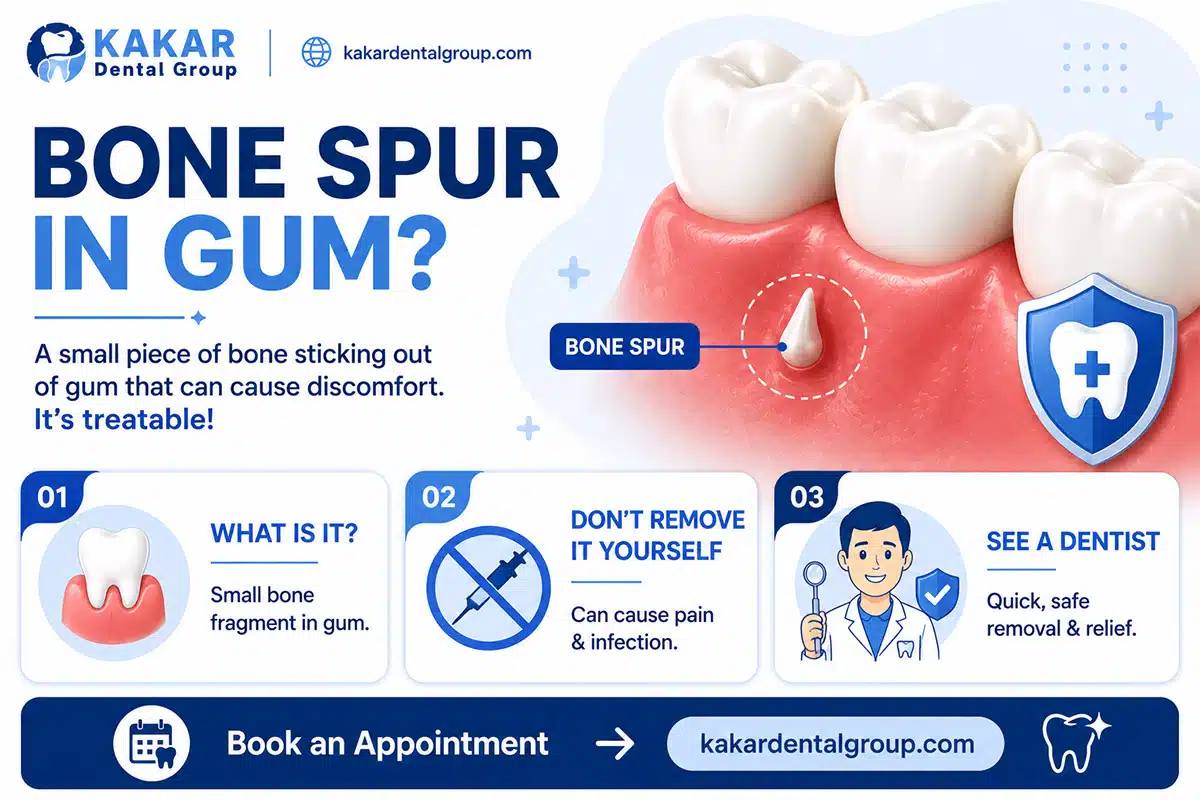
“Bone spur” is a common term people use for a small, sharp bone fragment or edge that can become noticeable through the gum, often while the mouth is healing after an extraction or oral surgery. Small fragments may work loose or be resorbed without a procedure. A hard or sharp spot is not always a bone fragment, however; a dentist may need to examine the area to identify the cause.
What Causes Bone Spurs in the Gums?
Small bone fragments or sharp edges may become noticeable as the gum heals after a tooth extraction or other oral surgery. This does not necessarily mean the site has healed incorrectly.
Can You Have a Bone Spur in the Gum Without a Tooth Extraction?
A hard or sharp spot can be noticed even when you have not recently had a tooth extracted, but it may not be a bone spur. Several dental conditions can feel similar, and it is not possible to identify the cause reliably at home. If the spot persists, becomes painful, or is accompanied by swelling, arrange a dental examination.
Treatment for Bone Spur in the Gum
Treatment depends on what the dentist finds. A small fragment that is not causing significant symptoms may only need monitoring while the area heals. If a fragment is large, painful, repeatedly irritating the gum, or not improving, the dentist may recommend smoothing or removing it. The dentist will explain the appropriate option after examining the site.
How to Remove a Bone Spur from the Gum (Can You Do It at Home?)
Do not cut, dig into, file, or forcefully pull a suspected bone fragment from your gum. You may injure the tissue or disrupt the healing site. Small fragments may loosen on their own, but a dentist should evaluate a fragment that is painful, persistent, or difficult to distinguish from another problem. Follow the aftercare instructions you received; do not start rinses or other treatments unless those instructions allow them.
| What You Notice | What It May Mean | Recommended Next Step |
|---|---|---|
| A small hard or sharp spot after an extraction, with mild symptoms that are improving | A small bone fragment or edge may be part of the healing process | Do not pick at it; follow your aftercare instructions |
| A painful, persistent, or increasingly irritating spot | The area may need a dental examination; the cause cannot be confirmed by touch alone | Contact your dentist or oral surgeon |
| Pus, fever, or increasing swelling | Possible infection or another complication | Contact a dental professional promptly |
| A sharp spot without a recent extraction or oral surgery | It may have a different cause | Arrange an examination if it persists or is painful |
Can You Prevent a Bone Spur in the Gum?
Not every bone fragment or sharp edge that becomes noticeable during healing can be prevented. After an extraction or oral surgery, follow the specific care instructions from your dentist or oral surgeon and avoid disturbing the site. If you have concerns about a sharp area during recovery, ask the dental office to assess it rather than trying to smooth or remove it yourself.
When Should You Contact a Dentist?
Contact your dentist if the sharp area is painful, keeps irritating your tongue or cheek, persists, or is getting worse. Seek prompt dental advice if you notice increasing swelling, pus, fever, or persistent bleeding. A dentist can examine the area and determine whether it is a small bone fragment or something else.
Summary
A sharp spot in the gum after an extraction may be a small bone fragment, but not every hard or sharp area has the same cause. Some small fragments loosen or are resorbed as the mouth heals; painful, persistent, or worsening symptoms should be assessed by a dentist. Do not try to cut or pull out a suspected fragment yourself.
FAQs About Bone Spurs in Gum
What is a bone spur in the gum?
What does a bone spur in the mouth feel like?
How do I get a bone spur out of my gum at home?
How is a bone spur in the gum treated?
Can you have a bone spur in the gum without a tooth extraction?
Will a bone spur in the gum go away by itself?
What are the symptoms of a bone spur in the gum?
How much does bone spur removal cost?