
There is no single best toothpaste for gingivitis for everyone. For cavity protection, choose a fluoride toothpaste. If you are looking for a toothpaste with a specific gingivitis-related benefit, check the active ingredients and Drug Facts label: stannous fluoride is used in some toothpastes to help control plaque and gingivitis. Toothpaste works as part of daily plaque removal; it does not replace brushing twice a day, cleaning between your teeth, or a dental evaluation when gum symptoms persist.
Table of Contents
What is gingivitis?
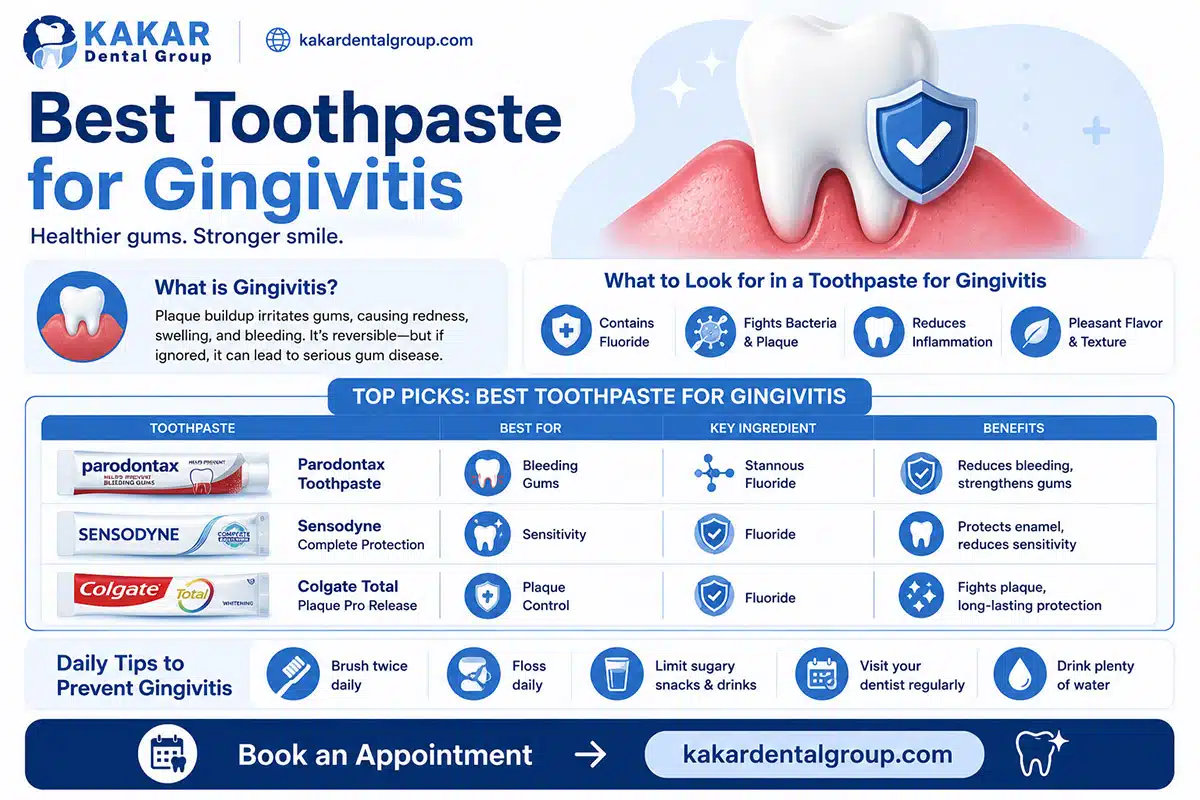
Gingivitis is an early form of gum disease, commonly caused by plaque buildup along the gumline. It can make gums look red or swollen and bleed during brushing or flossing. Plaque-related gingivitis can often improve with consistent brushing and daily cleaning between the teeth. If plaque hardens into tartar, a dental professional must remove it; toothpaste cannot do that.
What should you look for in a toothpaste for gingivitis?
Daily plaque removal is more important than choosing a specialty toothpaste. Brush twice a day with a fluoride toothpaste and clean between your teeth daily. For an added gingivitis-related benefit, look for a product whose current Drug Facts label specifically identifies it as an antigingivitis toothpaste; some products use stannous fluoride for this purpose. Fluoride is important for cavity protection, but not every fluoride toothpaste is labeled to help reduce gingivitis. Avoid relying on triclosan as a toothpaste ingredient when choosing a product in the United States; triclosan toothpastes are no longer commercially available there.
Another thing to look for is the right flavor and texture. This is especially important for children, who are more likely to be reluctant to brush their teeth if they don’t like the toothpaste.
If you’re considering an alternative to fluoride toothpaste, our guide explains what the evidence says about hydroxyapatite and other fluoride-free options.
Top Picks: Best Toothpaste for Gingivitis
Product formulations and labels can change, so compare the active ingredient and Drug Facts on the package before buying. These examples are not a ranking, and the right choice depends on your needs and the current product formulation.
| Product Example | Active Ingredient | Gingivitis-Related Information |
|---|---|---|
| Parodontax Daily Fluoride Anticavity and Antigingivitis Toothpaste | Stannous fluoride | Its Drug Facts label says it helps control bleeding gums and interfere with harmful effects of plaque associated with gingivitis. |
| Sensodyne Complete Protection | Stannous fluoride | Its U.S. Drug Facts label lists antigingivitis and sensitivity benefits. Check the package because formulas can vary. |
| Colgate Total Plaque Pro Release Whitening | Stannous fluoride | Its U.S. Drug Facts label identifies it as an anticavity, antigingivitis, and antisensitivity toothpaste. |
For questions about a child’s age-appropriate toothpaste and oral care, families can learn about pediatric dentistry in Falls Church.
Parodontax Toothpaste for Bleeding Gums
Parodontax Daily Fluoride Anticavity and Antigingivitis Toothpaste contains stannous fluoride. Its Drug Facts label says it helps control bleeding gums and interfere with the harmful effects of plaque associated with gingivitis. Use it as directed on the current package.
Sensodyne Complete Protection for Sensitivity and Gum Care
Sensodyne Complete Protection may be an option for people who want both sensitivity relief and a gingivitis-related benefit. Its U.S. Drug Facts label lists stannous fluoride and says the toothpaste helps prevent gingivitis. Check the label on the exact product you buy because product formulations can vary.
Colgate Total Plaque Pro Release Whitening Toothpaste
Colgate Total Plaque Pro Release Whitening contains stannous fluoride. Its U.S. Drug Facts label identifies the product as anticavity, antigingivitis, and antisensitivity. Follow the directions on the product’s package.
A toothpaste with an antigingivitis active ingredient may help as part of daily plaque control, but no toothpaste can replace thorough brushing, daily interdental cleaning, or professional care when symptoms persist.
FAQs About the Best Toothpaste for Gingivitis
What is the best toothpaste for gingivitis?
Does gingivitis toothpaste really work?
What is the best toothpaste for gingivitis and bleeding gums?
What toothpaste ingredient helps with gingivitis?
Can toothpaste reverse gingivitis?
What toothpaste do dentists recommend for gingivitis?
When should I see a dentist for bleeding gums?