

Mouthwash is an ordinary dental hygiene product people use for various reasons. When used as directed, mouthwash can help control certain dental conditions, support strong and healthy teeth and gums, and help to freshen breath. But one thing people worry about is what happens if you swallow mouthwash.
Table of Contents
Is Mouthwash Safe?
Mouthwashes are all formulated differently depending on their specific use. Typically, they will contain various chemicals and ingredients designed to fight multiple dental issues such as halitosis, teeth whitening, plaque removal, and gingivitis.
The types of active ingredients you can expect to find in mouthwash include the following:
- Chlorhexidine
- Fluoride
- Peroxide
- Essential Oils
- Cetylpyridinium chloride
- Alcohol
The FDA regulates manufacturers as mouthwash is an over-the-counter drug product.
In general, is it safe to swallow mouthwash is a common concern, and the answer is NO! Mouthwash is designed to be rinsed and spit out, not swallowed. While accidentally swallowing a small amount is usually not harmful for healthy adults, it is bad if you swallow mouthwash regularly or in larger amounts becomes a more serious issue, because ingredients like alcohol, fluoride, or antiseptic agents may cause stomach irritation, dizziness, or other side effects. For best safety, always follow the label instructions and avoid swallowing mouthwash during routine use.
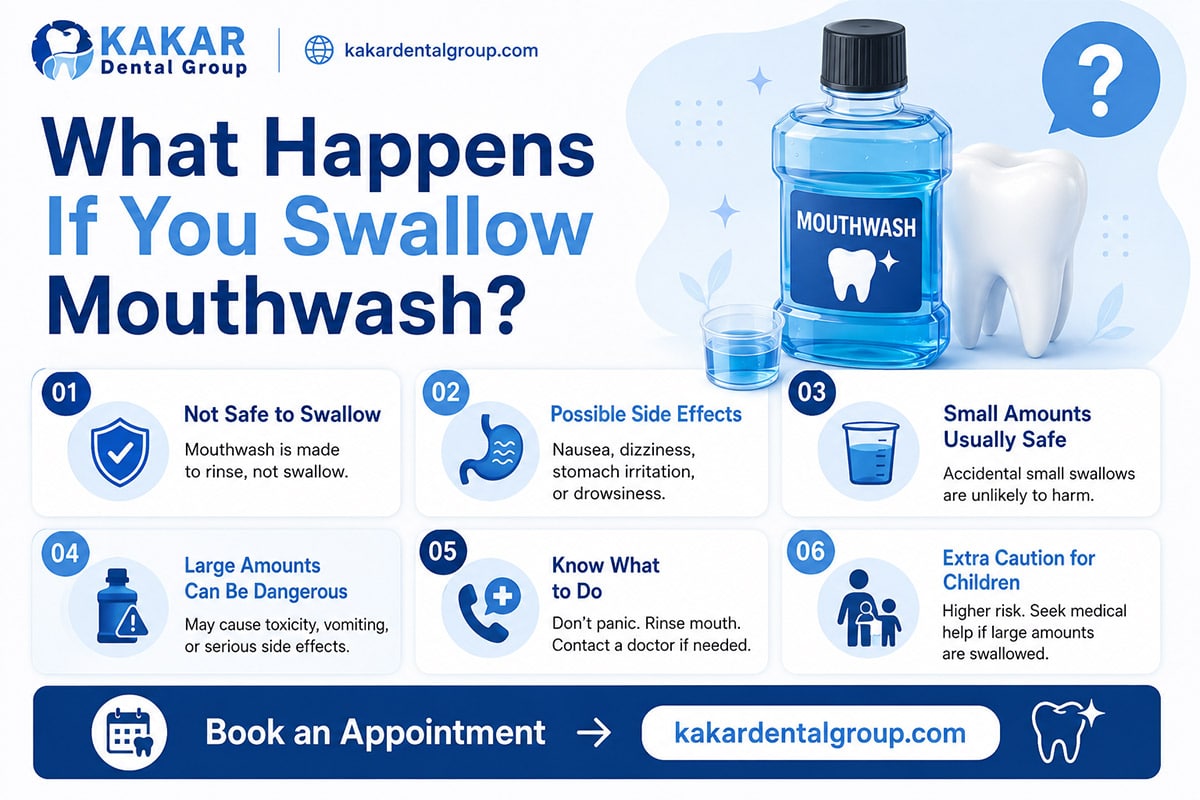
What Happens If You Accidentally Swallow Mouthwash?
Most people will swallow residual amounts of mouthwash when rinsing their mouth after brushing. This is perfectly normal, and the amount consumed is unlikely to affect your health adversely. Mouthwash has many active ingredients to allow it to clean and carry out the functions it is designed to do. That being said, the active ingredients in mouthwash are formulated at safe levels for use as directed.
If mouthwash isn’t used correctly, i.e., to rinse out the mouth and is swallowed especially in large quantities, then you may experience side effects. Many of the side effects will be from the alcohol used in mouthwash resulting in intoxication.
How Much Mouthwash Is Dangerous to Swallow?
In most cases, accidentally swallowing a small amount of mouthwash after rinsing is not harmful. The quantity typically used for daily oral rinsing—usually about 10 to 20 milliliters—is considered safe when used as directed, and swallowing a trace amount by mistake is unlikely to cause serious health effects in healthy adults. Many people wonder how much mouthwash is dangerous to swallow, but small accidental amounts are generally not a cause for concern.
However, swallowing larger amounts of mouthwash can become dangerous depending on the ingredients and the volume consumed. Many mouthwashes contain active compounds such as alcohol, fluoride, chlorhexidine, or hydrogen peroxide, which are safe when used for rinsing but not intended to be swallowed. Drinking mouthwash in larger quantities may lead to symptoms such as nausea, dizziness, stomach irritation, or drowsiness, especially if the product contains alcohol.
The risk is higher for children, older adults, and anyone who swallows more than the recommended rinse amount. If someone drinks more than a capful intentionally or accidentally—particularly from alcohol-based mouthwash—it is important to seek medical guidance or contact a poison control center. If you are unsure how much mouthwash is dangerous to swallow, checking the product label and estimating how much was ingested can help healthcare professionals decide whether further treatment is needed.
Swallowing Mouthwash Side Effects
The swallowing mouthwash side effects depend on how much is consumed and which ingredients the product contains. In most cases, when people accidentally swallow mouthwash in small amounts after rinsing, they do not experience serious health problems. However, swallowing larger amounts may lead to noticeable symptoms because mouthwash is designed for topical use inside the mouth—not for ingestion.
Common short-term side effects may include throat irritation, nausea, stomach discomfort, dizziness, or a burning sensation in the mouth or digestive tract. These symptoms are usually temporary and resolve on their own, especially if only a small quantity was swallowed.
More significant symptoms can occur if larger amounts are swallowed, particularly with alcohol-based mouthwash. Because some mouthwash products contain ethanol or antiseptic agents, ingestion may cause drowsiness, confusion, slurred speech, or vomiting. These effects are more likely in children, older adults, or individuals sensitive to alcohol-containing products.
The specific ingredients in the mouthwash also affect how the body reacts. For example:
| Ingredient | Possible Side Effects if Swallowed |
|---|---|
| Alcohol | Drowsiness, dizziness, intoxication-like symptoms |
| Fluoride | Nausea, stomach upset (in larger amounts) |
| Hydrogen peroxide | Stomach irritation, vomiting |
| Chlorhexidine | Temporary digestive discomfort or taste disturbance |
It is important to remember that most symptoms are mild if someone accidentally swallows a small amount of mouthwash. However, swallowing larger quantities—especially by children—may require medical advice. Understanding possible swallowing mouthwash side effects helps determine when symptoms are temporary and when professional medical guidance is needed.
What Should You Do If You Swallow Mouthwash?
In the first instance, do not panic or induce vomiting. If you accidentally swallowed the amount you were rinsing your mouth out with, it’s unlikely to impact your health. Rinse your mouth with water or drink milk if you are overly concerned. Milk can help to dilute the chemicals in the mouthwash.
In some cases, depending on the ingredients and strength of the mouthwash, you might feel a slight irritation of the throat or some nausea or diarrhea and these will likely pass quickly. If you start to feel unwell, note the brand and how much you have swallowed and get medical treatment.
What Is A Mouthwash Overdose?
A mouthwash overdose is categorized as when a person has ingested a quantity of mouthwash mobile standard usage limits. For example, swilling a capful in your mouth and accidentally swallowing isn’t considered an overdose. Drinking more than capful on purpose (or children accidentally drinking from the bottle) is considered an overdose.
It is worth bearing in mind that adults are more likely to tolerate higher quantities of mouthwash in their bodies than children and may not see side effects as potent as children. A mouthwash overdose can include but not be limited to slurred or slowed speech, increased heart rate or palpitations, multi-organ failure, nausea, vomiting, and difficulty breathing.
When to Get Medical Treatment for Swallowing Mouthwash
If you suspect that you or someone else has swallowed a potentially toxic amount of mouthwash, it is important not to panic. Many people immediately wonder, what happens If you swallow mouthwash or does swallowing mouthwash make you sick, but the first step is to stay calm and assess the situation. Rinse your mouth and check the bottle to estimate how much may have been swallowed. Small accidental amounts are unlikely to cause serious effects. For larger amounts—or if a child has swallowed mouthwash—call the Poison Control Center hotline and be ready to provide the exact type of mouthwash and the estimated quantity consumed.
They can guide you through what to do next. If you or another adult has swallowed a larger amount, you may be advised to monitor symptoms at home, contact a healthcare professional, or visit the emergency room depending on the situation. Understanding what happens If you swallow mouthwash helps determine when symptoms are mild and when immediate medical evaluation is necessary. Under no circumstances should you induce vomiting, even if symptoms develop
Frequently Asked Questions About Swallowing Mouthwash
What happens if you accidentally swallow mouthwash?
What happens if you swallow mouthwash every day?
What happens if you swallow oil pulling mouthwash?
How much Listerine is too much to swallow?
Is it safe to swallow mouthwash?
What happens if you swallow peroxide mouthwash?



[…] Mouthwash is used to freshen breath and keep teeth clean. But, it’s not meant to be swallowed. Swallowing mouthwash can cause serious problems, especially if you drink a lot of it. Most people swallow a little mouthwash when they rinse their mouth after brushing1. […]