

Picture this: you grab your favorite bag of jellies and switch on the TV for a perfect Saturday night. However, when you pop it in your mouth, your teeth start hurting, making you scream, “Ow, ow!” If this sounds familiar, you might have teeth sensitivity to sweets. Why Teeth Hurts when Eating Sweets But No Cavity ? is our topic today.
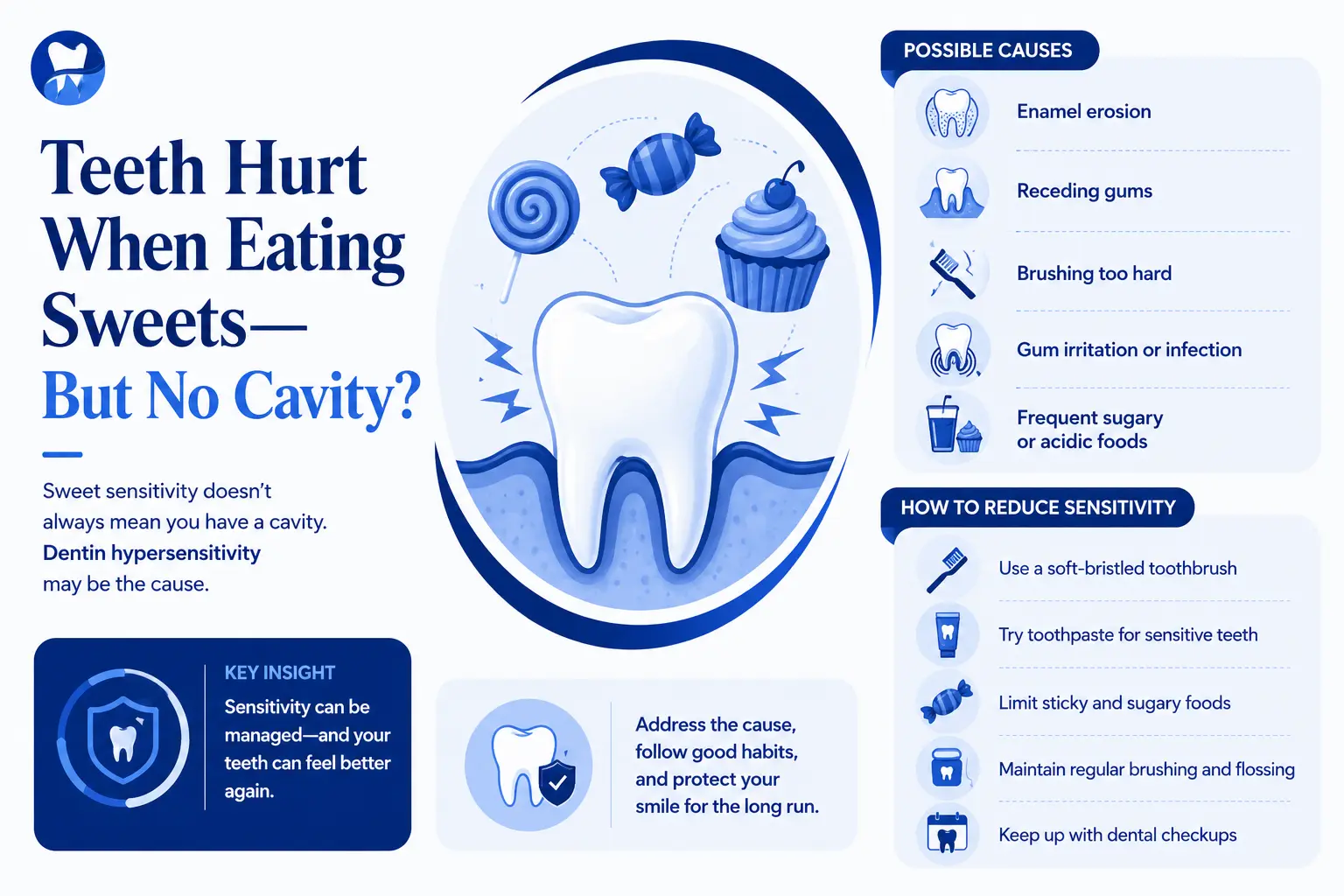
Here’s the fact- tooth hurting doesn’t always have to be because of a cavity. It can also occur because of Dentin Hypersensitivity (read: tooth sensitivity). You can meet our doctors in Pediatric Dentistry Alexandria VA today for treatment. In today’s article, we’ll unveil what’s stopping you from satisfying your sweet tooth:
Table of Contents
Why Does My Tooth Hurt When Eating Sweets but There Is No Cavity?
Ever felt a sharp pang in your teeth when you chew on mouth-watering sweets? The discomfort arises from numerous factors. When enamel becomes thinner or the tooth root becomes exposed, dentin underneath can become more sensitive. Dentin contains microscopic tubules that communicate with the nerve inside the tooth, which is why sweet, cold, hot, or acidic foods may trigger a short, sharp sensation even when no obvious cavity is present.
Improper Brushing
If you’re still learning oral hygiene practices, you’re not alone! Many people experience gum and tooth pain because they brush too hard, use a stiff bristle, or forget to replace their toothbrush.
If you’ve been using the same brush for over four months, this is your sign to get a new one!
Frequent Sugary or Acidic Foods
Frequently consuming sugary or acidic foods and drinks can contribute to enamel erosion and tooth decay over time. As enamel becomes thinner, the underlying dentin may become more exposed, increasing sensitivity to sweets, cold drinks, and other triggers.
If your teeth are sensitive to sugar but no cavities are visible, enamel wear or exposed dentin may still be responsible for the discomfort.
Enamel Erosion, Early Decay, or Exposed Dentin
Sweet foods do not directly “irritate the nerve” of a healthy tooth. Instead, sensitivity may occur when enamel is worn, dentin is exposed, or decay has begun in an area that is difficult to see without a dental examination or X-ray.
Acidic foods and drinks can also contribute to enamel erosion, making teeth more responsive to sugar and temperature changes.
Cracked or Damaged Tooth
A small crack, worn filling, or other structural damage can sometimes cause pain when sweets reach sensitive areas of the tooth. These problems may not always be visible at home, which is why persistent sensitivity in a single tooth should be evaluated by a dentist.
Receding Gums or Infection
Receding gums can expose the tooth roots, which are not protected by the same thick enamel that covers the crowns of the teeth. This can make the teeth more sensitive to sweets, cold foods, and brushing.
Gum inflammation may also cause soreness around the teeth, although gingivitis itself is a condition of the gums rather than an infection inside the tooth.
Do I Have a Cavity if My Tooth Is Sensitive to Sugar?
Not necessarily. Sugar sensitivity can occur because of a cavity, but it can also result from enamel erosion, exposed dentin, gum recession, a cracked tooth, or worn dental work.
If the pain is localized to one tooth, becomes stronger over time, lingers after the sweet food is gone, or occurs with biting pressure, a dental examination is the best way to determine the cause.
| What You Notice | Possible Cause | When to Have It Checked |
|---|---|---|
| Brief sensitivity to sweets | Exposed dentin or mild enamel wear | If it keeps recurring |
| Sensitivity to sweets and cold | Dentin exposure, enamel erosion, or decay | If persistent or worsening |
| Pain in one tooth | Crack, decay, or damaged filling | Dental evaluation recommended |
| Pain when biting plus sweet sensitivity | Crack, decay, or inflammation | Schedule an examination |
| Lingering pain after sweets | Possible deeper tooth irritation | Prompt dental evaluation |
Waving Goodbye to Teeth Sensitivity to Sugar- Ways to Prevent?
If you’re ready to enjoy your favorite snacks without wanting to scream every time the food touches your teeth, and get rid of Teeth Hurts when Eating Sweets But No Cavity! here are ways to limit your sensitivity (+ say not to cavities!):
- Swap a hard-bristled toothbrush with one that is gentle on sensitive teeth, and use a toothpaste designed to shield your teeth.
- Try to steer clear of sticky food that clings to your teeth and eat desserts right after meals.
- Limit your liquid sugar intake and use a straw when drinking. Additionally, only drink water between meals.
- Rinse your mouth with fluoride mouthwash once you brush and floss to scare off cavities and avoid tooth sensitivity.
- Treat your cavities before they become bigger, deeper oral issues by scheduling regular checkups.
Conclusion For Teeth Hurts when Eating Sweets But No Cavity
Your sweet sensitivity can flare up if you have poor toothbrushing technique and enjoy sugary foods. The good news is that you can alleviate these symptoms by pinpointing why your teeth hurts when eating sweets but no cavity and following these preventive measures. Also you can know, why does your tooth hurts when you bite down?
If you’re still unsure, consider scheduling a checkup with your dentist.
FAQs About Teeth Hurting When Eating Sweets
Why does my tooth hurt when eating sweets but I have no cavity?
Can teeth be sensitive to sugar without cavities?
When should sugar sensitivity be checked by a dentist?
Sources
https://calhoundds.com/dental/tooth-pain-tooth-hurt-eating-sweets/
https://www.teethtalkgirl.com/dental-health/why-do-my-teeth-hurt-when-i-eat-sweets/
https://crest.com/en-us/oral-care-tips/teeth-sensitivity/why-are-my-teeth-sensitive-to-sugar