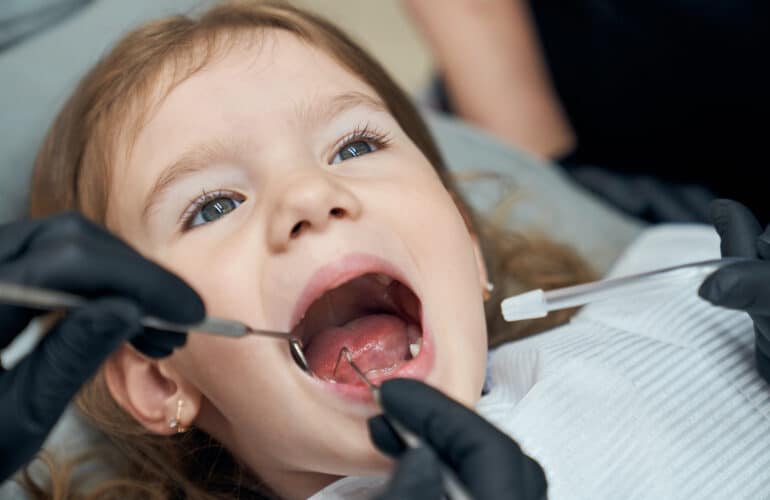

As a parent, protecting your child’s health, including their smile, is among your highest priorities. Yet many families are surprised to learn that tooth decay doesn’t wait for permanent teeth. Dental caries, the clinical term for tooth decay, can affect even the youngest children, making it essential to recognize the early signs of tooth decay before they develop into something more serious. The good news is that with early detection and consistent care, decay can often be stopped before it causes lasting damage.
Table of Contents
Why Tooth Decay Happens in Young Children
Understanding the causes of tooth decay is the first step to preventing tooth decay in kids. Decay develops when bacteria in the mouth feed on sugars and produce acids that attack tooth enamel. Over time, this process erodes the enamel and can create cavities in the affected tooth.
In toddlers, several everyday habits contribute to this cycle. Frequent consumption of sugary foods, sipping fruit juices throughout the day, poor oral hygiene, and prolonged use of a sippy cup containing sweet beverages all create conditions where bacteria can thrive.
One of the most well-known patterns is baby bottle tooth decay, which occurs when a child’s teeth are repeatedly exposed to milk, juice, or formula during sleep. Falling asleep with a baby bottle allows sugary liquid to pool around the teeth for extended periods, accelerating plaque buildup along the gum line and increasing the risk of tooth decay significantly.
Early Signs of Tooth Decay to Watch For
Catching decay in its earliest stages is far preferable to treating advanced cavities, and many of the early signs of decay are visible to an attentive parent. One of the most common early signs is the appearance of white spots on a child’s teeth. These chalky patches indicate early mineral loss from tooth enamel and are often the first signal that decay is underway.
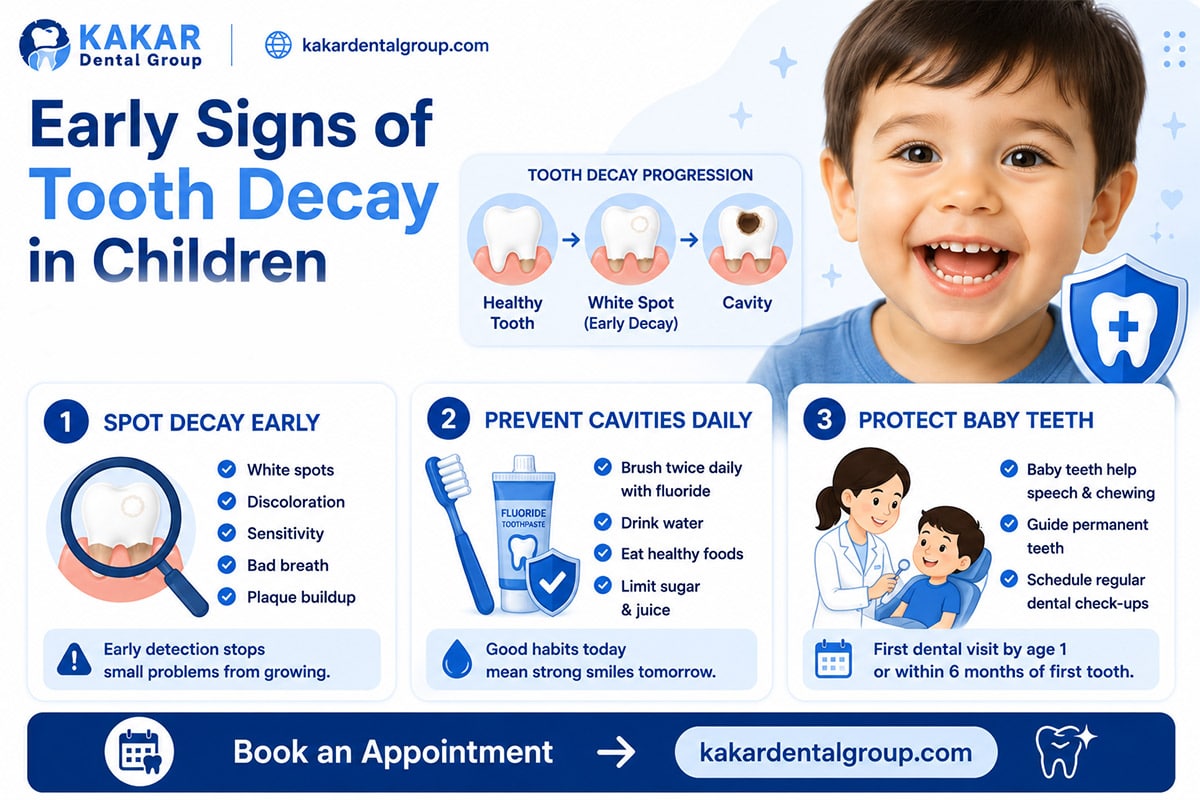
Other early signs worth noting include tooth discoloration, brown or dark spots on the teeth, increased tooth sensitivity, visible plaque buildup near the gum line, rough areas on the tooth surface, and bad breath that persists despite regular brushing. These symptoms typically appear during the early stages of decay, when intervention tends to be simpler and more effective.
If early tooth decay is left unaddressed, the damage progresses deeper into the tooth structure. Parents may notice tooth pain, sensitivity to hot, cold, or sweet foods, visible holes or pits in the teeth, dark discoloration on a decayed tooth, difficulty chewing, or irritability during meals.
In more advanced cases, the decayed part of the tooth may become infected, potentially requiring treatment options such as a dental crown or even a root canal procedure to save the tooth.
Why Baby Teeth Matter More Than You Might Think
It is a common misconception that children’s teeth are temporary and therefore unimportant.
Baby teeth play a critical role in speech development, proper nutrition, and guiding adult teeth into their correct positions. Early childhood caries left untreated can affect healthy smiles well beyond toddlerhood and may even increase the risk of tooth decay in permanent teeth later in life. Protecting a child’s oral health today creates the foundation for stronger teeth tomorrow.
Preventing Tooth Decay Before It Starts
The most effective strategy is prevention, and experts in pediatric dentistry consistently recommend establishing good hygiene habits as soon as a child’s first tooth appears. Brushing twice daily with fluoride toothpaste is a cornerstone of prevention. Encouraging drinking water over sugary beverages and limiting fruit juices and sweet snacks also support a healthy diet that is less conducive to decay.
Avoiding bedtime bottles and weaning children from prolonged sippy cup use further reduces the risk of baby bottle tooth decay.
When indicated, a pediatric dentist may also recommend fluoride varnish applications, fluoride treatments, or dental sealants, particularly for protecting the back teeth, which are more vulnerable to trapped food and plaque.
Regular dental check-ups are essential for monitoring your little one’s oral development and catching potential problems early. A pediatric dentist can evaluate early signs of tooth decay, recommend appropriate treatment options, and provide personalized guidance for maintaining healthy teeth. If you notice white spots, tooth discoloration, tooth pain, or any other sign of tooth decay, scheduling an appointment promptly can make a meaningful difference in outcomes.
Partner with Kakar Dental Group for Healthy Smiles
At Kakar Dental Group, our team of experienced specialists is dedicated to supporting your child’s oral health at every stage of development. With four convenient locations across Northern Virginia — in Tysons, Falls Church, Manassas, and Fredericksburg — we make it easy for families throughout the region to access compassionate, high-quality pediatric dentistry.
Whether you’re concerned about early childhood caries, looking to establish healthy hygiene habits, or simply due for regular dental check-ups, we’re here to help your family achieve healthy smiles that last a lifetime. Contact us today to schedule an appointment.