

The roof of your mouth can hurt after a minor burn or scrape, or because of a mouth ulcer, irritation, dry mouth, or an infection affecting the mouth or throat. The location and appearance of a sore, how long it has lasted, and any other symptoms can help guide an evaluation, but they cannot confirm the cause at home.
For mild soreness after hot or irritating food, avoid further irritation and monitor it. Arrange a dental or medical evaluation if the pain is worsening, does not begin to improve within about a week, or comes with fever, swelling, or painful swallowing. Have a sore, lump, or red or white patch checked if it lasts more than two weeks. Difficulty breathing or inability to swallow saliva requires emergency care.
Table of Contents
Common Causes of Roof-of-Mouth Pain
In some cases, the discomfort is temporary and resolves on its own, while in others it may indicate an infection, injury, or condition that requires treatment.
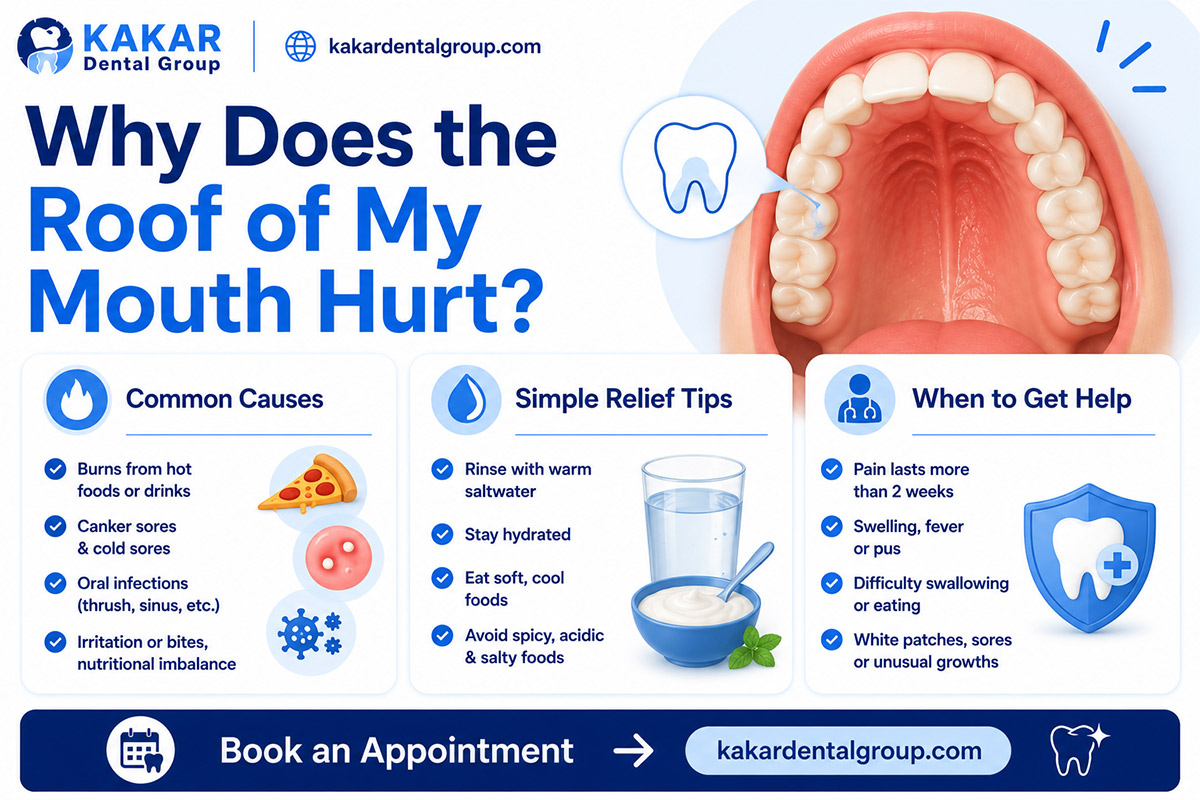
Cuts, Bites & Burns
Bites and cuts can make the roof of the mouth sore when eating or speaking. Roof of mouth blistering and soreness from consuming hot items can also occur. One of the most common examples is “pizza burn,” which occurs when hot cheese or sauce comes into contact with the palate. These minor burns often cause temporary pain in roof of mouth and usually heal within a few days. If the roof of your mouth hurts when drinking hot beverages, always cool your drinks to avoid causing injury to the roof of the mouth.
Mouth Sores
Canker sores are painful ulcers that can develop inside the mouth. Eating may make an existing sore hurt more, but pain after eating does not identify the cause. A sore that lasts more than two weeks, becomes more painful, or bleeds should be evaluated by a dentist or medical professional.
Cold sores are caused by herpes simplex virus and most often appear on or around the lips. A sore on the roof of the mouth can have several causes, so its location or pain alone cannot confirm herpes. The NIDCR guide to fever blisters and canker sores explains how these conditions differ.
Oral Thrush
Oral thrush can cause white patches and soreness in the mouth or throat. Similar signs can have other causes, so a clinician should assess the area before treatment is chosen. Risk may be higher with factors such as recent antibiotic use, inhaled corticosteroids, diabetes, or a weakened immune system. The CDC’s overview of oral candidiasis symptoms notes that these symptoms can overlap with other conditions, so white patches alone do not confirm thrush.
Sore Throat and Respiratory Illness
A sore throat or respiratory illness may occur alongside discomfort at the back of the roof of the mouth. If the pain is focused in the movable tissue at the back of the palate, it may involve the soft palate, where discomfort can be more noticeable during swallowing.
A persistent ulcer, lump, or red or white patch needs an examination. These changes can have several causes and do not by themselves mean cancer; a dentist or medical professional can decide whether further testing or referral is needed.
When to Seek Medical Attention for Roof-of-Mouth Pain
Contact a dentist or medical professional if the pain is getting worse, does not begin to improve within about a week, or comes with fever, swelling, pus, or painful swallowing. Have a sore, lump, or red or white patch checked if it lasts more than two weeks. These findings can have several causes and do not by themselves mean cancer.
Difficulty breathing or inability to swallow saliva requires emergency care. The NIDCR recommends evaluation of persistent mouth sores, lumps, and red or white patches.
Home Care for Minor Roof-of-Mouth Irritation
For mild irritation after hot or rough food, choose cool drinks and soft foods, and avoid foods that irritate the area while it heals. A gentle warm saltwater rinse may soothe a minor sore; spit it out and do not swallow it. These steps may ease discomfort but do not treat every cause of roof-of-mouth pain.
| What You Notice | What You Can Do | When to Seek Care |
|---|---|---|
| Soreness after hot, spicy, acidic, or rough food | Avoid the trigger; choose cool drinks and soft foods | If pain worsens or does not begin to improve within about a week |
| A distinct mouth ulcer | Avoid foods that irritate it; use gentle oral care | If it lasts more than two weeks, becomes more painful, or bleeds |
| White patches or persistent discoloration | Do not assume the cause or start antifungal medicine without advice | Arrange an evaluation with a dentist or medical professional |
| Fever, pus, increasing swelling, or painful swallowing | Do not assume the cause or self-treat it as an infection | Contact a dentist or medical professional promptly |
| Difficulty breathing or inability to swallow saliva | — | Seek emergency care |
Lifestyle Tips to Reduce Mouth Roof Pain
While the area is sore, drink water, choose soft foods, and avoid very hot, spicy, acidic, salty, or rough foods that may irritate it. Brush gently and maintain your usual oral hygiene. These steps may reduce irritation but will not treat an infection or a persistent sore.
Pediatric Dental Evaluation in Northern Virginia
A dentist can examine mouth injuries, ulcers, and visible changes. Because roof-of-mouth pain can also be related to throat or other medical conditions, a dental evaluation may be followed by a referral when appropriate. Kakar Dental Group provides pediatric dental care in Northern Virginia, including pediatric dentistry in Falls Church.
FAQs About Roof of Mouth Pain
Why does the roof of my mouth hurt?
Why does the roof of my mouth hurt when I eat?
Why does the roof of my mouth hurt when I swallow?
Why is the roof of my mouth swollen?
When should I see a dentist or doctor for roof-of-mouth pain?