
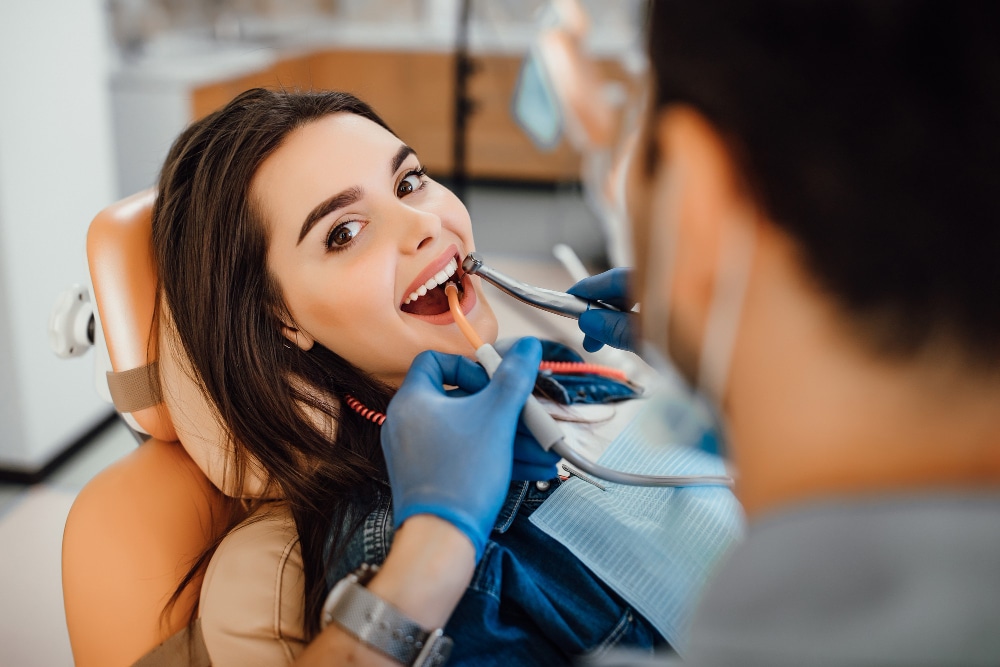
A routine professional dental cleaning often takes about 30 to 60 minutes, although the exact visit can be shorter or longer depending on your oral health and whether an exam or X-rays are included. At home, brushing takes two minutes per session; the morning brushing routine should also include daily cleaning between teeth at a time that works for you.
Table of Contents
How Long Does a Professional Dental Cleaning Take?
For many patients, the full appointment for a routine cleaning is roughly half an hour to an hour. That is a planning range, not a guaranteed appointment length or a rule set by the American Dental Association. The hygienist may need more time to remove hardened deposits carefully, and a dental exam or X-rays can add time beyond the hands-on cleaning.
At a routine visit, a hygienist typically checks the mouth, removes plaque and hardened tartar from tooth surfaces and around the gumline, and may polish the teeth or provide other preventive care based on the patient’s needs. The actual steps vary by office and by the care recommended for that visit.
How Long Does It Take to Clean Teeth at Home?
If by “clean teeth” you mean brushing at home, plan on two minutes each time, twice a day, with fluoride toothpaste. Brushing removes soft plaque from the surfaces you reach; it does not remove tartar that has already hardened. The American Dental Association also recommends cleaning between teeth once a day with floss or another interdental cleaner.
How Long Does It Take to Clean Teeth at Home in the Morning?
The brushing part of a morning routine takes two minutes. If you also floss or use an interdental cleaner in the morning, that adds however long you need to clean between every tooth carefully; there is no official combined “morning routine” time. Since the daily recommendation is to clean between teeth once a day, you can do it in the morning or at another consistent time.
A practical way to use the two minutes is to divide the mouth into four sections and spend about 30 seconds on each: upper right, upper left, lower right, and lower left. This is a simple pacing aid, not a separate clinical requirement. Move gently along the gumline and cover the outside, inside, and chewing surfaces rather than spending the full two minutes on the front teeth.
A simple timer and four-section routine can help make a two-minute brushing session easier to pace.
| Type of Cleaning | Typical Time to Plan For | What the Time Covers |
|---|---|---|
| Brushing at home | 2 minutes per session, twice daily | Brushing with fluoride toothpaste |
| Morning brushing | 2 minutes for brushing | Daily interdental cleaning can be done at this time or another time |
| Routine professional visit | About 30–60 minutes in many practices | Cleaning; the visit may also include an exam or X-rays |
| Scaling and root planing | Varies; may need multiple appointments | Treatment below the gumline for gum disease |
Why Can a Dental Cleaning Take Longer Than Expected?
The time depends on what the hygienist finds and what the appointment includes. More time may be needed when there is heavier tartar buildup, gum inflammation, sensitive teeth that call for a gentler pace, or additional assessment. A first visit may include more history-taking or diagnostic steps than a routine recall visit.
| Situation | What It Can Mean for Timing |
|---|---|
| Routine cleaning | Often about 30–60 minutes for the visit; the exact time varies by clinic and patient. |
| More plaque or hardened tartar | Removal may take longer because deposits need to be cleared carefully. |
| First appointment or exam and X-rays | Assessment and records can add time beyond the cleaning itself. |
| Gum disease treatment | May require a different procedure and more than one visit; it is not simply a longer routine polish. |
Is a Regular Cleaning the Same as a Deep Cleaning?
No. A routine prophylaxis removes deposits from the tooth surfaces and around the gumline as preventive care. Scaling and root planing is a different, deeper treatment that cleans below the gumline and is used to treat gum disease. It may be performed with local anesthesia and divided by sections of the mouth, depending on the treatment plan. That distinction matters when estimating time: a “deep cleaning” should not be treated as an ordinary cleaning that simply ran long.
The difference between a routine visit and gum-disease treatment is also why a single time estimate cannot fit every patient. People with ongoing periodontal needs may have a maintenance schedule tailored to their clinical findings.
Can Home Brushing Replace a Professional Cleaning?
No. Brushing and interdental cleaning help control soft plaque between visits, but they cannot remove hardened tartar once it has formed. Professional cleaning also lets a dental professional assess areas that are difficult to evaluate at home. Regular home care supports oral health; it does not make the two kinds of cleaning interchangeable.
The timing of professional visits is individualized. A general six-month interval is common, but dental history, gum health, cavity risk, and other factors can change the recommended schedule; the guide to cleaning frequency explains why there is not one interval for everyone.
Frequently Asked Questions
How long does it take to clean teeth at home?
Does brushing longer make teeth cleaner?
How long does it take to clean teeth at home in the morning?



can i take flexeril and elavil together
can i take flexeril and elavil together