Many parents are surprised to learn that cavities can develop soon after a child’s first tooth appears. While baby’s teeth eventually give way to permanent ones, they are far from disposable. A baby tooth plays a critical role in chewing, speech development, and guiding adult teeth into their correct positions. Understanding the best way to treat cavities in baby teeth naturally can support your child’s oral health in meaningful ways: provided it goes hand in hand with professional dental care when the situation calls for it.
Table of Contents
What “Natural” Management Actually Looks Like
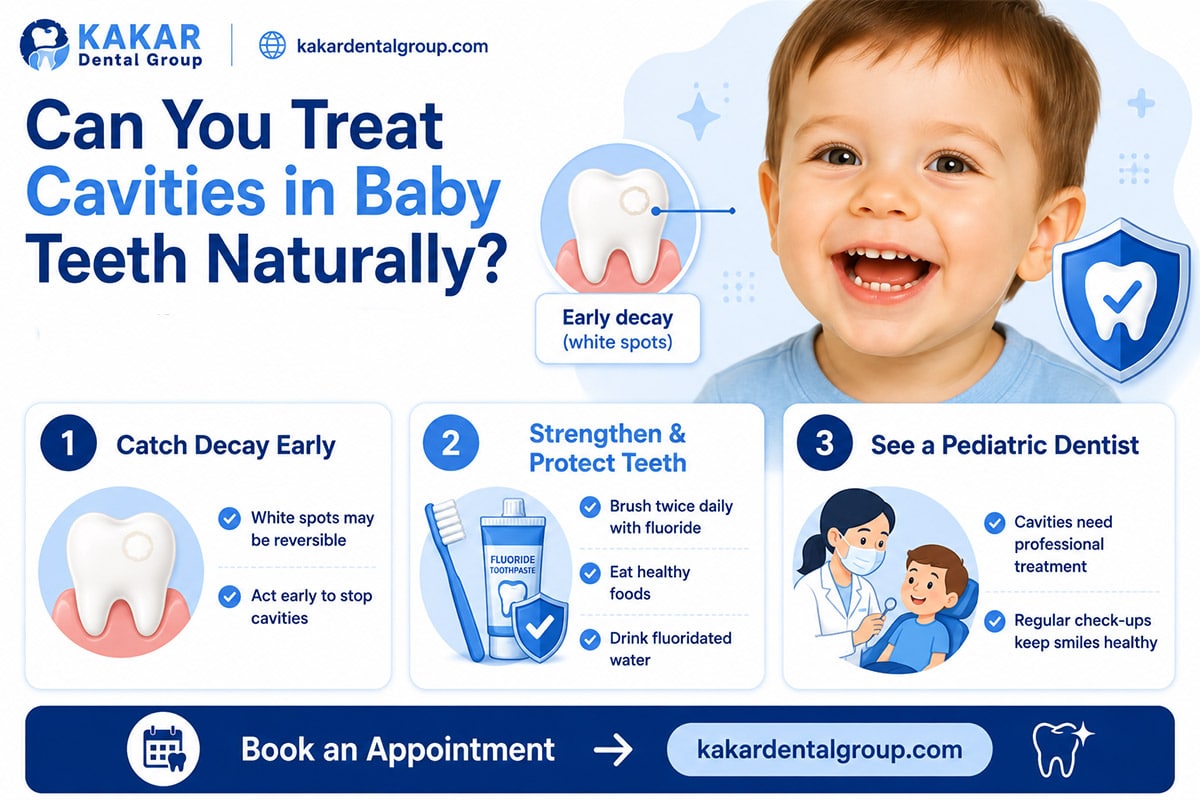
When early tooth decay is caught in the early stages, there is a genuine opportunity to slow, stop, or even reverse the damage before a cavity fully forms. Early decay often appears as white spots on the outer surface of the tooth, chalky patches that signal mineral loss from tooth enamel before a hole ever develops. This is the window in which natural approaches carry the most weight.
The most effective answer to how to treat cavities in baby teeth naturally is a two-part strategy: strengthen what’s there and stop the conditions that are wearing it down. Neither nutrition nor dental hygiene alone is sufficient; both work together to give children’s teeth the best possible defense against cavity-causing bacteria and ongoing cavity formation.
Prevention Through Consistent Dental Hygiene
Good dental hygiene remains the cornerstone of any effort to prevent tooth decay and address early decay before it advances. Parents should help ensure that their child brushes twice daily using a small amount of fluoride toothpaste appropriate for their age. Fluoride strengthens tooth enamel and makes the outer surface of the tooth far more resistant to acid attacks from harmful bacteria responsible for dental caries.
Regular brushing removes plaque buildup and disrupts the cycle that allows cavity-causing bacteria to produce enamel-eroding acids. Establishing these habits early protects not only the teeth your child has now but also lays the groundwork for healthy permanent teeth to follow. The American Academy of Pediatrics consistently emphasizes that early oral care, including routine care of the first tooth, is among the most important investments a family can make in a child’s overall health.
Limiting sugar intake, reducing sugary snacks and fruit juices, offering fluoridated water when available, and scheduling regular check-ups can dramatically lower the risk of untreated cavities. Poor oral hygiene, by contrast, allows plaque buildup to go unchecked and creates the conditions where early tooth decay progresses quietly until it becomes something more serious.
Strengthening Enamel Through Nutrition
A balanced diet is one of the most underappreciated tools for supporting a healthy child’s smile. Frequent consumption of sugary foods and fruit juices provides a constant fuel source for bacteria that produce acids capable of damaging tooth enamel. Shifting the focus toward healthy foods and nutrient-rich options can meaningfully change the environment inside your child’s mouth.
The role of fluoridated water deserves particular emphasis. A 2024 CDC statement confirmed that water fluoridation is beneficial for reducing and controlling tooth decay and promoting oral health across the lifespan, noting that evidence shows water fluoridation prevents tooth decay by providing frequent and consistent contact with low levels of fluoride, ultimately reducing tooth decay by 25% in children and adults. For families with access to fluoridated water, encouraging regular drinking water over sweet beverages is one of the simplest and most effective steps available.
Natural Remedies: What the Evidence Says
Several natural remedies are frequently discussed for supporting oral health, and while none of them replace professional cavity treatment, some may complement a consistent routine.
Coconut oil is among the most well-known. A 2023 systematic review and meta-analysis published in the International Journal of Dental Hygiene found that coconut oil’s antibacterial properties may help decrease plaque levels, though the research noted it remains inferior to chlorhexidine in clinical comparisons.
It is equally important to understand what natural approaches cannot do. Once a cavity creates an actual hole in the tooth structure, no home remedy or dietary change can rebuild that lost enamel.
Heal cavities in the truest sense — restoring destroyed tooth structure — requires professional intervention, and delaying that care allows untreated cavities to worsen.
Supporting Your Child’s Smile at Kakar Dental Group
At Kakar Dental Group, our specialists are committed to helping families across Northern Virginia give their children the strongest possible start in oral health. With four convenient locations — in Tysons, Falls Church, Manassas, and Fredericksburg — we offer compassionate, evidence-based pediatric dentistry tailored to the unique needs of young patients.
Whether you’re concerned about early tooth decay, looking to establish good dental hygiene habits, or ready to schedule regular check-ups, our team is here to help your child achieve a healthy smile that lasts a lifetime.