

When a dentist recommends a tooth extraction for kids, parents often have just as many questions as their children. Why does the tooth need to come out? Will the procedure hurt? Should your child eat before the appointment? And what can you do to make the experience less stressful?
A pediatric tooth extraction may be recommended when a baby or permanent tooth cannot be predictably restored, is severely damaged or infected, remains in place longer than expected, interferes with another tooth, or needs to be removed for another clinical reason. The exact recommendation depends on the child’s age, dental development, symptoms, X-rays, and the condition of the tooth.
Preparing your child involves more than simply telling them not to worry. Using age-appropriate language, knowing what to expect on the day of the procedure, following any eating or medication instructions from the dental team, and planning ahead for recovery can help the appointment feel more predictable for both parent and child.
AAPD guidance emphasizes that pediatric oral surgery requires special attention to developing teeth and surrounding structures, behavior guidance, parental consent, and perioperative and postoperative care.
Table of Contents
When Do Kids Need a Tooth Extraction?
Baby teeth usually fall out naturally, so not every loose, decayed, or damaged tooth needs to be extracted. A pediatric dentist first considers whether the tooth can and should be preserved.
In some situations, however, removing a tooth may be the most appropriate option. Common reasons include:
- A tooth that cannot be restored: Severe decay or structural damage may leave too little healthy tooth to repair predictably.
- Dental infection: Some infected teeth can be treated with pulp therapy, while others may require extraction depending on the diagnosis and restorability of the tooth.
- An over-retained baby tooth: A primary tooth may remain in place and interfere with the normal eruption of a permanent tooth.
- A badly traumatized tooth: Dental injuries sometimes damage a tooth beyond repair.
- Supernumerary or impacted teeth: Extra teeth or teeth that do not erupt normally may occasionally require surgical management.
- Orthodontic considerations: In selected cases, removing a tooth may be part of a broader orthodontic treatment plan.
The American Academy of Pediatric Dentistry discusses extraction as one of the management options for nonrestorable, over-retained, impacted, traumatized, and supernumerary teeth, with special care needed to protect developing permanent teeth and nearby structures.
What Happens During a Child’s Tooth Extraction?
The exact procedure depends on which tooth is being removed and how difficult the extraction is.
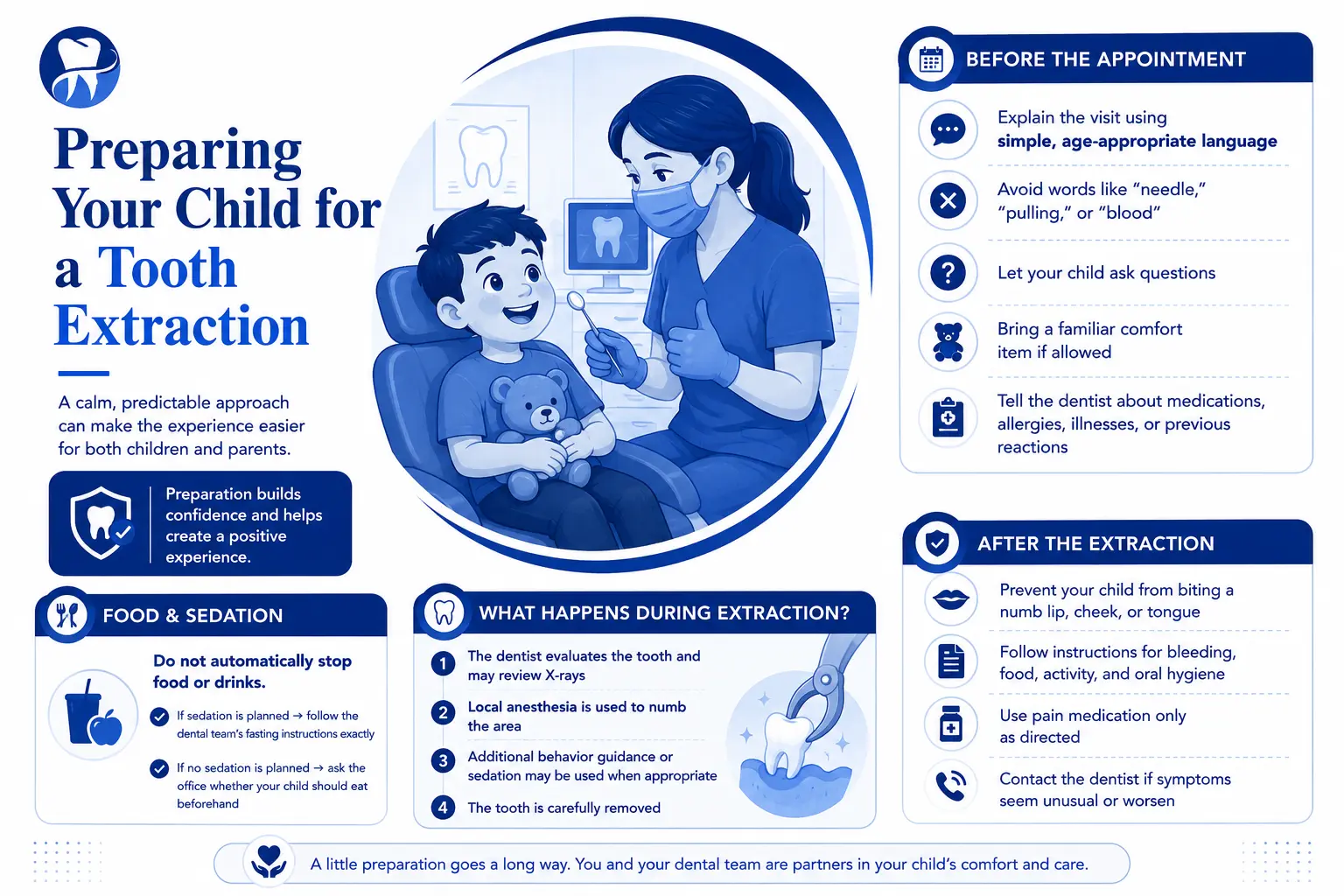
Before treatment, the dentist evaluates the tooth and surrounding area and may review dental X-rays. Local anesthesia is typically used to numb the treatment area so the child can remain comfortable while the tooth is removed.
Some children may also need additional behavior guidance or sedation depending on factors such as their age, anxiety level, medical history, the complexity of the procedure, and their ability to cooperate safely.
If sedation is planned, the preparation is different from a routine extraction performed with local anesthesia alone. Parents should follow the dental team’s specific instructions rather than relying on general online advice about eating or drinking before the appointment.
AAPD and American Academy of Pediatrics sedation guidance emphasizes presedation assessment, appropriate fasting when indicated, monitoring, trained personnel, recovery observation, and clear discharge instructions.
How to Prepare Your Child for Tooth Extraction
Children often cope better when they know enough to feel prepared without being overwhelmed with unnecessary details. The way you explain the appointment should depend on your child’s age, temperament, and previous dental experiences.
Stay Calm and Use Reassuring Language
Children notice how adults react to unfamiliar situations. Try to discuss the appointment calmly and matter-of-factly rather than presenting it as something frightening.
Explain that the dentist needs to help remove a tooth that is no longer healthy or needs to make room for another tooth. Use simple, accurate language and avoid dramatic descriptions of needles, pulling, blood, or pain.
At the same time, avoid promising that your child “won’t feel anything.” A better approach is to explain that the dental team will work to keep them comfortable and will tell them what they need to know during the appointment.
Tell Your Child Close Enough to the Appointment
There is no universal rule that every child should be told exactly one or two days beforehand. The right timing depends on the child.
Younger children may do better with a simple explanation relatively close to the appointment so they do not spend many days anticipating it. Older children may want more time to ask questions and understand what will happen.
The goal is to give your child enough information to feel prepared without creating unnecessary time for worry.
Encourage Questions Without Giving Too Much Detail
Let your child ask questions, but keep your answers short and appropriate for their age.
If your child asks a question that you cannot answer confidently, tell them that you will ask the dentist together. This is usually better than guessing about what the procedure will feel like or how long it will take.
Bring a Familiar Comfort Item
A favorite stuffed animal, small blanket, or another familiar object may help some children feel more secure in an unfamiliar environment.
Depending on the dental office and the procedure, music, headphones, video, or other forms of distraction may also be useful.
What Should Parents Do Before the Extraction Appointment?
Preparation is not only emotional. Before the appointment, make sure the dental team has accurate information about your child’s health.
Tell the dentist about:
- medications your child currently takes;
- medication or material allergies;
- medical conditions;
- previous reactions to anesthesia or sedation;
- recent illness, fever, coughing, or breathing problems;
- previous difficult dental experiences or significant dental anxiety in children.
If the procedure will involve sedation, follow the practice’s fasting and medication instructions exactly. Do not independently decide that your child should skip food or fluids unless the dental team has instructed you to do so.
If no sedation is planned, ask the office whether there are any specific eating or drinking instructions for your child’s appointment.
How Can a Pediatric Dentist Help an Anxious Child?
A pediatric dentist can adjust communication and behavior-guidance techniques to the child’s developmental level and individual needs.
For some children, a calm explanation, distraction, positive reinforcement, and time to become familiar with the environment may be sufficient. Others may need additional support.
Children with significant dental anxiety, very young children, patients with special health care needs, or children undergoing more complex procedures may be evaluated for sedation when clinically appropriate.
What Should You Expect After a Kids Tooth Extraction?
After a tooth is removed, the dental team should provide instructions specific to your child’s procedure. Mild soreness, limited bleeding, or temporary numbness may occur after some extractions, but the expected recovery depends on the tooth and the complexity of treatment.
While your child’s mouth is numb, remind them not to bite or chew the lip, cheek, or tongue. Young children sometimes injure numb soft tissue without realizing it.
AAPD postoperative guidance recommends following the dentist’s instructions regarding bleeding control, diet, oral hygiene, activity, and pain management after pediatric oral surgery.
For more detailed recovery guidance, Kakar already has dedicated resources:
Frequently Asked Questions About Tooth Extraction for Kids
Does a kids tooth extraction hurt?
How do I prepare my child for a tooth extraction?
Should my child eat before a tooth extraction?