The best way to brush a toddler’s teeth is for an adult to brush twice a day with a small, soft-bristled toothbrush and fluoride toothpaste. Use a rice-sized smear for children younger than 3 and a pea-sized amount from age 3. Gently clean the outer, inner, and chewing surfaces for two minutes, then let your toddler practice before an adult finishes and checks the back teeth.
Every parent knows the moment: toothbrush in hand, toddler on the move. Brushing a toddler’s teeth can feel like a power struggle, but it is vital for your child’s long-term health. The Centers for Disease Control and Prevention reports that over 1 in 10 children ages 2–5 had at least one untreated cavity. By ages 6–8, it rises to nearly 1 in 5. Tooth decay is the most common chronic disease among children, but it is almost entirely preventable with consistent dental care and regular visits to a pediatric dentist.
The good news is that a few simple strategies can make this process much easier for your infant’s teeth. Here is what you need to know to get started.
Table of Contents
Start Early — Earlier Than You Think
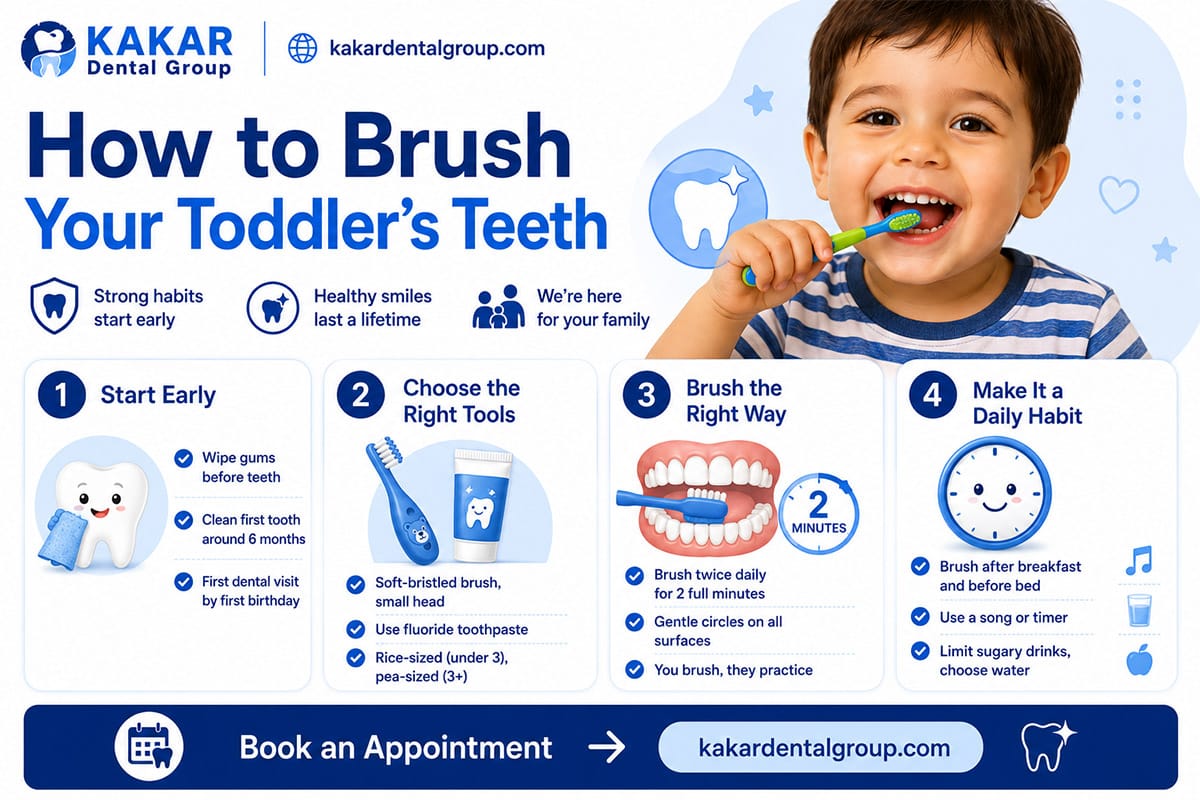
Dental care should start before your child’s first birthday. Begin cleaning your baby’s first tooth as soon as it appears, usually around 6 months. Before teeth appear, gently wipe your baby’s gums with a soft, damp cloth to remove bacteria and set the stage for future brushing. This routine starts with the first tooth; Kakar’s guide to when to start brushing baby teeth explains the earliest steps in more detail.
Schedule your child’s first dental visit by their first birthday, as advised by the American Academy of Pediatrics and the American Dental Association. Early visits let the dentist check your child’s teeth and gums and offer advice on toothpaste and brushing techniques for your child’s age.
Choose the Right Tools
Set your child up for success with the right tools. Choose a soft-bristled toothbrush with a small head for toddlers. Let them pick a favorite color or character to engage them. An electric toothbrush designed for children can make brushing easier because rotating bristles do most of the work.
Always use fluoride toothpaste. For children under 3, a rice-sized smear is enough. After age three, use a pea-sized amount. Fluoride strengthens enamel, protecting against cavities in both baby and permanent teeth.
Brushing Technique: The Basics
Brush your toddler’s teeth twice a day for two full minutes. Hold the soft bristles at a 45-degree angle toward the gum line and use gentle, circular motions to clean all surfaces of those tiny teeth: front, back, and especially the back molars where plaque tends to hide. It helps to have your child tilt their head back slightly or lie down so you can see the whole child’s mouth clearly.
Encourage your child to practice brushing first, then finish for them. By age 6–7, children often have the skill to brush more independently, but most need supervision until about age 8–9.
Tips on Brushing Your Toddler’s Teeth
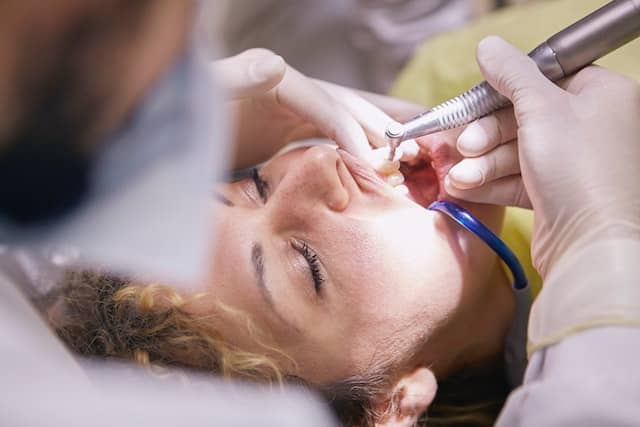
Tips on brushing your toddler’s teeth are easier to follow when you can see the whole mouth. If your child is comfortable, sit on the floor and let them recline with their head supported in your lap; this often makes it easier to see the gumline and back molars. If reclining upsets your child, use a comfortable supported sitting position instead.
Use the same short route each time so no surface is missed:
- Outer surfaces: move gently in small circles along the gumline, from the back teeth toward the front.
- Inner surfaces: repeat the gentle motion; turn the brush vertically for the inside of the front teeth.
- Chewing surfaces: brush the tops of the back teeth, then make a quick visual check of the molars.
A repeatable route is a practical reminder, not a special clinical technique. Gentle pressure and covering every surface matter more than making the child hold the brush at an exact angle.
| Step | What to Do | Why It Helps |
|---|---|---|
| Toddler practices | Let your toddler hold the child-sized brush and try first while you supervise. | Gives the child a role in the routine without relying on toddler-level brushing to clean every surface. |
| Adult completes the pass | Use gentle small circles on the outer and inner surfaces, then short strokes on chewing surfaces. Keep the child’s head supported in a comfortable position. | Helps the caregiver cover the gumline, front teeth, and back molars. |
| Quick final check | Look over the back molars and gumline. If your child can spit, encourage them to spit out excess toothpaste. | Catches missed spots; immediate water rinsing can wash away fluoride toothpaste residue. |
Keep the child comfortable and use the dentist’s advice if your child has a specific oral-health need. The table is a reminder for coverage, not a requirement to hold the brush at one exact angle.
Making It a Daily Habit (Without the Drama)
Consistency is the cornerstone of good dental hygiene. Building brushing teeth into a predictable daily routine, right after breakfast and before bed, takes the negotiation out of it. When it is simply a matter of what happens next, resistance tends to fade over time.
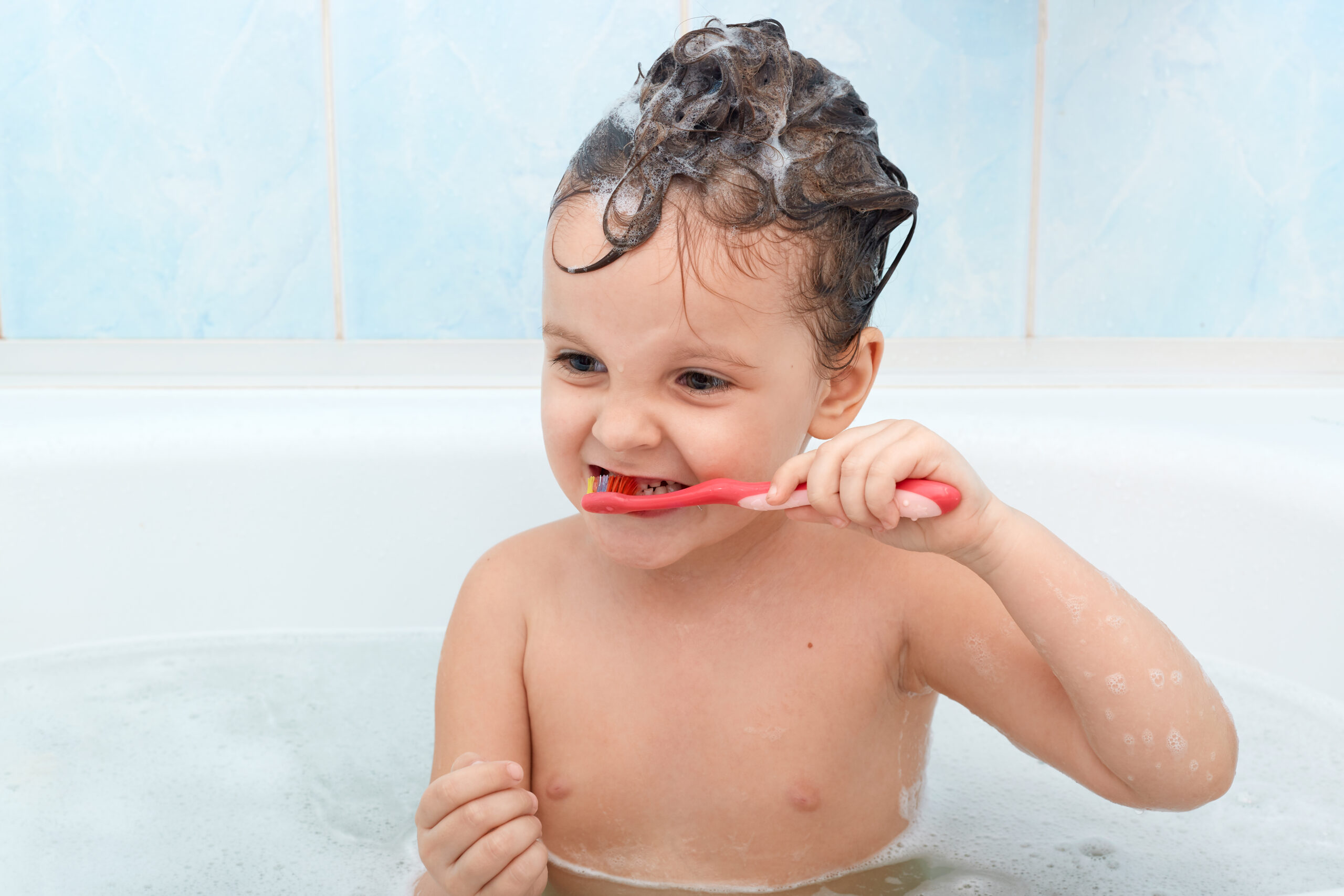
A few approaches help: brush your child’s teeth with them as an example, use a two-minute song or timer for fun, and let your child hold their own toothbrush for control. Letting them choose toothpaste flavor can also make brushing enjoyable.
Beyond brushing, small choices matter. Limit sugary drinks in sippy cups, encourage water, and avoid prolonged juice or milk contact with your child’s teeth to lower cavity risk.
When to See a Dentist
Even with a solid home routine, regular professional check-ups are essential for your child’s dental hygiene. If you notice any discoloration, sensitivity, or discomfort in your child’s teeth, do not wait until the next scheduled visit, contact your child’s dentist promptly. Early intervention prevents small issues from becoming larger, more complex problems that can affect eating, speaking, and overall well-being.
The American Academy of Pediatric Dentistry recommends checkups every 6 months starting with the first birthday visit. These appointments reinforce good habits, allow for professional cleaning, and give your healthcare provider a chance to monitor the development of both baby and incoming permanent teeth.
Healthy Kids’ Teeth Start Here
Learning to brush toddler teeth does not have to be complicated. It takes consistency, the right tools, and a team you trust.
At Kakar Dental Group, our specialists make every visit comfortable and positive for children. We know that starting good habits early is one of the best gifts you can give your child, and we are here to support your family.
If you have questions about toothpaste, brushing technique, or first visits, our team is ready to help. Contact Kakar Dental Group to schedule an appointment and give your child a healthy, confident smile.
FAQs About Brushing Toddler Teeth
How often should you brush a toddler’s teeth?
How much toothpaste should I use for my toddler?
Should toddlers rinse after brushing?
What is the best way to brush a toddler’s teeth if they resist?