
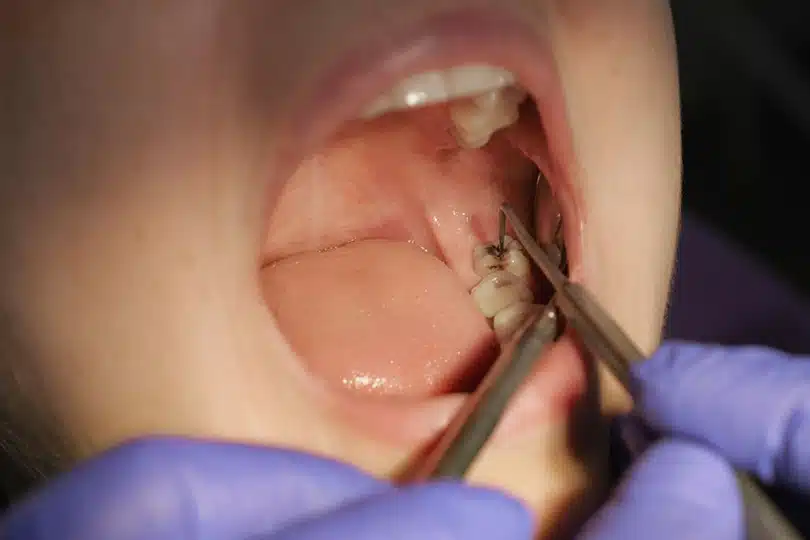
Loose or missing wisdom teeth stitches do not automatically mean that something has gone wrong. Absorbable stitches can loosen or fall out at different times, and a stitch coming out by itself does not confirm whether the extraction site is healing normally. Do not pull at any remaining stitches. Follow your surgeon’s instructions and contact the office if the wound appears to open, bleeding does not stop, or pain or swelling is getting worse.
Table of Contents
Understanding Wisdom Teeth Stitches and Their Role
Stitches may be placed after wisdom tooth removal to help control bleeding and support healing, but not every extraction requires them. Some stitches dissolve; others need to be removed at a follow-up visit. The timing depends on the suture material and the procedure: a stitch may loosen or fall out before it has fully dissolved. Follow the timeline and aftercare instructions provided by your dentist or oral surgeon.
Why Are Wisdom Teeth Stitches Coming Out?
Loose or dangling threads can occur as absorbable stitches loosen or fall out. This alone does not show whether the extraction site is healing normally or has reopened. Do not pull at the stitches, and follow your surgeon’s aftercare instructions. For general information about a loose or frayed absorbable stitch, see our guide to dissolvable stitches hanging in the mouth.
What to Do If Wisdom Teeth Stitches Come Out
The day a stitch comes out matters less than whether the wound appears open, bleeding continues, or pain and swelling are getting worse.
| What You Notice | What It May Mean | What to Do |
|---|---|---|
| A stitch loosens or falls out, but pain and swelling are improving and bleeding has stopped | A stitch can loosen or come out during healing; this alone does not show whether the site has a problem | Do not pull at remaining stitches. Follow your surgeon’s instructions and monitor symptoms |
| A stitch comes out soon after surgery, or you are unsure whether the wound has opened | The timing and significance depend on the procedure and suture | Contact the dentist or oral surgeon who performed the procedure for advice |
| Bleeding does not stop, the wound appears to open, or pain or swelling gets worse | The site may need to be assessed | Contact your dental office or oral surgeon promptly |
| Fever, pus, persistent foul taste, or severe throbbing pain | These may indicate a complication, including infection or dry socket | Contact your dentist or oral surgeon promptly |
Does a stitch coming out mean you have dry socket? No. A stitch coming out by itself does not diagnose dry socket. Dry socket happens when the blood clot in the extraction socket is lost or breaks down; it can cause severe pain within a few days of extraction. If you develop severe or worsening pain, especially with a foul taste or odor, contact your oral surgeon. The American Association of Oral and Maxillofacial Surgeons dry socket guide explains the condition and its warning signs.
Wisdom Teeth Stitches Came Out After 1 Day, 3 Days, or 5 Days: What Does It Mean?
The number of days alone cannot determine whether a stitch coming out is a problem. A stitch may loosen or fall out at different times depending on the suture and procedure. Whether it happens after 1, 3, or 5 days, follow your surgeon’s instructions and contact the office if the wound appears to open, bleeding continues, or pain or swelling worsens. If the area seems to be improving and there are no warning signs, do not pull at any remaining stitches; continue following your aftercare instructions.
Post-Operative Instructions for Proper Healing
Follow the written aftercare instructions from your dentist or oral surgeon, including when to rinse, brush near the site, and return to your usual diet. Many instructions advise avoiding vigorous rinsing during the first 24 hours, then beginning gentle rinses as directed. Do not disturb the socket or pull at stitches. Choose soft foods while chewing is uncomfortable, and avoid smoking or using a straw for the period specified by your surgeon. Avoid alcohol during recovery if your surgeon advises it, and do not combine alcohol with prescribed pain medication.
When to Contact Your Dentist or Oral Surgeon
If you have concerns about stitches after wisdom tooth removal, contact the dentist or oral surgeon who performed your procedure. They can assess the extraction site and advise whether you need a follow-up visit.
Trust our expertise to guide you through every aspect of wisdom tooth removal and oral surgery with professional care and genuine compassion for your well being.
Parents seeking a pediatric dental evaluation in Fredericksburg can learn about our pediatric dentistry team in Fredericksburg. For concerns about the extraction site or stitches, contact the oral surgeon who performed the procedure.
FAQs About Wisdom Teeth Stitches Coming Out
Is it normal for stitches to come out after wisdom teeth removal?
Wisdom teeth stitches came out after 5 days. Should I worry?
Wisdom teeth stitches came out after 3 days. Is that too early?
What should I do if stitches are coming out of my wisdom teeth extraction site?
Does a stitch coming out cause dry socket?