
If your tooth hurts when you eat sweets but you cannot see a cavity, the cause may be exposed dentin, enamel wear, gum recession, a crack, a worn filling, or decay that is not visible at home. Sweet sensitivity alone cannot confirm or rule out a cavity. A dentist can examine the tooth and decide whether imaging or other tests are needed.
Arrange a dental evaluation if the pain keeps returning, is getting worse, affects one tooth, lingers after the sweet food is gone, or hurts when you bite. The American Dental Association lists decay, fractured teeth, worn fillings, gum disease, worn enamel, and exposed roots among possible causes of tooth sensitivity.
Contact a dentist promptly if you also have swelling, fever, or severe spontaneous tooth pain.
Table of Contents
Why Does My Tooth Hurt When I Eat Sweets Even If I Can’t See a Cavity?
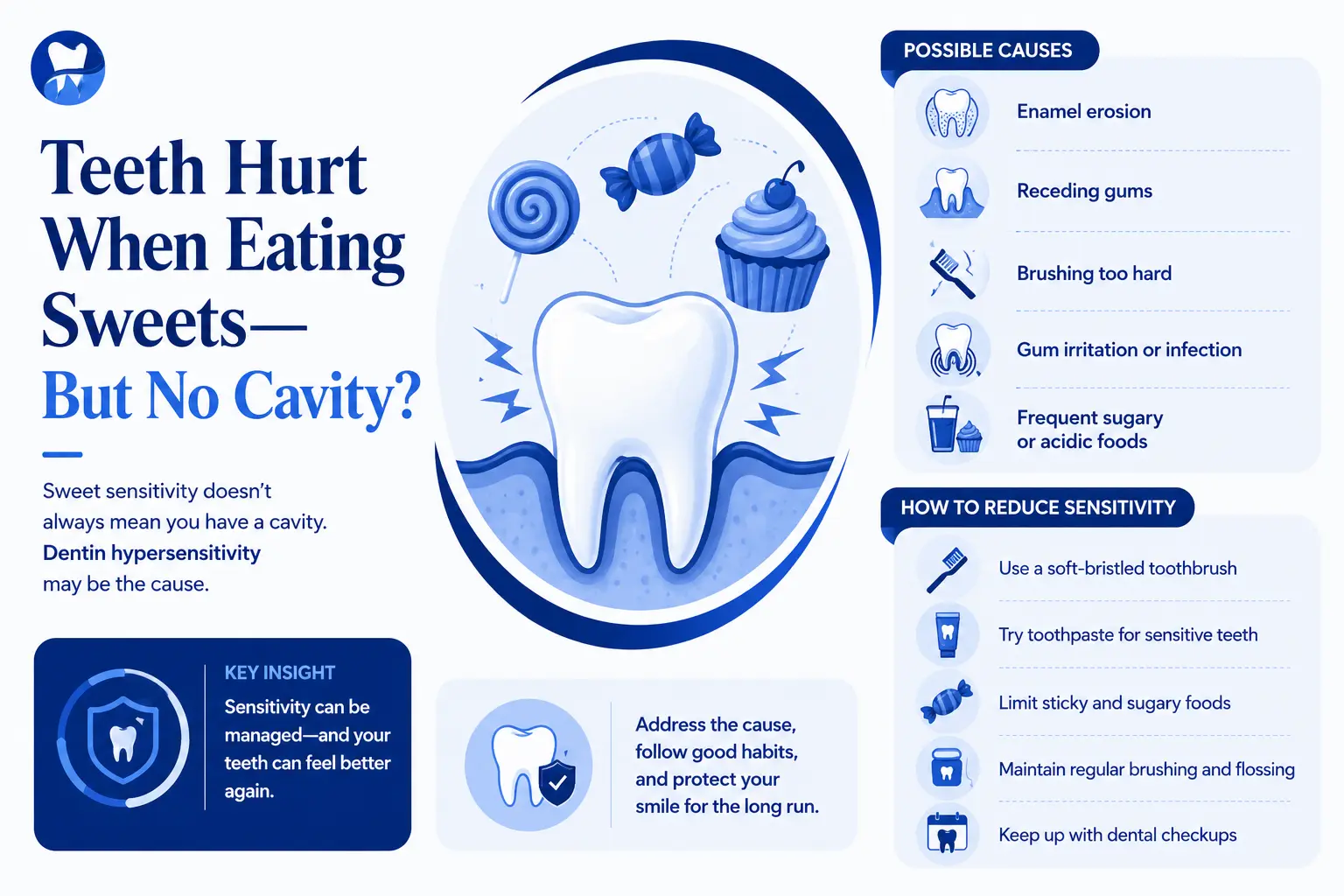
Ever felt a sharp pang in your teeth when you chew on mouth-watering sweets? The discomfort arises from numerous factors. When enamel becomes thinner or the tooth root becomes exposed, dentin underneath can become more sensitive. Dentin contains microscopic tubules that communicate with the nerve inside the tooth, which is why sweet, cold, hot, or acidic foods may trigger a short, sharp sensation even when no obvious cavity is present.
Improper Brushing
Brushing with excessive force can irritate the gums. Gum recession can expose the root surface, which may be sensitive to sweets, cold, or brushing. Use gentle pressure and a soft-bristled toothbrush. Replace a worn toothbrush as needed, but an older brush by itself does not explain why a tooth hurts when you eat sweets.
Frequent Sugary or Acidic Foods
Sugar and dietary acids affect teeth in different ways. Bacteria in plaque use sugars to produce acids that can contribute to tooth decay. Acidic foods and drinks can directly wear away enamel over time. Either decay or loss of tooth protection may contribute to sensitivity, but pain from sweets alone does not tell you which is happening. A cavity between teeth may not be visible at home; a dentist can examine the area and use X-rays when appropriate.
Enamel Erosion, Early Decay, or Exposed Dentin
Sweet foods do not directly “irritate the nerve” of a healthy tooth. Instead, sensitivity may occur when enamel is worn, dentin is exposed, or decay has begun in an area that is difficult to see without a dental examination or X-ray.
Acidic foods and drinks can also contribute to enamel erosion, making teeth more responsive to sugar and temperature changes.
Cracked or Damaged Tooth
A crack, worn filling, or other structural damage may expose or irritate sensitive parts of a tooth. Symptoms can include sensitivity to sweets or temperature changes, or pain when biting. These problems may not be visible at home, so recurring pain in one tooth should be evaluated by a dentist.
If the tooth also hurts when you bite down, read our guide to tooth pain when biting down.
Gum Recession or Exposed Roots
When gums recede, part of the tooth root may become exposed. The root is covered by cementum rather than enamel. If gum recession exposes the root surface or underlying dentin, it may become sensitive to sweets, cold, or acidic foods. Gum redness, swelling, or bleeding should be assessed as a gum concern; these symptoms do not by themselves mean that the tooth is infected.
Do I Have a Cavity if My Tooth Is Sensitive to Sugar?
Not necessarily. Sugar sensitivity can occur because of a cavity, but it can also result from enamel erosion, exposed dentin, gum recession, a cracked tooth, or worn dental work.
If the pain is localized to one tooth, becomes stronger over time, lingers after the sweet food is gone, or occurs with biting pressure, a dental examination is the best way to determine the cause.
| What You Notice | Possible Cause | When to Have It Checked |
|---|---|---|
| Brief sensitivity to sweets | Exposed dentin or mild enamel wear | If it keeps recurring |
| Sensitivity to sweets and cold | Dentin exposure, enamel erosion, or decay | If persistent or worsening |
| Pain in one tooth | Crack, decay, or damaged filling | Dental evaluation recommended |
| Pain when biting plus sweet sensitivity | A crack or another tooth problem | Schedule an examination |
| Lingering pain after sweets | The cause needs dental evaluation | Prompt dental evaluation |
What Can I Do About Tooth Sensitivity to Sweets?
The right next step depends on the cause. These measures may help limit irritation while you arrange an evaluation if the pain persists:
- Brush twice a day with fluoride toothpaste, using gentle pressure and a soft-bristled toothbrush. Spit out the excess toothpaste rather than rinsing immediately.
- A desensitizing toothpaste may help some people when used regularly as directed, but it cannot repair a cavity, crack, or worn filling.
- Limit frequent sugary snacks and drinks. If you have sweets, having them with a meal rather than grazing throughout the day can reduce repeated sugar exposure.
- If acidic foods or drinks trigger symptoms, limit them and rinse with water. Wait about an hour before brushing after acidic foods or drinks.
- If you use fluoride mouthwash, use it at a different time from brushing. It should not replace fluoride toothpaste.
Key Takeaway
A tooth that hurts when you eat sweets may be sensitive because of exposed dentin, enamel wear, gum recession, a crack, a worn filling, or decay that is not visible at home. The symptom alone cannot identify the cause. If the pain keeps returning, worsens, lingers, or affects one tooth, arrange a dental examination.
FAQs About Teeth Hurting When Eating Sweets
Why does my tooth hurt when I eat sweets if I have no cavity?
Can teeth be sensitive to sugar even if no cavity is visible?
When should I see a dentist about tooth sensitivity to sweets?
Why do my teeth hurt when I eat chocolate but I have no cavities?
Sources