
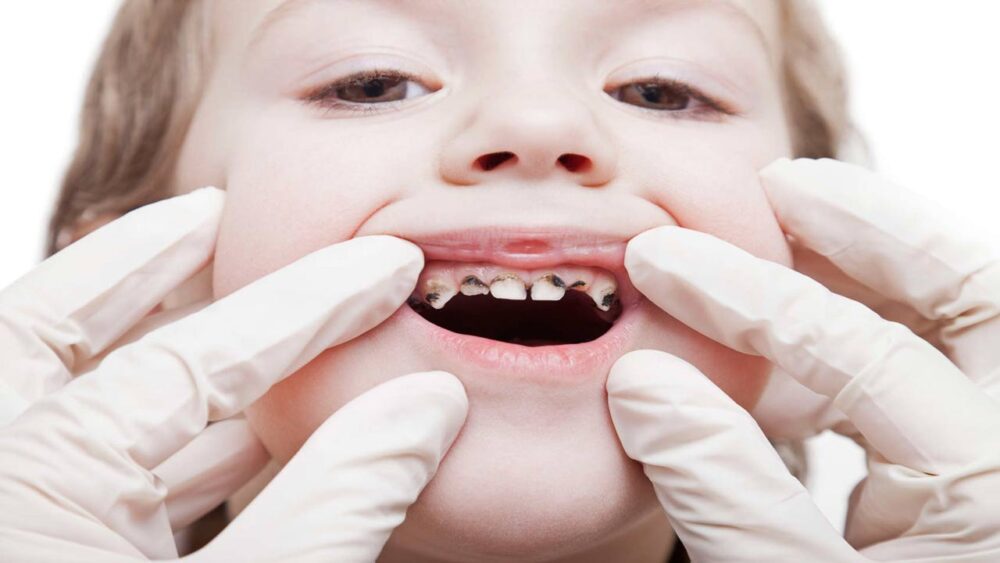
Parents sometimes describe advanced tooth decay as “rotten teeth” or worry that their child has “bad teeth.” In most cases, these phrases refer to dental decay that may appear as dark spots, holes, broken tooth structure, pain, or infection. The right next step is a dental examination: a pediatric dentist can assess the damage, relieve symptoms, and recommend treatment based on the child’s age and the affected tooth. Rotten teeth in kids should be evaluated promptly, especially if a child has persistent tooth pain, swelling, pus, fever, or difficulty eating. Treatment may involve fluoride care for early enamel changes, a filling or crown for a cavity, pulp therapy for certain affected teeth, or extraction if a tooth cannot be restored.
Table of Contents
What Does Severe Tooth Decay Mean for a Child?
Childhood tooth decay, also called dental caries or cavities, develops when acids produced by bacteria in plaque weaken the tooth. If decay progresses, it can create a cavity and affect deeper parts of the tooth, potentially causing pain or infection. Untreated decay can make it harder for a child to eat comfortably and sleep well. A dentist can determine whether the problem is limited to the enamel or has spread deeper into the tooth.
What Do Rotten Teeth Look Like in Kids?
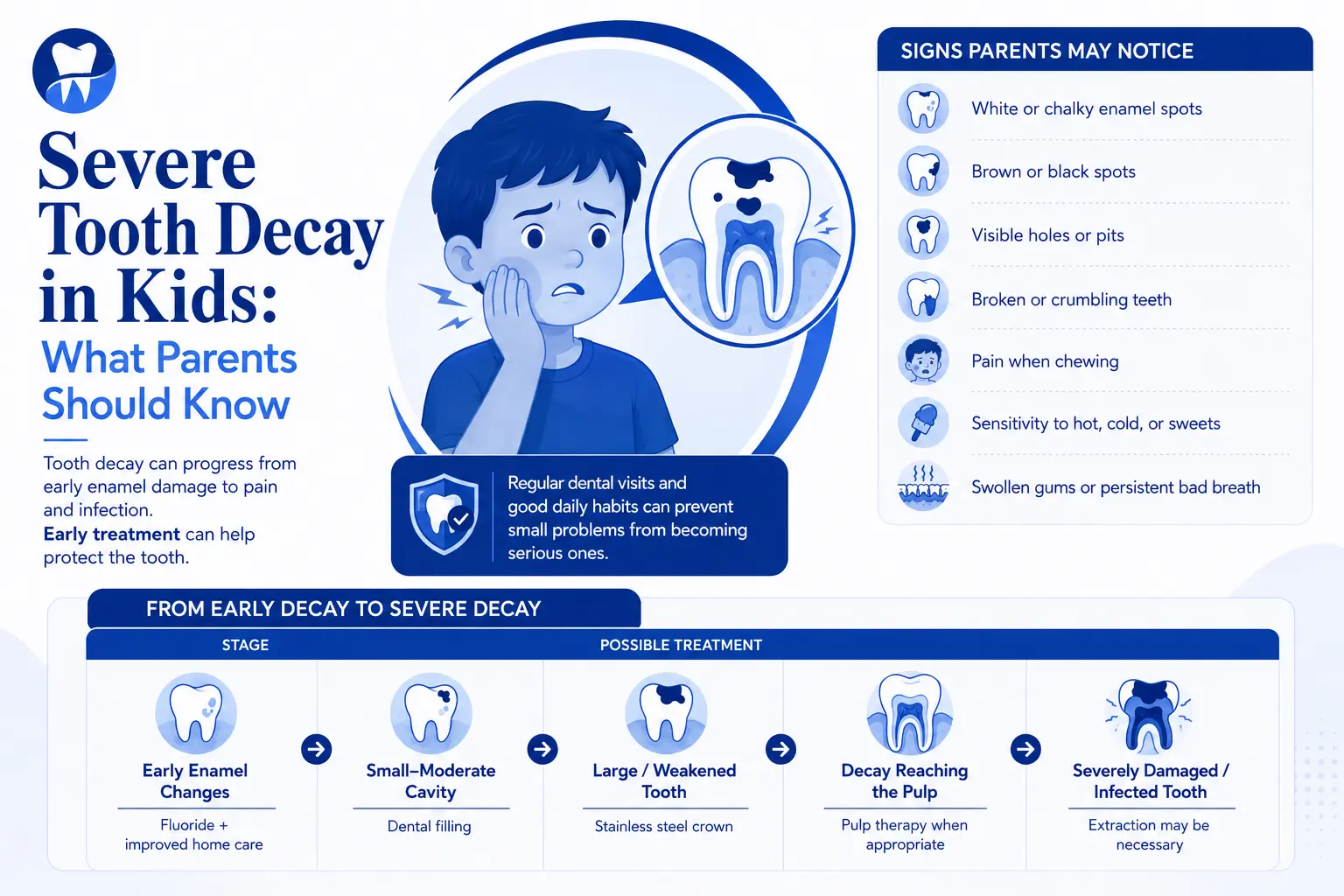
“Rotten teeth” is a common phrase for teeth with visible decay; it is not a separate dental diagnosis. Depending on how advanced the decay is, parents may notice:
- White or chalky areas on the enamel
- Brown or black spots
- Visible holes or pits
- Teeth that look chipped, broken, or crumbling
- Sensitivity to sweet, hot, or cold foods
- Toothache or pain while chewing
- Swelling or redness in the gums near a tooth
- Persistent bad breath
A dark spot does not always mean a severe cavity, and decay can develop between teeth where it is difficult to see. A dental exam—and X-rays when appropriate—can help show how far it has progressed.
Why Do Some Kids Develop Severe Tooth Decay?
Tooth decay develops when bacteria in plaque use sugars from food and drinks to produce acids that weaken enamel. Frequent exposure to sugary foods or drinks, difficulty removing plaque, and inadequate fluoride protection can raise a child’s risk. Other factors may contribute, including enamel defects, dry mouth, certain medical or developmental conditions, and challenges with brushing. When parents notice rotten baby teeth or repeated cavities, the cause is not necessarily just candy or brushing habits. A pediatric dentist can consider diet, oral hygiene, fluoride exposure, tooth development, and medical history together.
What to Do When Your Child Has Severe Tooth Decay
Arrange a dental evaluation promptly if you suspect a cavity, particularly if your child has pain, swelling, or trouble eating. The treatment depends on the depth of the decay, whether the tooth is a baby or permanent tooth, and whether it can be restored.
| Finding | Possible Treatment | Purpose |
|---|---|---|
| Early enamel changes without a cavity | Fluoride and preventive care | Strengthen enamel and help slow or reverse early mineral loss |
| Small or moderate cavity | Filling | Restore the affected part of the tooth |
| Large cavity or weakened baby tooth | Crown or another suitable restoration | Protect and strengthen the remaining tooth |
| Decay affecting the pulp | Pulp therapy may be considered for selected teeth | Treat diseased tissue while preserving a restorable tooth |
| Tooth that is severely damaged or cannot be restored | Extraction may be recommended | Remove a source of pain or infection |
Fluoride may help early enamel changes, but it cannot rebuild tooth structure once a hole has formed. For some children and specific cavities, a dentist may discuss silver diamine fluoride (SDF). SDF can help arrest decay in selected cases, but it typically darkens the treated decayed area and does not restore the tooth’s shape.
Tooth Decay Treatment by Age
The best treatment depends on how far the cavity has progressed, which tooth is affected, and whether it can be restored—not on age alone. A pediatric dentist will examine the tooth and may take X-rays to check for decay between teeth or near the pulp. Understanding the stages of tooth decay in kids can also help parents understand why treatment may differ from one child to another.
3-Year-Old Tooth Decay Treatment
For a 3-year-old, the dentist considers the extent of decay, the child’s comfort, and whether the child can cooperate during treatment. A small cavity may be treated with a filling. If decay has weakened a larger part of a baby tooth, a crown may provide better protection. When decay affects the pulp, pulp therapy may be considered if the tooth can be saved. Extraction may be recommended if the tooth cannot be restored or has a serious infection.
4-Year-Old Tooth Decay Treatment
A 4-year-old tooth decay treatment plan depends on the affected tooth and how deeply the decay has progressed. A filling may be suitable for a smaller cavity; a crown or pulp therapy may be considered for a more extensive cavity if the tooth is restorable. The dentist will also consider how to help the child complete treatment comfortably and may discuss behavior guidance or other support.
5-Year-Old Tooth Decay Treatment
For a 5-year-old, the dentist will assess how much of the baby tooth is affected and how long it is expected to remain in place. A filling, crown, or pulp therapy may be considered depending on the tooth’s condition. If a severely decayed tooth cannot be restored, extraction may be necessary. The dentist can also assess whether losing the tooth early could affect spacing or require follow-up as permanent teeth develop.
7-Year-Old Tooth Decay Treatment
At age seven, a child may have both baby teeth and newly erupting permanent teeth. For 7-year-old tooth decay treatment, identifying which type of tooth is affected is especially important: a permanent tooth may need a different restoration and longer-term monitoring than a baby tooth. The dentist will consider the depth of decay, the tooth’s development, and whether it can be restored before recommending treatment.
When Is Tooth Decay an Urgent Dental Problem?
Contact a dentist promptly if your child has persistent or worsening tooth pain, a broken tooth, or swelling around a tooth. Facial swelling, pus, or fever alongside dental pain may indicate an infection and needs urgent evaluation. Seek emergency medical care if your child has difficulty breathing or swallowing, or swelling that is rapidly spreading.
How Can Parents Help Prevent More Cavities?
Preventing further decay involves daily care at home and regular dental visits. Parents and caregivers can help children:
- Brush twice a day with fluoride toothpaste. Young children may need help brushing and should use an age-appropriate amount.
- Clean between the teeth as recommended by the dentist.
- Limit frequent sugary snacks and drinks, especially between meals and before bed.
- Choose water between meals when possible.
- Attend regular dental checkups so early changes can be identified.
- Follow the dentist’s recommendations for fluoride or other preventive care.
Pediatric Dental Care for Rotten Teeth in Kids
If you notice signs of tooth decay, arrange an examination with a pediatric dentist. The dentist can explain whether the affected tooth may be restored, what treatment options are appropriate, and how to reduce the risk of future cavities. Families seeking pediatric dentistry in Fredericksburg can contact Kakar Dental Group to discuss an evaluation with Dr. Sonu Kakar and the dental team.
FAQs ABout Rotten Teeth in Kids
What causes rotten teeth in kids?
What should I do if my child has several rotten teeth?
Why does my child have bad teeth even though we brush?
Can rotten baby teeth affect permanent teeth?


[…] Tooth decay in children can progress quickly if left untreated, leading to more severe dental issues and even affecting their overall health. As a parent, it’s crucial to recognize the early and advanced signs of severe tooth decay to protect your child’s oral health. In this guide, we’ll highlight the signs of severe tooth decay in children and What to Do When Your Child Has Severe Tooth Decay. […]