
Soft palate pain can come from a minor burn or irritation, a mouth ulcer, dry mouth, or an infection affecting the mouth or throat. The location and appearance of any sore, how long it has lasted, and other symptoms can help a dentist or medical professional decide what to check, but they cannot confirm the cause at home.
For mild soreness after hot or irritating food, avoid further irritation and monitor it. Arrange a dental or medical evaluation if the pain is worsening, does not begin to improve within about a week, or comes with fever, swelling, or painful swallowing. Have a sore, patch, or lump checked if it persists for more than two weeks. Get emergency help for difficulty breathing or inability to swallow saliva.
Table of Contents
Understanding the Soft Palate and Its Role in Oral Health
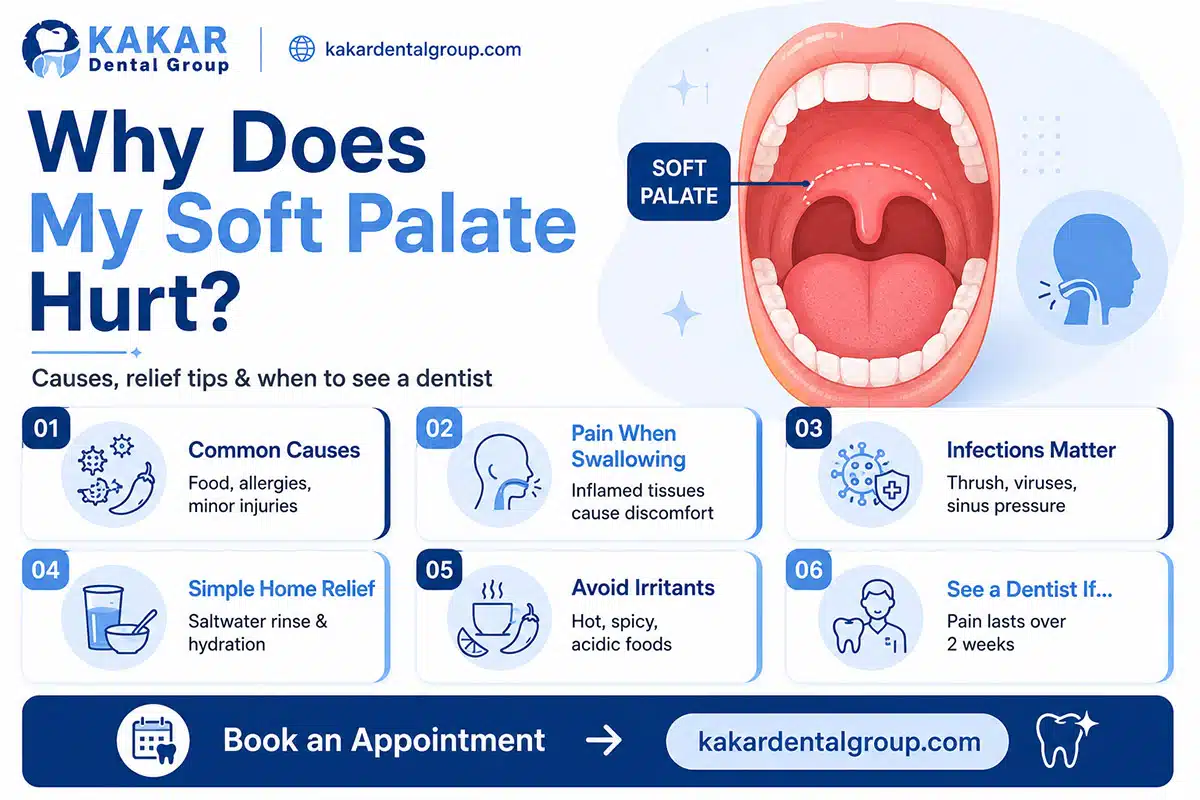
The soft palate is the flexible, muscular tissue at the back of the roof of the mouth. During swallowing, it moves to help close off the nasal passage so food and liquid do not enter the nose.
Pain across the roof of the mouth may involve the hard palate as well as the soft palate; the possible causes of roof of mouth pain can vary depending on the area affected.
Potential Causes of Soft Palate Pain
The cause of soft palate pain cannot be identified by location alone. Common possibilities include a minor burn or scrape, a mouth ulcer, dry or irritated tissue, or inflammation associated with a sore throat or respiratory illness. A dentist or medical professional may need to examine the area, especially if symptoms persist or other signs are present.
Some clues may help guide an evaluation, but they do not confirm a diagnosis:
| Possible Cause | Clues That May Be Present | What to Do |
|---|---|---|
| Burn or minor irritation | Soreness after very hot, acidic, spicy, or rough food | Avoid the trigger and monitor for improvement |
| Mouth ulcer | A distinct sore that hurts when eating or swallowing | Avoid irritating foods; get it checked if it lasts more than two weeks |
| Oral thrush | White patches, soreness, or pain while eating or swallowing; risk is higher with factors such as recent antibiotics, inhaled corticosteroids, diabetes, or a weakened immune system | Ask a clinician to assess it; white patches alone do not confirm thrush |
| Sore throat or respiratory illness | Throat pain, congestion, postnasal drip, or discomfort when swallowing | Seek care if symptoms worsen, persist, or include urgent warning signs |
| Possible nutritional deficiency | Recurrent mouth ulcers along with other symptoms, such as a sore or red tongue | Ask a medical professional whether evaluation or testing is appropriate; do not diagnose or treat a deficiency based on palate pain alone |
Oral thrush can cause white patches and soreness in the mouth or throat, but similar symptoms can have other causes. See the CDC’s overview of candidiasis symptoms for more information.
Some nutritional deficiencies may be associated with recurrent mouth ulcers. The NIDCR guide to canker sores and fever blisters lists certain deficiencies as possible triggers; palate pain alone does not establish a deficiency.
Why Does My Soft Palate Hurt When I Swallow?
Swallowing moves the soft palate, so an irritated or sore area may hurt more when you eat or drink. Note whether the pain began after a burn or scratch, whether you can see a sore or patch, and whether you also have a sore throat, fever, or congestion. These details may help a clinician assess the cause, but they cannot confirm a diagnosis at home.
Contact a dentist or medical professional if painful swallowing is worsening or does not begin to improve within about a week.
Home Remedies and Daily Life Tips for Relief
For mild irritation, choose cool drinks and soft foods, and avoid very hot, spicy, acidic, or rough foods until the area feels better. A gentle warm saltwater rinse may soothe minor irritation; spit it out and do not swallow it. These steps may ease discomfort, but they do not treat every cause of soft palate pain. Do not start antifungal medicine or vitamin supplements without advice from a qualified healthcare professional.
The NHS guidance on mouth ulcers also recommends avoiding foods that irritate the sore.
When to Seek Medical Attention for Soft Palate Pain
Contact a dentist or medical professional if the pain is getting worse, does not begin to improve within about a week, or comes with fever, swelling, or painful swallowing. Arrange an evaluation if a sore, lump, or red or white patch lasts more than two weeks.
Difficulty breathing or being unable to swallow saliva requires emergency care. A persistent sore or patch needs an examination, but it does not by itself mean that you have cancer. A clinician can examine the area and decide whether further testing or a referral is needed. Persistent oral changes can have different causes; the distinction between a mouth ulcer and oral cancer depends on an examination, not pain alone.
Kakar Dental Group provides pediatric dental care in Northern Virginia, including pediatric dentistry in Falls Church.
Frequently Asked Questions About Soft Palate Pain
Why does my soft palate hurt?
Why does my soft palate hurt when I swallow?
Can a vitamin deficiency cause soft palate pain?
Can oral thrush cause soft palate pain?
Can a cold sore cause soft palate pain?
Could soft palate pain be a sign of oral cancer?
When should I seek urgent care for soft palate pain?