When do kids start going to the dentist? It is one of the most common questions parents ask — and one of the most important. Establishing good oral hygiene habits and dental hygiene routines at a young age can set your little one up for a lifetime of healthy smiles.
According to the American Academy of Pediatric Dentistry (AAPD) and the American Dental Association (ADA), a child’s first dental visit should take place within six months of the eruption of the first primary tooth, and no later than 12 months of age. That may sound early for a first-time dental appointment, but the importance of early dental visits cannot be overstated.
Table of Contents
The Importance of Early Dental Visits for Prevention
Tooth decay (caries) is the most common chronic disease in children. Early childhood caries is largely preventable and reversible in its early stages through good oral health habits, professional health care, and community interventions such as water fluoridation.
At a child’s first dental appointment, a dental professional will assess disease risk, provide early detection services, administer fluoride treatments, and offer anticipatory guidance on topics such as fluoride toothpaste use and a child’s diet.
These routine dental visits lay the groundwork for a positive dental experience and help prevent dental problems before they become painful or costly.
What Happens at a Child’s First Dental Visit?
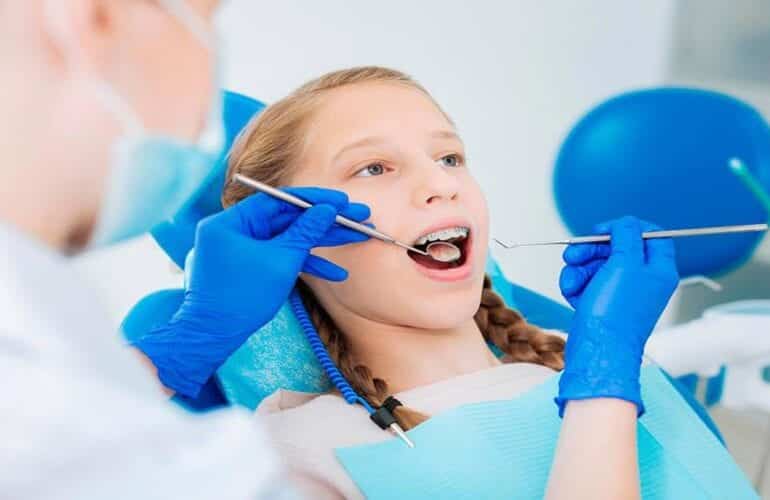
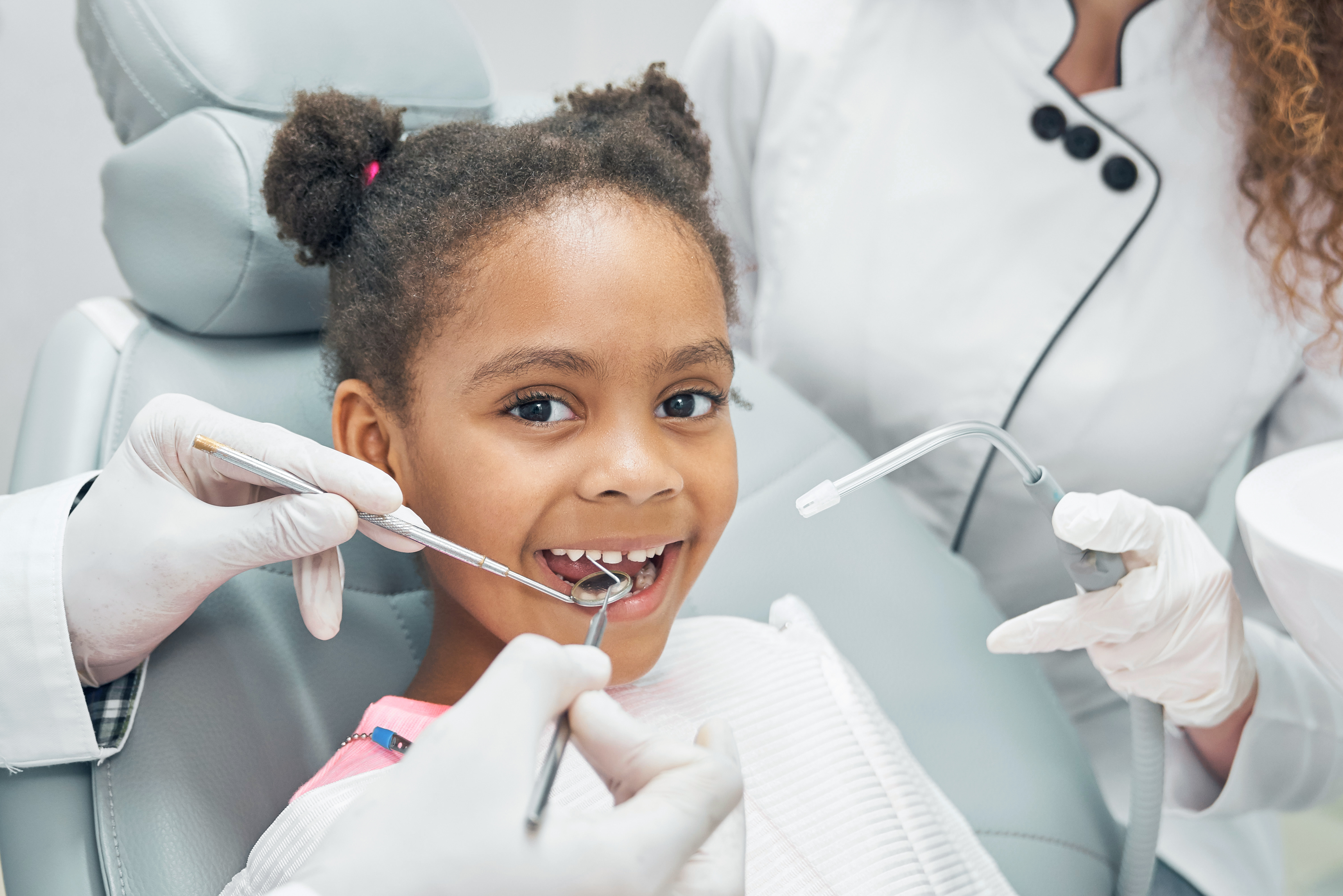
Parents are often relieved to learn that a child’s first visit to the dentist’s office is gentle and low-pressure. The pediatric dentist will examine the child’s mouth, evaluate the gums, check the child’s teeth for early signs of decay or enamel defects, and assess alignment. Depending on the child’s age, dental X-rays may also be taken to identify potential issues not visible to the naked eye.
Baby teeth may be temporary, but they are critical to a child’s oral health and overall development. Primary teeth support chewing, enabling children to process a varied diet and receive adequate nutrition for growth. They also assist in speech development — particularly for sounds requiring tongue-tooth contact, such as “t,” “d,” “n,” and “s.” Missing or decayed teeth can impair articulation and delay clear speech.
Additionally, visible decay or missing front teeth can affect a child’s self-esteem. The CDC has linked untreated tooth decay to missed school days and lower academic performance — emphasizing that good oral health is inseparable from a child’s overall well-being. Future visits build on this foundation, and each positive experience reinforces the good habits that children carry into adulthood.
Protecting Children’s Teeth: Space, Spacing, and Permanent Teeth
Primary teeth serve as natural space maintainers, preserving arch length and guiding the eruption path of adult teeth developing beneath them. When a primary molar is lost prematurely, neighboring teeth can drift and jeopardize the eruption of permanent teeth.
Regular visits also allow a child’s dentist to monitor jaw growth and flag habits such as thumb sucking or prolonged pacifier use, which — if unaddressed — can contribute to alignment concerns in the permanent dentition.
Preventing Dental Anxiety and Building Positive Habits
One of the most under appreciated benefits of early dental visits is the opportunity to establish a positive experience with dental care from the start. Dental anxiety is common among children and adults alike, and it is often rooted in unfamiliarity. When children begin regular check-ups at an early age, the dentist’s office becomes a familiar, comfortable environment rather than an unfamiliar or intimidating one.
A child who attends routine dental visits regularly is far more likely to maintain regular dental check-ups and good hygiene habits into adulthood. That consistency — reinforced at home with proper brushing, fluoride toothpaste appropriate for the child’s age, and a healthy child’s diet — is the foundation of a lifetime free from serious dental issues and gum disease.
Early Pediatric Dentistry Protects Long-Term Oral Health
Premature loss of baby’s teeth can contribute to malocclusion — a misaligned bite that affects chewing, cleaning, and jaw function. A 2023 systematic review published in International Orthodontics found that premature loss of primary teeth increases the odds of malocclusion, and that affected children required orthodontic treatment much more frequently.
Regular dental visits allow a pediatric dentist to closely monitor these dental needs, address potential issues at the earliest opportunity, and help children and families make informed decisions about their children’s health care before small concerns become complex dental problems.
Schedule Your Child’s First Dental Appointment at Kakar Dental Group
At Kakar Dental Group, our team of experienced pediatric dentistry professionals provides compassionate, comprehensive care for children’s dental health at our four Northern Virginia locations in Tysons, Falls Church, Manassas, and Fredericksburg.
Our office is equipped to deliver a positive dental experience from the very first visit. If your little one has not yet had their child’s first dental appointment, there is no better time than now.
Contact our office today to schedule — because the gift of good oral health starts earlier than most parents realize, and those early visits make all the difference.