
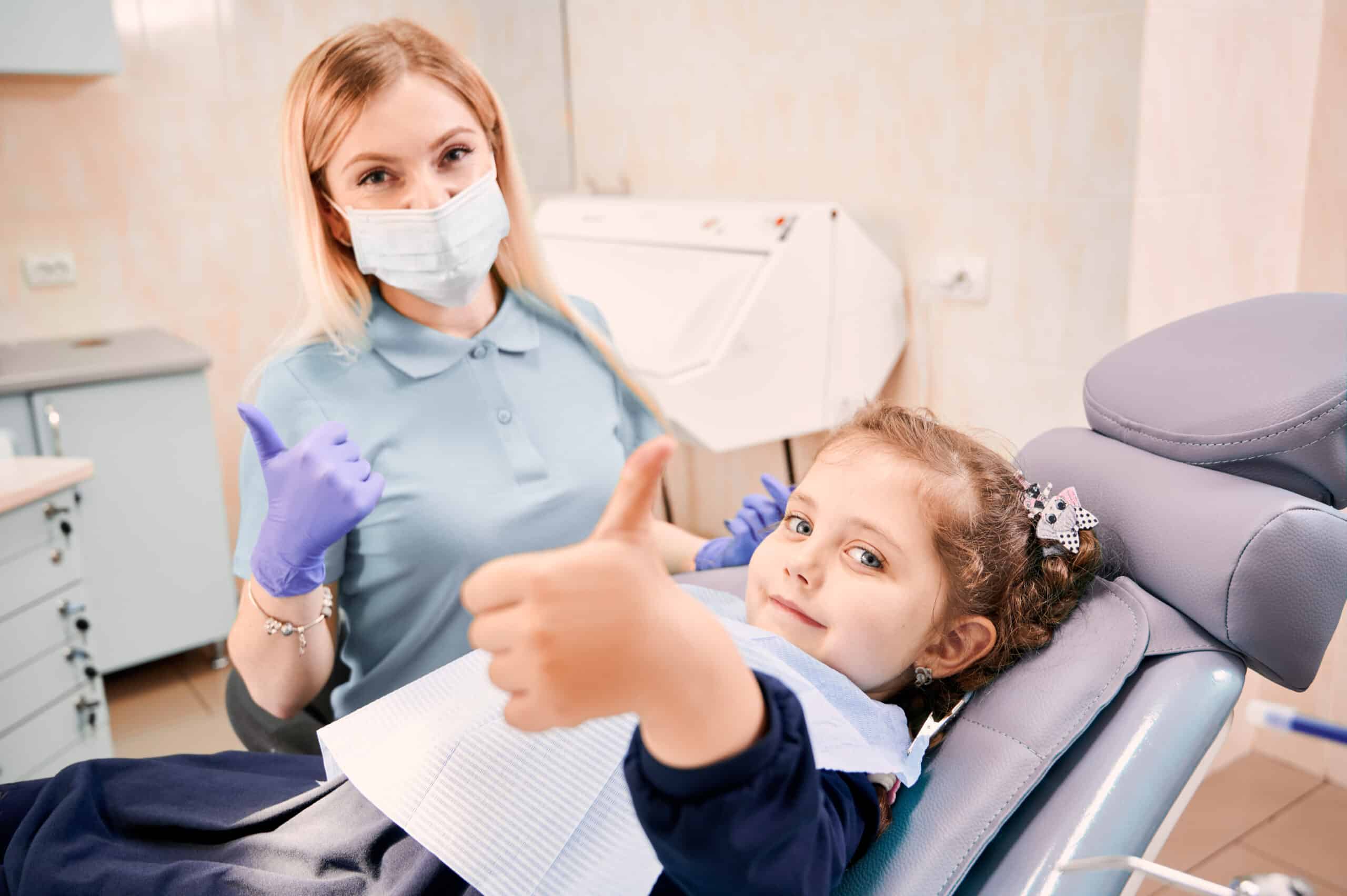
It may sound like an unusual question at first, but for certain patients, choosing to see a pediatric dentist as an adult is a genuinely reasonable decision. The honest answer is: sometimes yes — and in some cases, it may even be the right choice.
Table of Contents
Pediatric Dentistry: A Specialty Built on a General Dentistry Foundation
Pediatric dentistry is a recognized specialty — but it is important to understand what that means in practice. Pediatric dentists begin with the same dental school training as any general dentist, earning a Doctor of Dental Medicine (DMD) or equivalent degree. After graduation, they complete an additional two to three years of focused training in child development, child psychology, behavior management, and children’s dentistry.
Many are board-certified by the American Board of Pediatric Dentistry and follow the clinical guidelines set by the American Academy of Pediatric Dentistry. Their expertise spans preventive care, fluoride treatments, dental sealants, early monitoring of orthodontic treatment needs, and the management of tooth decay in baby teeth and developing permanent teeth.
Because their specialty is built on a comprehensive general dentistry education, pediatric dentists are technically trained to address basic adult dental needs. In specific situations — particularly for long-time patients aging out of pediatric care — they may continue providing dental care into young adulthood.
The Design of a Pediatric Dental Office Is Intentional
That said, there are meaningful differences between pediatric dental care and adult dentistry that go beyond clinical training. Adult teeth present different dental problems than children’s teeth. Adults are more likely to require root canals, crown restorations, comprehensive gum disease treatment, or management of tooth loss — services that are less central to a pediatric dental practice.
Pediatric dental offices are also purposefully designed around young patients: child-friendly waiting rooms, communication styles adapted to child development, and sedation dentistry protocols calibrated for younger patients.
Adults seeking long-term comprehensive dental care are typically better served by a family dentist or a general dentistry practice equipped to care for patients of all ages.
When Adults Can Benefit From Pediatric Dental Care
There are, however, two distinct groups for whom visiting a pediatric dentist as an adult is not only understandable but may be the most appropriate option.
The first is young adults in transition. A 19-or 20-year-old heading off to college, for example, may not yet have an established relationship with an adult dentist. If that patient has been seeing the same pediatric dentist since their first tooth, continuing temporarily for routine dental visits — cleanings, exams, and preventive care — is a practical choice. Continuity of care matters, and the comfort and trust that have been established over years of dental appointments carry real clinical value.
The second group is adults with special healthcare needs. This population faces well-documented barriers to transitioning to adult dental care. Research has identified a shortage of general dentists equipped to receive adolescents with special health care needs (ASHCN), as well as the difficulty of breaking established bonds between pediatric providers and long-term patients and families. According to published literature, dental care represents the most common unmet need for this population, and over 50 percent of pediatric dentists report continuing to treat young adults with SHCN into adulthood to ensure continuity of preventive and restorative care.
A third scenario worth noting involves adults with significant dental anxiety. Pediatric dental offices are built, from the ground up, around emotional comfort: warm atmospheres, welcoming staff, and intentionally non-intimidating environments. For adults whose dental fear stems from negative childhood experiences, a pediatric setting can lower barriers that a traditional adult dentistry office may not. While family dentistry and general dentistry practices can absolutely be compassionate and accommodating, pediatric offices were specifically designed with anxiety reduction as a core priority.
The Right Question to Ask
For most adults, a general dentist or family dentist remains the right choice for comprehensive dental care — particularly when restorative treatment, gum health management, or age-related dental needs are involved. But the more useful question is not whether a pediatric dentist “can” treat an adult. The more useful question is whether they are the right provider for your specific dental health needs.
Three considerations can guide that decision: What type of dental services are needed — routine preventive care or more complex restorative treatment? What is the patient’s comfort level and history with the provider? And is this a short-term transitional arrangement or a long-term plan for ongoing care?
If you are unsure, the simplest step is to ask your current provider. Most pediatric dental offices communicate their age policies clearly and can help guide the transition to adult dental care when the time is right.
Expert Pediatric Dental Care in Northern Virginia
At Kakar Dental Group, our pediatric dental specialists bring advanced training in child development, behavior management, and preventive care to every patient visit — building the foundation for a lifetime of healthy oral hygiene habits.
With convenient locations in Tysons, Falls Church, Manassas, and Fredericksburg, our team is here to support your family at every stage, from your child’s first tooth through the teenage years and beyond.
Contact us today to schedule a dental appointment and experience the difference that specialized, compassionate pediatric dentistry makes.