
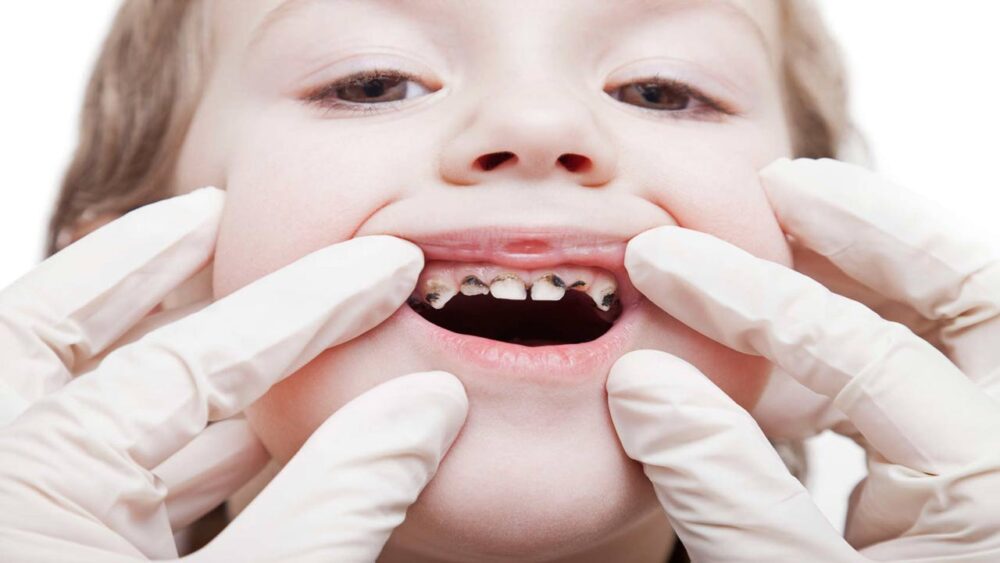
Parents sometimes describe advanced decay as “rotten teeth” or worry that their child simply has “bad teeth.” In reality, visible dark spots, holes, broken tooth structure, pain, or infection usually point to dental decay that needs professional evaluation.
If you are dealing with kids with rotten teeth or repeated cavities, the goal is not to assign blame. A pediatric dentist can identify how advanced the decay is, relieve pain or infection, and create a treatment and prevention plan based on your child’s age and individual needs.
Table of Contents
What severe decay means for your child’s tooth?
Child tooth decay, also known as pediatric dental caries or childhood cavities, is a common oral health problem that occurs when bacteria in the mouth produce acids that erode the enamel and dentin of a child’s teeth. This decay can lead to cavities or holes in the teeth, which can cause pain, infection, and in severe cases, tooth loss.If left untreated, child tooth decay can lead to a range of oral health problems, including gum disease, abscesses, and difficulty eating and speaking.
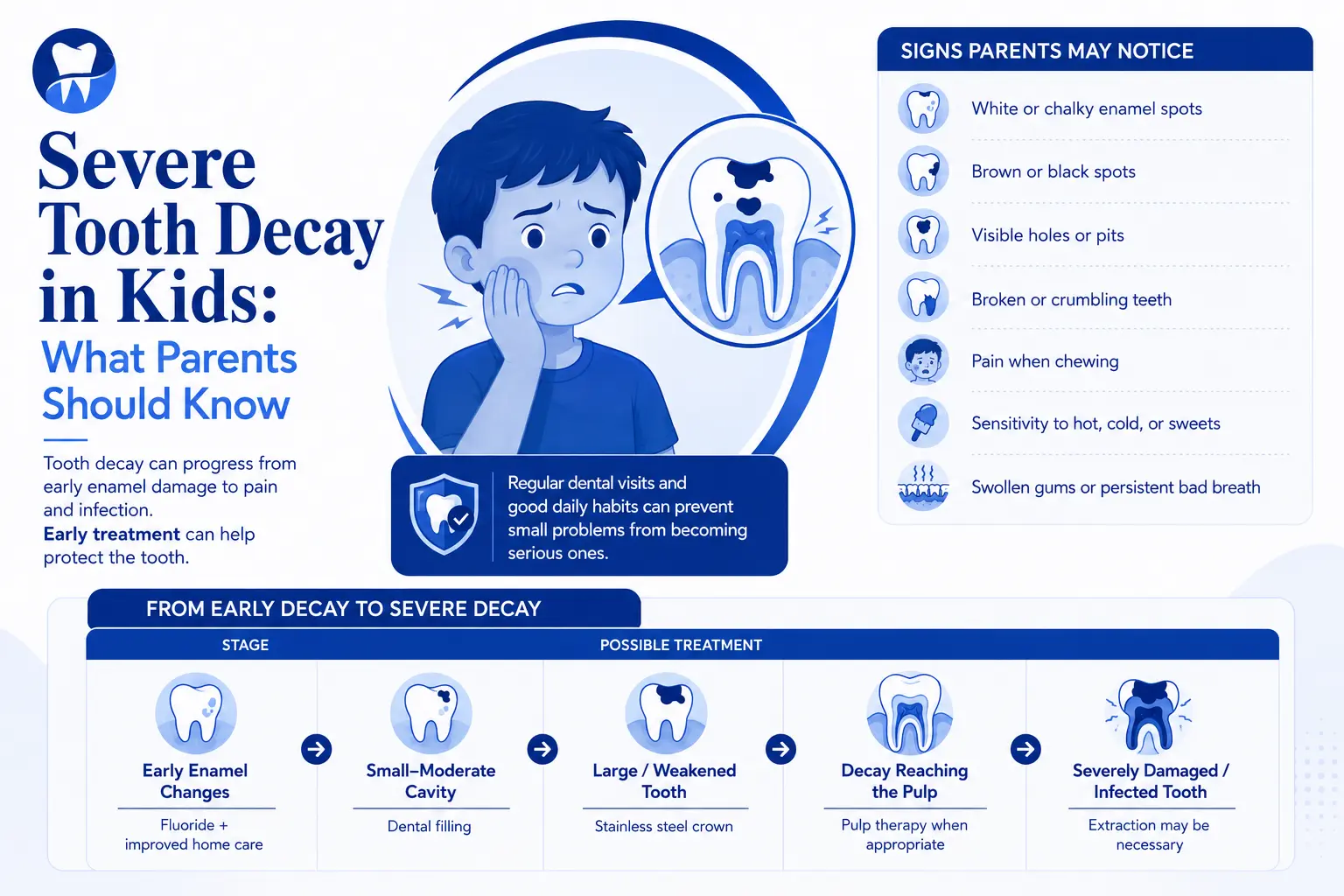
What Do “Rotten Teeth” Look Like in Kids?
The phrase rotten teeth in kids usually refers to teeth with advanced decay rather than a separate dental condition. Tooth decay can look different depending on its stage.
Parents may notice:
- white or chalky areas on the enamel;
- brown or black spots;
- visible holes or pits;
- broken or crumbling tooth structure;
- sensitivity to sweet, hot, or cold foods;
- toothache or pain while chewing;
- swollen gums near the affected tooth; or
- bad breath that persists despite brushing.
Not every dark spot means severe decay, and some cavities develop between teeth where parents cannot see them. A dental examination and, when appropriate, X-rays help determine how far the decay has progressed.
Why Do Some Kids Develop Severe Tooth Decay?
Tooth decay develops when bacteria in dental plaque use sugars from foods and drinks to produce acids that gradually damage tooth enamel. Frequent exposure to sugar, inadequate plaque removal, and insufficient fluoride protection can all increase risk.
Some children are also more susceptible because of enamel defects, dry mouth, certain medical or developmental conditions, or difficulty maintaining effective oral hygiene.
So when parents see kids with bad teeth, the explanation is not always simply “too much candy” or poor brushing. A pediatric dentist can look at diet, brushing habits, fluoride exposure, tooth development, medical history, and other factors together.
What to Do When Your Child Has Severe Tooth Decay
Severe tooth decay should be evaluated promptly, especially if your child has tooth pain, swelling, difficulty eating, or signs of infection. Treatment depends on how deeply the decay has progressed and whether the affected tooth is a primary or permanent tooth.
| Stage / Finding | Possible Treatment | Goal |
|---|---|---|
| Very early enamel changes without a cavity | Fluoride and improved home care | Strengthen enamel and slow or reverse early demineralization |
| Small to moderate cavity | Dental filling | Remove decay and restore the tooth |
| Large cavity or weakened baby tooth | Stainless steel crown or another appropriate restoration | Protect and strengthen the remaining tooth |
| Decay close to or involving the pulp | Pulp therapy may be considered in selected teeth | Preserve a restorable tooth when appropriate |
| Tooth severely damaged or infected | Extraction may be necessary | Remove the source of pain or infection |
Child tooth decay is a preventable condition, but it requires a combination of good oral hygiene practices, a healthy diet, and regular dental check-ups. Parents and caregivers play a crucial role in preventing and managing child tooth decay by ensuring that children brush their teeth twice a day, limit sugary snacks and drinks, and visit the dentist regularly for cleanings and check-ups.
Choosing the right treatment option is essential when dealing with tooth decay.
- Treatment for Early Stages of Tooth Decay:
In the early stage, a pediatric dentist may perform a fluoride treatment to strengthen or remineralize the tooth, which may reverse a cavity. This treatment is effective only in the case of smaller cavities, and it is ineffective if the tooth shows other signs of decaying, such as dark or white spots on the tooth and bad breath.
- Treatment for Advanced Stages of Tooth Decay:
Small or moderate cavities may be restored with a filling. If a baby tooth has lost a significant amount of structure or is too weak for a filling alone, a pediatric dentist may recommend a stainless steel crown to protect the remaining tooth.
- Treatment for Extremely Advanced Stages of Tooth Decay:
When decay reaches or closely approaches the pulp, treatment depends on the type of tooth, the extent of infection, the condition of the roots, and whether the tooth can reasonably be saved.
For some primary teeth, pulp therapy may be used to remove diseased tissue while preserving the tooth. If the tooth is severely damaged, abscessed, or cannot be restored predictably, extraction may be recommended. After early loss of a baby tooth, the pediatric dentist may assess whether a space maintainer is needed to help preserve room for the developing permanent tooth.
Does Tooth Decay Treatment Differ by Age?
The principles of treating tooth decay are similar at different ages, but the treatment plan depends heavily on the child’s developmental stage, cooperation, whether the affected tooth is primary or permanent, and how long the tooth needs to remain functional.
For toddlers and preschoolers, a pediatric dentist may also consider behavior guidance or sedation options if extensive treatment is needed and the child cannot comfortably complete care while awake.
For school-age children, the dentist will also consider the development and eruption of nearby permanent teeth when deciding whether to restore or remove a badly damaged baby tooth.
Learn If Your Child’s Tooth Needs a Pulpotomy:
If you notice any symptoms of tooth decay in your child’s mouth, then you must take your child to a pediatric dentist in Falls Church for a dental check-up. There are many treatment options available such as pediatric dental filling that can save your kid’s tooth and overall oral health. Traditional root canal treatment may not be appropriate for children’s teeth, but kid’s dentists at Kakar Dental Group can perform a minimized version, specifically for children who experience severe tooth decay.
To learn more about tooth decay in kids and the treatments available, schedule an appointment with Dr. Sonu Kakar, a lead To learn more about tooth decay in kids and the treatments available, families looking for pediatric dentistry in Fredericksburg can schedule an appointment with Dr. Sonu Kakar and the Kakar Dental Group team..
FAQs About Rotten Teeth in Kids
What causes rotten teeth in kids?
What should I do if my child has several rotten teeth?
Why does my child have bad teeth even though we brush?



[…] Tooth decay in children can progress quickly if left untreated, leading to more severe dental issues and even affecting their overall health. As a parent, it’s crucial to recognize the early and advanced signs of severe tooth decay to protect your child’s oral health. In this guide, we’ll highlight the signs of severe tooth decay in children and What to Do When Your Child Has Severe Tooth Decay. […]